

Why Choose Us
Team
Our company has a professional management team engaged in scientific research, safety production, quality control, and sales operations
Production Line
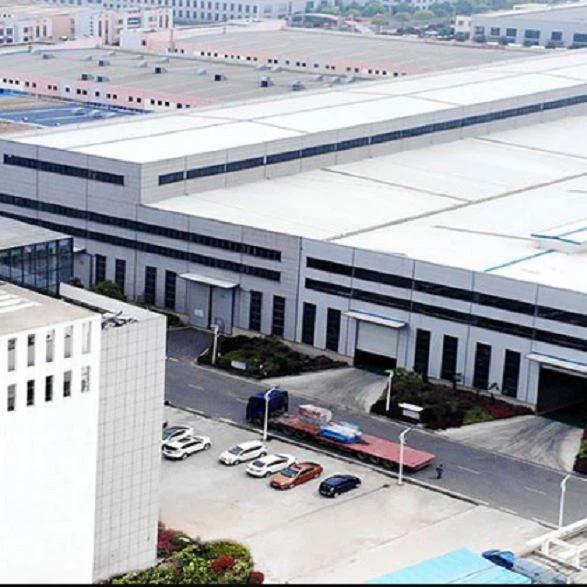
We have highly automated production lines and international standard research and development facilities
Security Management
We emphasize safety and environmental management
Our Product
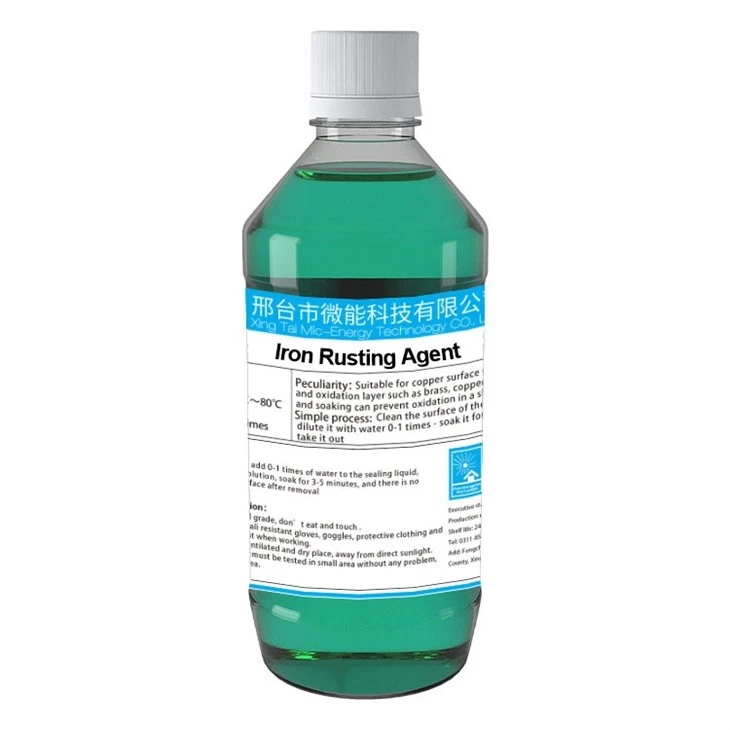
Degreaser;Metal cleaning agent; Antirust agent;Phosphating agent;Silane agent;Cutting solution;Copper blackening agent;Iron rusting agent.

Antirust Agent For Steel Metal
Antirust Lubricating oil is brown transparent liquid. It is a pure antirust oil which is composed of hydrorefining base oil and special antirust agent. It has the effect of lubrication, antiwear and antirust. Meanwhile, we add VCI gas phase corrosion inhibitor, when VCI molecules volatilize into a confined space, a protective barrier is formed on the surface of the metal, so that the metal can be protected better.

This product is made from a combination of dehydrating agent, antirust additive, and medium to light petroleum. It can remove moisture from the surface of the workpiece at room temperature, and has dual properties of dehydration and rust prevention.

Best Antirust Agent For Aluminum Metal
As a high-tech company,xingtai weineng Ltd. is specialize in researching,developing,manufacturing and selling chemical products like metal surface treatment chemicals, liquid for metal industry, industrial cleaning agent and chemical product,which is also qualified to offer tailored solution for clients concerninig the chemical products mentioned above. weineng Chemical will strive to grow into the most innovative and professional chemical company, aimed at creating solution and orientation,product and service in higher level continuously for various industries as well as driving chemical industry accomplish striking achievements increasingly. weineng Chemical has been regarding "Environment-friendly weineng and Green Home" as its health development strategy,"Environment Protection and Green" as its guidance for product research and production,"Top-grade,Refined, Advanced and Specialized" as its conception for chemical product development, and perfecting its innovative system, improving its capacity for sustainable growth unceasingly, striking to create social value continuously and be a leader in chemical industry for environment production.

Heavy Duty Antirust Agent For Aluminum
This product is modulates by many kinds of chemical additives such as the mineral oil, the solvent oil, the rust-preventing agent, the oxidation inhibitor and so on under the specific craft.

Premier Antirust Agent For Copper
Rust preventive oil is a high-quality solvent cutback type which has very good water displacement characteristics and fingerprint corrosion prevention property for semi-finished or finished parts.

Anti-rusting oil working material ferrous, copper, aluminium anti-rusting period retention period material cleanliness information (previous process contaminants)
What is Copper Antirust Agent
A copper antirust agent is a substance specifically formulated to protect copper and its alloys from corrosion, which is commonly known as tarnishing or patination. These agents work by providing a barrier between the copper surface and corrosive elements such as moisture, oxygen, and sulfur compounds that are present in the atmosphere.
The main components of copper rust inhibitors include corrosion inhibitors, surfactants, corrosion inhibitors and stabilizers.
Copper rust inhibitor is a chemical agent specifically designed to protect copper and its alloys from oxidation and corrosion. Its main function is to prevent copper from electrochemical corrosion and rust when it comes into contact with oxygen, moisture or other corrosive media in the air. To achieve this goal, copper rust inhibitors typically contain the following key ingredients:
Corrosion inhibitor
This is one of the most important ingredients in rust inhibitors and can effectively slow down or stop the corrosion process of metals.
Surfactant
It can reduce the interfacial tension between the rust inhibitor and the metal surface, making it easier for the rust inhibitor to form a uniform film on the metal surface, thereby better isolating the contact between the metal and corrosive media.
Corrosion Inhibitors
These ingredients slow down the corrosion reaction and extend the protection time of the metal.
Stabilizer
Used to maintain the chemical stability of the anti-rust agent and prevent it from chemical changes due to environmental factors (such as temperature, humidity, etc.), thereby affecting its anti-rust effect.
Effective methods to prevent copper rust include using copper cleaning agents, polishing fluids, film stripping fluids, nano-coatings, and copper passivation treatments.
Use copper cleaning agent: Soak rusty copper products in copper cleaning agent for about 1 minute, and then wash them with water. This method is suitable for removing rust from copper surfaces.
Polishing solution treatment: Put the copper product into the copper polishing solution and soak it for 1 to 3 minutes for polishing. A physical protective film will be formed on the surface, and then washed with water again. Stirring is required during the polishing process to ensure that the product surface is fully in contact with the reagent.
Film stripping liquid treatment: Put the polished copper product into the copper film stripping liquid and soak it for 5 to 8 seconds, then take it out and wash it with water. This step can make the surface of the copper product very bright.
Nano coating: Nano coating can provide anti-rust protection by forming a sealing layer on the surface of copper, which is not only hydrophobic and oleophobic, but also acid and alkali resistant and corrosion resistant. Nanocoatings improve the surface properties of materials without affecting their chemical properties, providing long-term corrosion protection.
Passivation treatment of copper materials: For copper parts that have been treated, passivation treatment can be carried out to prevent them from rusting back. Passivation treatment can restore the original luster of copper parts and keep them as bright as new for more than a year without oxidation.
Detailed Explanation Of The Principle Of Copper Antirust Agent
Copper is a common metallic element with the chemical symbol Cu and atomic number 29. It belongs to the first group of elements in the first cycle. Copper has physical properties such as good electrical conductivity, thermal conductivity, plasticity and solubility.
Copper is an active metal that easily reacts chemically with oxygen, moisture in the air, carbon dioxide and other substances to produce insoluble substances such as copper oxide. This reaction is called oxidation or rust, and is the cause of rust in copper.
The surface of copper is smooth, but it is susceptible to moisture and pollution, and is more prone to oxidation reactions in humid environments. Therefore, copper products need to take anti-rust measures to preserve and use them for a long time.
Chemical rust prevention
Chemical rust prevention refers to the formation of a special protective film on the surface of copper products to isolate air and moisture from contacting the metal surface to achieve the purpose of rust prevention. Commonly used chemical anti-rust methods include hot-dip tin plating, hot-dip galvanizing, electrochromic plating and other methods.
Mechanical rust prevention
Mechanical rust prevention uses physical methods to process the surface of copper products to remove surface oxides and foreign matter and prevent air and moisture from contacting the metal surface to achieve the purpose of rust prevention. Commonly used mechanical anti-rust methods include sanding, polishing, fire baking and other methods.
Surface treatment
Surface treatment refers to special coating treatment on the surface of copper products to achieve rust prevention. Commonly used surface treatment methods include oiling, painting, spraying and other methods.
Copper products require frequent anti-rust maintenance during use, And dirt on the surface of copper products needs to be cleaned regularly to avoid dirt accumulation and oxidation reactions.
When performing chemical anti-rust and surface treatment, Anti-rust coatings and materials that meet environmental protection requirements should be selected to avoid pollution and harm to the environment.
When performing mechanical rust prevention, Appropriate processing techniques and tools should be selected to avoid damage to the surface of copper products.
Analysis on the usage of oily and water-based copper rust inhibitors
Introduction to oil-based and water-based copper anti-rust agents
Copper rust inhibitors are divided into two types: oil-based and water-based. Oil-based copper rust inhibitors use oil as the main component, while water-based copper rust inhibitors use water as the main component. Both can be used to prevent surface oxidation and rust of copper products, but their usage methods and scope of application are slightly different.
How to use oily copper rust inhibitor and its scope of application
Oil-based copper rust inhibitors usually need to be shaken well before use and sprayed evenly on the surface of the copper products to be protected. Suitable for anti-rust protection on various transmission mechanisms, steel materials, alloys and other surfaces. Its anti-rust effect is better, but it will produce an oil film, which is easier to absorb dust and dirt.
How to use and scope of application of water-based copper anti-rust agent
The method of using water-based copper rust inhibitor is similar to that of oil-based one. It also needs to be shaken well before use and sprayed evenly on the surface of the copper products to be protected. Suitable for rust prevention and protection of copper, brass and other materials. Compared with oil-based copper rust inhibitors, water-based copper rust inhibitors will not form an oil film on the surface after drying, causing less environmental pollution and lower costs.
Precautions
- When using copper anti-rust agents, corresponding products should be selected according to different materials. Generally speaking, oil-based is suitable for steel, alloys and other substances, and water-based is suitable for copper, brass and other substances.
- Before use, care should be taken to clean the surface of the copper product to be protected and ensure that the surface is dry and smooth.
- When spraying, spray evenly to avoid too much or too little locally.
- After use, the nozzle should be cleaned to prevent clogging.
Tips for using Copper Antirust Agent
Shanghai Jwell machinery Workshop co-operation projects

Sequence of use
When using copper corrosion inhibitors and rust removers, rust removers should be used first to remove oxidized substances on the metal surface, and then copper corrosion inhibitors should be used to protect the metal surfaces. If copper corrosion inhibitor is used first, it will affect the effect of rust remover, making it impossible to completely remove

How to use
When using rust remover and copper corrosion inhibitor, you need to follow the usage instructions in the instructions. Chemicals usually need to be dissolved in water and mixed in a certain proportion. When mixing, please note that rust remover and copper corrosion inhibitor need to be used in different containers to avoid confusion.

Precautions
Pay attention to safety during use, wear gloves, masks, goggles and other personal protective equipment, and maintain good ventilation. After using chemicals, hands and tools should be washed promptly, and waste liquid and residue should be properly disposed of.
Our company was founded in 2014, with its headquarter located in XingTai. Our company is operated by a professional management team specialized in scientific research ,safe production,quality control and sales operation.We have highly automatic production lines and R&D facilities of international standard we emphasizes safety & environment protect management ,precise process control and quality supervision according to SHEQ standards (lSO9001/ISO14001/OHSAS18001).We also stick to sustainable development with social responsibilities so as to in prove the core competitiveness.Also, we have a trading company, Our sales team is consisted of up to 30 elites of high professionalism, providing our clients first-class service of high efficiency.
FAQ
Hot Tags: copper antirust agent, China copper antirust agent manufacturers, suppliers, factory, anti corrosion treatment for metal surfaces, aerosol anti corrosion, customized anti corrosion, physical antirust agent, copper anti corrosion chemicals, anti corrosion in copper


