

What is Blackening Agent
A blackening agent is a substance applied to metal surfaces to create a protective black oxide layer that enhances corrosion resistance and appearance.
Why Choose Us
Team
Our company has a professional management team engaged in scientific research, safety production, quality control, and sales operations
Production Line
We have highly automated production lines and international standard research and development facilities
Security Management
We emphasize safety and environmental management
Our Product
Degreaser;Metal cleaning agent; Antirust agent;Phosphating agent;Silane agent;Cutting solution;Copper blackening agent;Iron rusting agent.
-
![Blackening Agent for Steel]() Blackening Agent for SteelProduct name:Metal Blackening Agent . Usage:Blacken the metal. Label:Custom. Certification:MSDS. MOQ:100ml. Sample:free sample can be sent to check qualityread more
Blackening Agent for SteelProduct name:Metal Blackening Agent . Usage:Blacken the metal. Label:Custom. Certification:MSDS. MOQ:100ml. Sample:free sample can be sent to check qualityread more -
![Best Blackening Agent for Steel]() Best Blackening Agent for SteelProduct name:Metal Blackening Agent . Usage:Blacken the metal. Label:Custom. Certification:MSDS. MOQ:100ml. Sample:free sample can be sent to check qualityread more
Best Blackening Agent for SteelProduct name:Metal Blackening Agent . Usage:Blacken the metal. Label:Custom. Certification:MSDS. MOQ:100ml. Sample:free sample can be sent to check qualityread more -
![Highly Effective Blackening Agent for Aluminum]() Highly Effective Blackening Agent for AluminumProduct name:Metal Blackening Agent . Usage:Blacken the metal. Label:Custom. Certification:MSDS. MOQ:100ml. Sample:free sample can be sent to check qualityread more
Highly Effective Blackening Agent for AluminumProduct name:Metal Blackening Agent . Usage:Blacken the metal. Label:Custom. Certification:MSDS. MOQ:100ml. Sample:free sample can be sent to check qualityread more -
![Good Aluminum Blackening Agent]() Good Aluminum Blackening AgentProduct name:Metal Blackening Agent . Usage:Blacken the metal. Label:Custom. Certification:MSDS. MOQ:100ml. Sample:free sample can be sent to check qualityread more
Good Aluminum Blackening AgentProduct name:Metal Blackening Agent . Usage:Blacken the metal. Label:Custom. Certification:MSDS. MOQ:100ml. Sample:free sample can be sent to check qualityread more -
![Copper Metal Blackening Agent]() Copper Metal Blackening AgentProduct name:Metal Blackening Agent . Usage:Blacken the metal. Label:Custom. Certification:MSDS. MOQ:100ml. Sample:free sample can be sent to check qualityread more
Copper Metal Blackening AgentProduct name:Metal Blackening Agent . Usage:Blacken the metal. Label:Custom. Certification:MSDS. MOQ:100ml. Sample:free sample can be sent to check qualityread more -
![Good Copper Blackening Agent]() Good Copper Blackening AgentProduct name:Metal Blackening Agent . Usage:Blacken the metal. Label:Custom. Certification:MSDS. MOQ:100ml. Sample:free sample can be sent to check qualityread more
Good Copper Blackening AgentProduct name:Metal Blackening Agent . Usage:Blacken the metal. Label:Custom. Certification:MSDS. MOQ:100ml. Sample:free sample can be sent to check qualityread more -
![Blackening Agent Stainless Steel]() Blackening Agent Stainless SteelProduct name:Metal Blackening Agent . Usage:Blacken the metal. Label:Custom. Certification:MSDS. MOQ:100ml. Sample:free sample can be sent to check qualityread more
Blackening Agent Stainless SteelProduct name:Metal Blackening Agent . Usage:Blacken the metal. Label:Custom. Certification:MSDS. MOQ:100ml. Sample:free sample can be sent to check qualityread more -
![Heavy Duty Blackening Agent for Stainless Steel]() Heavy Duty Blackening Agent for Stainless SteelProduct name:Metal Blackening Agent . Usage:Blacken the metal. Label:Custom. Certification:MSDS. MOQ:100ml. Sample:free sample can be sent to check qualityread more
Heavy Duty Blackening Agent for Stainless SteelProduct name:Metal Blackening Agent . Usage:Blacken the metal. Label:Custom. Certification:MSDS. MOQ:100ml. Sample:free sample can be sent to check qualityread more


Blackening Agent Market Growth Drivers
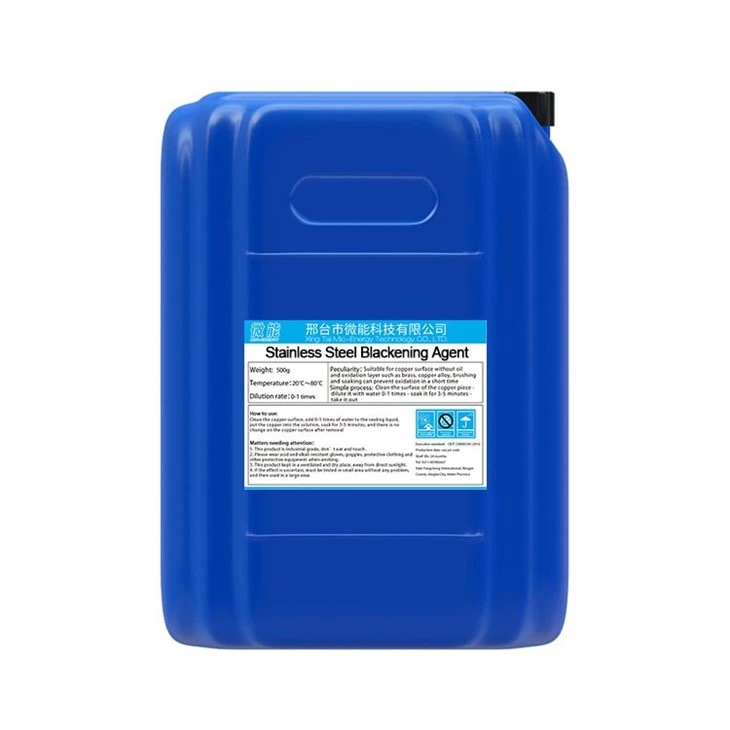
The main ingredients of blackening agents usually include weakly acidic compounds, sodium hydroxide, sodium nitrite, copper sulfate, etc. Specific to steel blackening agent, its ingredients may include copper sulfate pentahydrate, potassium pyrophosphate, nickel sulfate tetrahydrate, ammonium molybdate, alkylphenol polyoxyethylene ether (OP-10), composite additives and other reagents, as well as Appropriate amount of water to achieve blackening treatment at room temperature. In addition, there are blackening agents on the market that do not contain carcinogens such as nitrites. They use copper sulfate as the main salt, combined with oxidants, penetrating agents, and stabilizers to adjust the pH value between 1 and 2. They are easy to use and have a long validity period. , can be used repeatedly, and the residual liquid can be recycled.

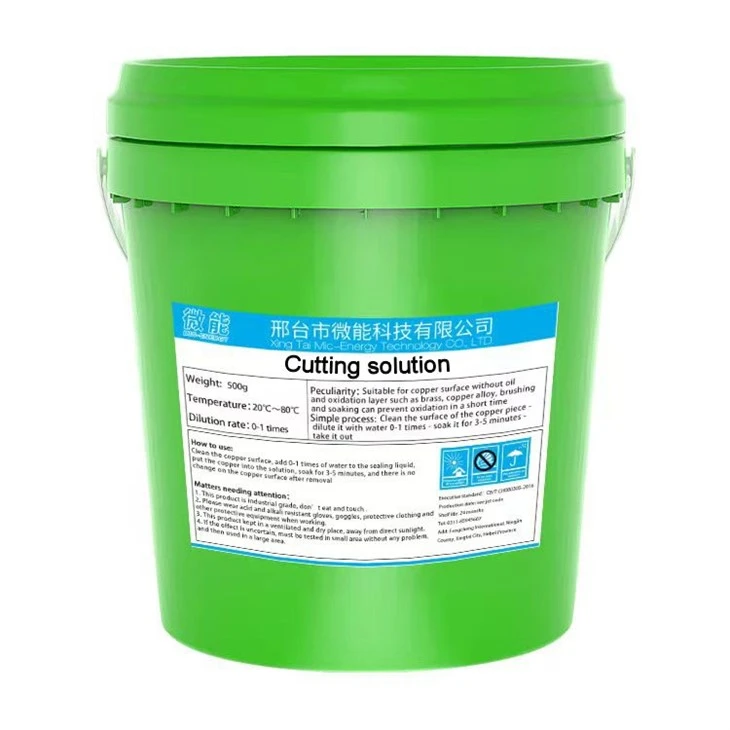
During the operation, you need to wear protective equipment such as plastic gloves and masks to prevent the agent from irritating the skin.
The production reaction of room temperature blackening agent involves strong acid, strong alkali, and ionic reaction. Extra care needs to be taken during operation to avoid problems in the chemical reaction process.
When processing metal products, the surface needs to be kept clean, otherwise the treatment effect will be affected.
The treated metal products cannot be dried directly using constant temperature drying equipment, otherwise surface peeling will occur.
The principle of blackening agent is to form a black oxide film on the metal surface through chemical treatment. This oxide film can provide anti-corrosion, increase appearance and improve certain mechanical properties. Specifically, blackening agents usually contain ingredients such as alkaline substances (such as sodium hydroxideNaOH) and oxidants (such as sodium nitriteNaNO2 or sodium nitrate NaNO3), which chemically react with the metal surface at a certain temperature. Black ferric oxide (Fe3O4) or other black oxides are produced.
Chemical reaction: During the blackening process, metal (especially iron-containing metals) reacts with the chemical components in the blackening agent to form a black oxide film. For example, ferrous ions (Fe) react with sodium hydroxide (NaOH) and oxidants to produce sodium ferrite (Na2FeO2) and sodium ferrite (Na2Fe2O4), and then ferric oxide (Fe3O4).
Temperature control: The temperature during the blackening process has a significant impact on the formation and quality of the oxide film. Too high a temperature may result in loose oxide film and poor color, while too low a temperature may result in insufficient oxidation, thin film and poor corrosion resistance.
Concentration adjustment: The concentration of sodium hydroxide in the blackening agent has a direct impact on the boiling point of the working fluid. By adjusting the concentration of NaOH, the working temperature of the blackening fluid can be controlled, which in turn affects the formation of the oxide film.
The blackening agent process includes preliminary cleaning, pickling, blackening and subsequent cleaning, saponification, oil immersion and other steps to ensure the uniformity and quality of the oxide film. The formed oxide film has a certain thickness (usually 0.5-1.5μm), which is firmly combined with the base metal surface and has little impact on the size and accuracy of the part. At the same time, it can also partially eliminate the residual stress of the workpiece.
How to use stainless steel blackening agent
Before using stainless steel blackening agent, you need to clean and dry the stainless steel surface to ensure that there are no impurities and grease on the surface, otherwise it will affect the subsequent painting effect. At the same time, special painting tools need to be prepared to facilitate the painting operation.
Apply the stainless steel blackening agent on the stainless steel surface, being careful not to miss or accumulate it. When painting, you can use horizontal, vertical, and diagonal alternating methods to facilitate adequate coating.
After the painting is completed, it needs to be left for a period of time to allow the stainless steel blackening agent to react on the surface until the desired black level is achieved. Generally, you need to wait 2 to 3 hours, and the specific time will vary depending on factors such as ambient temperature and humidity.
After the reaction of the blackening agent is completed, the surface needs to be thoroughly cleaned with clean water to remove residues on the stainless steel surface. Use a soft cloth to wipe the surface to avoid scratches or dirt. Make sure the surface is dry before painting is complete.
- Stainless steel blackening agent can only be used on stainless steel surfaces and cannot be used on other material surfaces;
- Before painting, the surface of the material needs to be cleaned and there should be no grease or impurities;
- When painting, the paint should be applied evenly without any leakage or accumulation;
- While waiting for the reaction, the indoor environment should be kept as stable as possible, and the temperature and humidity should not be too high or too low.
Strong adhesion. The blackened workpiece treated with the blackening agent does not have any blackening, and the film layer is fine. After repeated tests, it was found that even if the surface of the blackened workpiece was wiped with experimental filter paper more than 500 times, the metal matrix would not be visible, which shows its strong adhesion.
Strong corrosion resistance. The salt spray test of blackened workpieces can last up to 10 hours. In the sulfur-copper corrosion resistance test, my country's qualification standard is 30 seconds, but our company's blackening agent can last for 50 to 200 seconds, and its corrosion resistance is particularly good. powerful.
Less sediment and large processing capacity. Our company's blackening liquid has less sediment (about one-fifth of ordinary normal temperature blackening liquid), and there is no precipitation phenomenon. The use efficiency is particularly high. The blackening area per kilogram of blackening agent can reach 12-15 square meters. About (ordinary blackening liquid is generally between 3-7 square meters, if it can reach 9 square meters, it is already a good quality product). Therefore, from the perspective of cost-effectiveness, our company's products are better and save costs while ensuring quality.
Wide adaptability. Whether it is high carbon steel, low carbon steel products, or steel materials that are blackened at high temperatures and difficult to process, such as cast iron, 40 chromium, silicon steel, powder metallurgy, etc., after blackening agent treatment, you can get pure color and fine film layer. , No floating black film layer.
Wide time range, easy to operate. Ordinary blackening agent products have strict restrictions on the operating time. If the blackening time is long, it will easily become black and may even become loose and scrapped. This is because the blackened film is not fine enough and has poor adhesion. The blackened liquid can continue to react with the metal matrix through the formed film, causing the film layer to be damaged.
1.Steel
Steel can be perfectly coated with black oxide to create a strong, dark and durable surface that enhances its natural toughness.
2.Stainless steel
Black oxide stainless steel provides corrosion protection to parts, but it is not as durable or long-lasting as other forms of stainless steel surface treatments, such as electropolishing or physical vapor deposition (PVD) coatings.
3.Iron
Thanks to its strong properties, iron also adapts well to the black oxidation process, resulting in a stylish protective layer. This isn’t just for the heavyweights.
04
Zinc
A black oxide coating can be applied to zinc components to create an ebony z-finish. This finish is commonly used on hardware, auto parts, and decorative items.
05
Copper
Copper and its alloy partners, brass and bronze, can also join the black oxide party, achieving an elegant black luster through processes tailored specifically for them.
06
Nickel
Like its metallic counterparts, nickel can receive a black oxidation treatment that enhances its natural luster and resistance. This process further improves its durability and beauty.
07
Brass
Brass isn't left out of the black oxide party either. This gold alloy also benefits from a protective black oxide layer that enhances its visual appeal and provides it with additional protection against corrosion and wear.
Tips for using blackening agent at room temperature
When the parts that need to use room temperature blackening agent have thick oxide scale, thick oil stains, and high silicon steel, high manganese steel, high chromium steel and other parts that are difficult to activate with acid, the following process can be used:
Sand blasting → Water washing → Blackening at room temperature
The sandblasting machines here can choose sealed or water-based sandblasting machines to protect the environment and achieve clean production. At present, sandblasting machine manufacturers have launched various models of products, and their performance has taken into account the requirements for clean production.
When there are deep holes, blind holes and parts with complex shapes, and a room temperature blackening agent needs to be used, the following process can be used:
Ultrasonic degreasing → water washing → rust removal and activation → water washing → blackening at room temperature
Suitable for parts with little oil stain and no thick oxide scale. The following process can be used:
Wash with water → rinse with water → turn black at room temperature
Special note: The oil and rust removal process before using the normal temperature blackening agent is very important. The oil and rust removal must be completely removed. If the oil and rust removal is not ideal, please repeat the oil and rust removal process. Blackening is carried out. When the workpiece is blackened, do not rub it vigorously, because the blackened film is not yet stable, so handle it with care. Generally, the blackened layer will not be completely stable until 48 hours after blackening.
How to use blackening agent to treat surfaces coated with anti-rust paint?
Prepare tools: Blackening agent, detergent, brush, paper towel, gloves, etc.
Clean the surface: Clean the surface and remove surface attachments and grease.
Apply blackening agent: Apply blackening agent on the surface, you can use a brush or cleaning cloth. Be careful not to overlap and apply evenly.
Wipe the surface: After waiting for the blackening agent to act for 1-2 minutes, you can gently wipe the surface with a paper towel or cleaning cloth, do not use excessive force.
Repeated application: If you need a deeper blackening effect, you can apply the blackening agent repeatedly.
Maintain the surface: The blackened surface needs to be maintained to avoid scratches or collisions. Special coatings can be used for protection.
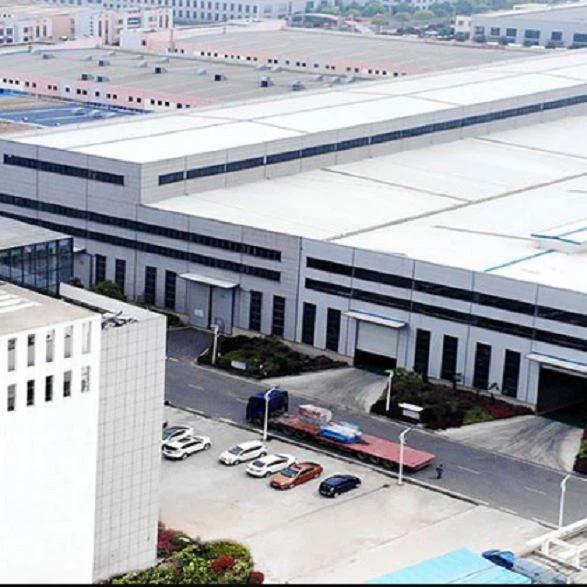
Our company was founded in 2014, with its headquarter located in XingTai. Our company is operated by a professional management team specialized in scientific research ,safe production,quality control and sales operation.We have highly automatic production lines and R&D facilities of international standard we emphasizes safety & environment protect management ,precise process control and quality supervision according to SHEQ standards (lSO9001/ISO14001/OHSAS18001).We also stick to sustainable development with social responsibilities so as to in prove the core competitiveness.Also, we have a trading company, Our sales team is consisted of up to 30 elites of high professionalism, providing our clients first-class service of high efficiency.
FAQ
As one of the leading blackening agent manufacturers and suppliers in China, we warmly welcome you to wholesale bulk high quality blackening agent in stock here from our factory. Contact us for free sample.
french blackening agent, construction blackening agent, electroplating alternative blackening agent