

What is Phosphating Agent
A phosphating agent is a chemical compound used to apply a conversion coating to metal surfaces. This process, known as phosphating or phosphate conversion coating, involves the chemical reaction between the phosphating agent and the metal surface, resulting in the formation of a thin layer of insoluble phosphate crystals.
Why Choose Us
Team
Our company has a professional management team engaged in scientific research, safety production, quality control, and sales operations
Production Line
We have highly automated production lines and international standard research and development facilities
Security Management
We emphasize safety and environmental management
Our Product
Degreaser;Metal cleaning agent; Antirust agent;Phosphating agent;Silane agent;Cutting solution;Copper blackening agent;Iron rusting agent.
-
![Normal Temperature Zinc Phosphating Agent]() Normal Temperature Zinc Phosphating AgentProduct name:Phosphating Agent . Label:Custom. Certification:MSDS. MOQ:100ml. Sample:free sample can be sent to check qualityread more
Normal Temperature Zinc Phosphating AgentProduct name:Phosphating Agent . Label:Custom. Certification:MSDS. MOQ:100ml. Sample:free sample can be sent to check qualityread more -
![Phosphating Agent with Zinc]() Phosphating Agent with ZincProduct name:Phosphating Agent . Label:Custom. Certification:MSDS. MOQ:100ml. Sample:free sample can be sent to check qualityread more
Phosphating Agent with ZincProduct name:Phosphating Agent . Label:Custom. Certification:MSDS. MOQ:100ml. Sample:free sample can be sent to check qualityread more -
![Normal Temperature Iron Phosphating Agent]() Normal Temperature Iron Phosphating AgentProduct name:Phosphating Agent . Label:Custom. Certification:MSDS. MOQ:100ml. Sample:free sample can be sent to check qualityread more
Normal Temperature Iron Phosphating AgentProduct name:Phosphating Agent . Label:Custom. Certification:MSDS. MOQ:100ml. Sample:free sample can be sent to check qualityread more -
![Iron Phosphating Agent]() Iron Phosphating AgentProduct name:Phosphating Agent . Label:Custom. Certification:MSDS. MOQ:100ml. Sample:free sample can be sent to check qualityread more
Iron Phosphating AgentProduct name:Phosphating Agent . Label:Custom. Certification:MSDS. MOQ:100ml. Sample:free sample can be sent to check qualityread more -
![Normal Temperature Iron Phosphating Liquid]() Normal Temperature Iron Phosphating LiquidProduct name:Phosphating Agent . Label:Custom. Certification:MSDS. MOQ:100ml. Sample:free sample can be sent to check qualityread more
Normal Temperature Iron Phosphating LiquidProduct name:Phosphating Agent . Label:Custom. Certification:MSDS. MOQ:100ml. Sample:free sample can be sent to check qualityread more -
![60℃-80℃ Zinc Phosphating Agent]() 60℃-80℃ Zinc Phosphating AgentProduct name:Phosphating Agent . Label:Custom. Certification:MSDS. MOQ:100ml. Sample:free sample can be sent to check qualityread more
60℃-80℃ Zinc Phosphating AgentProduct name:Phosphating Agent . Label:Custom. Certification:MSDS. MOQ:100ml. Sample:free sample can be sent to check qualityread more -
![60℃-80℃ Phosphating Agent]() 60℃-80℃ Phosphating AgentProduct name:Phosphating Agent . Label:Custom. Certification:MSDS. MOQ:100ml. Sample:free sample can be sent to check qualityread more
60℃-80℃ Phosphating AgentProduct name:Phosphating Agent . Label:Custom. Certification:MSDS. MOQ:100ml. Sample:free sample can be sent to check qualityread more -
![60℃-80℃ Phosphating Liquid]() 60℃-80℃ Phosphating LiquidProduct name:Phosphating Agent . Label:Custom. Certification:MSDS. MOQ:100ml. Sample:free sample can be sent to check qualityread more
60℃-80℃ Phosphating LiquidProduct name:Phosphating Agent . Label:Custom. Certification:MSDS. MOQ:100ml. Sample:free sample can be sent to check qualityread more -
![Medium Temperature Zinc Phosphating Solution]() Medium Temperature Zinc Phosphating SolutionProduct name:Phosphating Agent . Label:Custom. Certification:MSDS. MOQ:100ml. Sample:free sample can be sent to check qualityread more
Medium Temperature Zinc Phosphating SolutionProduct name:Phosphating Agent . Label:Custom. Certification:MSDS. MOQ:100ml. Sample:free sample can be sent to check qualityread more -
![Medium Temperature Phosphating Liquid]() Medium Temperature Phosphating LiquidProduct name:Phosphating Agent . Label:Custom. Certification:MSDS. MOQ:100ml. Sample:free sample can be sent to check qualityread more
Medium Temperature Phosphating LiquidProduct name:Phosphating Agent . Label:Custom. Certification:MSDS. MOQ:100ml. Sample:free sample can be sent to check qualityread more -
![High Temperature Manganese Phosphating Agent]() High Temperature Manganese Phosphating AgentProduct name:Phosphating Agent . Label:Custom. Certification:MSDS. MOQ:100ml. Sample:free sample can be sent to check qualityread more
High Temperature Manganese Phosphating AgentProduct name:Phosphating Agent . Label:Custom. Certification:MSDS. MOQ:100ml. Sample:free sample can be sent to check qualityread more -
![High Temperature Phosphating Agent]() High Temperature Phosphating AgentProduct name:Phosphating Agent . Label:Custom. Certification:MSDS. MOQ:100ml. Sample:free sample can be sent to check qualityread more
High Temperature Phosphating AgentProduct name:Phosphating Agent . Label:Custom. Certification:MSDS. MOQ:100ml. Sample:free sample can be sent to check qualityread more


The main function of phosphating agent is to form a layer of phosphide on the metal surface. This phosphide can improve the surface hardness and corrosion resistance of the material. Through the treatment of phosphating agent, the appearance quality and service life of the product can also be enhanced, which has the following functions:
- Improve the hardness and corrosion resistance of metal surfaces to make them more durable.
- Improve the adhesion of the metal surface, making it more stable during subsequent processing and coating processes.
- It can prevent oxidation and corrosion, especially for rust-prone metals such as iron and steel.
- Before electroplating or painting, phosphating treatment can greatly improve the durability and adhesion of the product, thereby enhancing the adhesion and gloss of the coating.
Basic Chemistry Behind Phosphating Agent


Different types of Phosphating Agent processes
Iron phosphating:The result is a light or medium phosphate coat. We use iron phosphate to offer moderate corrosion protection. It also serves as a primer for additional coatings.
Zinc Phosphating: The zinc phosphating process provides a thicker coating than iron phosphating. This results in a better adhesion of paint and enhanced corrosion resistance. The automotive and military industries use this process. They require corrosion protection for their products.
Manganese-phosphating: Manganese-phosphating produces a heavy and durable type of phosphate coat, which has excellent wear resistance. Manufacturers often apply this coating to parts with high wear, such as bearings and gears.
The Step-by-Step Phosphating Procedure
Pretreatment: Cleanse the metal surface thoroughly before applying the phosphate coating. It is necessary to remove oils, grease, and other contaminants to allow the phosphate to adhere correctly to the metal.
Application of the Phosphate Coating:After cleaning the metal, we immerse it in the phosphating solutions. It is essential to carefully control the solution composition, temperature, and immersion time to achieve the desired coating thickness and crystal size.
Post Treatment: After achieving the desired phosphate coating, metal parts are rinsed with water to remove the residual phosphating solutions. Then, the metal parts are dried to prepare them for subsequent finishing processes such as powder coating or painting.
Sealing of the Phosphate layer: Depending on the intended application, the sealant can be either a chromate, a passivation, or a lubricant.
Benefits Of Phosphating Agent
Maximum Hardness–Manganese phosphate is the hardest type of phosphate coating available, providing unbeatable durability.
Increased Corrosion Resistance–Because manganese phosphate is insoluble, it can’t be broken down by water or other liquids.
Improved Lubrication–The crystalline finish absorbs oil and other lubricants, making it ideal for metal parts designed to come in contact with other metal parts, like engines and transmissions. The wear of phosphated parts in friction is dramatically reduced.
Excellent Adhesion–Manganese phosphate provides a crystalline structure that is an effective base for secondary coatings and paint.
How To Choose The Different Types Of Phosphating Agent Process
Low-temperature phosphating, at room temperature, long processing time, in addition to medium-temperature phosphating has been added to the composition, in order to accelerate the speed of phosphating, but also add fluoride, the advantage of low-temperature work, without heating. The solution is stable mud slag less, but the film corrosion resistance is poor, bonding, heat resistance is also poor, the processing time is long. This phosphate in the production of not much application, spray phosphating when applied.
Medium-temperature phosphating 50 to 70 ℃, with Ma Zhifu salt, zinc dihydrogen phosphate and oxidizing agents (such as zinc nitrate, manganese nitrate, nickel nitrate) composed of phosphating solution, the film in addition to iron, manganese and other ferrous metals, but also interspersed with zinc, nickel. Film corrosion resistance, bonding and high-temperature phosphate film equivalent, stable solution, film speed, slag less than high-temperature phosphating. This process is applicable to a large area, in addition to the lower requirements for the hardness of the functional phosphate film, phosphating before painting the most applications. The disadvantage is that the composition of high-temperature phosphate is more complex, difficult to adjust.
High-temperature phosphate treatment temperature of 90 to 98 ℃, with Ma Zhifu salt and oxidizer (such as manganese nitrate) phosphate solution, phosphate film for iron, manganese, does not contain zinc. Film corrosion resistance, bonding, heat resistance, hardness are relatively high. The disadvantage is the long heating time, energy consumption, the amount of slag. Composition changes quickly, the solution is not stable. Phosphate crystallization coarse, thick film. This process is suitable for functional phosphate film, such as gears, automotive piston rings with friction reduction layer, lubrication phosphate layer between processing processes.
Any production and processing work must have a certain purpose to be achieved. For example, the reason why many manufacturers perform phosphating processing on metal workpieces is to improve the practicality and quality of the workpieces with the following application significance of this processing technology, the process in which the workpiece (steel or aluminum or zinc) is immersed in a phosphating solution (a solution based on some acid phosphates) and deposited on the metal surface to form a layer of water-insoluble crystalline phosphate conversion film, which is called Phosphate. Phosphating is a process in which chemical and electrochemical reactions form a phosphate chemical conversion film. The formed phosphate conversion film is called a phosphate film. The purpose of phosphating treatment is to provide protection to the surface of the base metal and prevent the metal from being corroded to a certain extent; it is used as a primer before painting to improve the adhesion and anti-corrosion ability of the paint film layer; it can reduce friction in the metal cold working process Use with lubrication. Metal surface phosphating is widely used in anti-corrosion technology and metal cold deformation processing industry.
Enhance the surface properties of metal workpieces. By phosphating the metal workpiece, the wear resistance, lubricity and other properties of its surface can be effectively enhanced. With this, the workpiece can better maintain stability in applications with excellent surface properties. Surface effect.
Improve the surface processing performance of metal workpieces. Through phosphating processing, the surface coating, heat treatment effect, plating properties and other processing properties of the metal workpiece can be greatly improved, thereby optimizing the subsequent processing of the workpiece and optimizing the subsequent surface processing of the workpiece. Effect.
Optimize the performance of metal workpieces. Phosphating processing can improve the performance of metal props and enhance the surface functionality of metal workpieces. It will inevitably optimize the performance of metal workpieces and make the workpieces present better in applications. Surface effect.
Application of phosphating agent
Phosphating agents are widely used in metallurgy, chemical industry, machinery, electronics, aviation, automobiles, electrical appliances and other industries, and the market demand is very large. Here are some common application scenarios:
Galvanized iron sheet
Treatment with phosphating agent can form a layer of fine, regular phosphide on the surface of the iron sheet, thereby improving its corrosion resistance and surface gloss, forming galvanized iron sheet.
Circuit boards
Phosphating agents are widely used in the surface treatment of circuit boards, which can prevent corrosion and rust on the surface of circuit boards and make them more stable during subsequent processing.
Auto parts
Phosphating agent can form a protective layer on the surface of auto parts to prevent corrosion and rust of auto parts.
Metal forgings
By surface treatment of metals with phosphating agents, the surface hardness and corrosion resistance of forgings can be improved, thereby enhancing their service life.
Pre-degreasing → degreasing → rust removal → water washing → (surface conditioning) → phosphating → water washing → post-phosphating treatment (such as electrophoresis or powder coating);
Main aluminum parts and zinc parts;
The phosphating blackening liquid is used at room temperature, and the phosphating protection is formed in one step. It is also called steel colorant. It is diluted at 1:4-5 before use, soaked at room temperature for about 30 minutes, and finally sealed for protection;
Treatment process: Oil and rust removal - immersion in anti-rust water - phosphating and blackening - drying - closed for protection.

Generation Of Phosphating Agent Must Solve Challenges
This thick, moist substance has been a necessary evil of the phosphating process, costing significant resources and downtime for the cleaning of equipment and tanks. Additionally, the cost to dispose of this sludge can be prohibitive, particularly in the quantities it is produced.
The current phosphating process requires multiple rinse steps that requires high volumes of water, and also produces a significant amount of wastewater that needs internal pre-treatment before it can be discharged to sewer systems.
The high temperatures generated by the phosphating process create incredible inefficiencies – requiring costly energy to heat process tanks up to 200°F. The mists and vapors generated by heated tanks are hazardous for employees, requiring removal from the environment using ventilation.
Zinc phosphating is a “production-line” process, requiring a large footprint to complete its cleaning, rinsing, activating, phosphating, a second round of rinsing, and drying steps – plus the addition of ancillary equipment to treat the waste; ductwork for ventilation; hoists to move baskets; and so on.
Zinc phosphating typically has delivered a finished product that has a gray matte finish – requiring interim steps, depending upon the application. For fasteners, this often means dipping the completed part in a colored wax or other topcoats to facilitate the distinction of one part from another; for larger parts, it requires heavy coats of primer or finish preparation prior to painting.
Method Of Phosphating Agent
High temperature phosphating
The phosphating film formed by high-temperature phosphating of manganese series has the best effect, has good corrosion resistance and wear resistance, and is the most widely used in high-temperature phosphating. However, the treatment effect is not good for some high-alloy steels, and it is even difficult to phosphate, such as 25Cr2Ni4WA alloy steel.
Medium temperature phosphating
The phosphating film layer of zinc calcium medium temperature phosphating has fine crystallization and good corrosion resistance, which has unique advantages over other series of phosphating films.
Low temperature phosphating
The film formation rate of calcium-based phosphating liquid is slow and usually requires medium and high temperature treatment. Zinc-calcium low-temperature black phosphating adds Mn2+, Ni2+, oxidants, surfactants, blackening agents, etc. to achieve excellent formation performance at low temperatures. Black phosphating film with dense film layer and strong corrosion resistance.
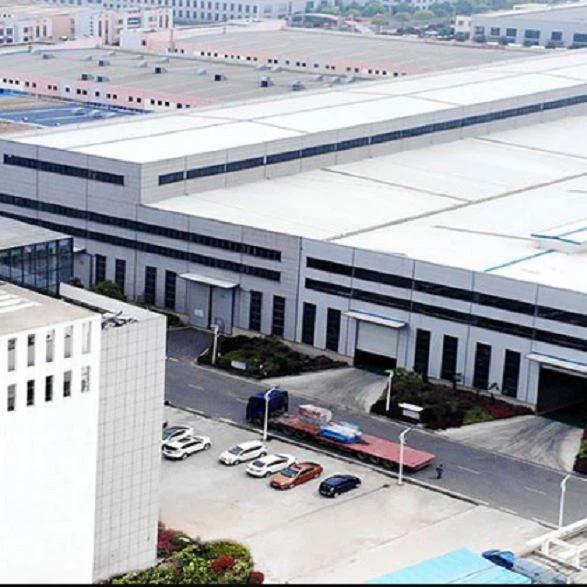
Our company was founded in 2014, with its headquarter located in XingTai. Our company is operated by a professional management team specialized in scientific research ,safe production,quality control and sales operation.We have highly automatic production lines and R&D facilities of international standard we emphasizes safety & environment protect management ,precise process control and quality supervision according to SHEQ standards (lSO9001/ISO14001/OHSAS18001).We also stick to sustainable development with social responsibilities so as to in prove the core competitiveness.Also, we have a trading company, Our sales team is consisted of up to 30 elites of high professionalism, providing our clients first-class service of high efficiency.
FAQ
As one of the leading phosphating agent manufacturers and suppliers in China, we warmly welcome you to wholesale bulk high quality phosphating agent in stock here from our factory. Contact us for free sample.