

What is Iron Rusting Agent
An iron rusting agent is a chemical substance that accelerates the oxidation process of iron, leading to the formation of iron oxide, commonly known as rust. This process, known as corrosion, occurs naturally but can be catalyzed by various agents. Common rusting agents include acids, salts, and moisture.
Why Choose Us
Team
Our company has a professional management team engaged in scientific research, safety production, quality control, and sales operations
Production Line
We have highly automated production lines and international standard research and development facilities
Security Management
We emphasize safety and environmental management
Our Product
Degreaser;Metal cleaning agent; Antirust agent;Phosphating agent;Silane agent;Cutting solution;Copper blackening agent;Iron rusting agent.
-
![Professional Iron Rusting Agent]() Professional Iron Rusting AgentProduct name:Iron rusting agent . Usage:help rust growth. Label:Custom. Certification:MSDS. MOQ:100ml. Sample:free sample can be sent to check qualityread more
Professional Iron Rusting AgentProduct name:Iron rusting agent . Usage:help rust growth. Label:Custom. Certification:MSDS. MOQ:100ml. Sample:free sample can be sent to check qualityread more -
![Iron Rusting Agent Manufacturers]() Iron Rusting Agent ManufacturersProduct name:Iron rusting agent . Usage:help rust growth. Label:Custom. Certification:MSDS. MOQ:100ml. Sample:free sample can be sent to check qualityread more
Iron Rusting Agent ManufacturersProduct name:Iron rusting agent . Usage:help rust growth. Label:Custom. Certification:MSDS. MOQ:100ml. Sample:free sample can be sent to check qualityread more -
![Best Iron Rusting Agent]() Best Iron Rusting AgentProduct name:Iron rusting agent . Usage:help rust growth. Label:Custom. Certification:MSDS. MOQ:100ml. Sample:free sample can be sent to check qualityread more
Best Iron Rusting AgentProduct name:Iron rusting agent . Usage:help rust growth. Label:Custom. Certification:MSDS. MOQ:100ml. Sample:free sample can be sent to check qualityread more -
![Professional Iron Rusting Agent]() Professional Iron Rusting AgentProduct name:Iron rusting agent . Usage:help rust growth. Label:Custom. Certification:MSDS. MOQ:100ml. Sample:free sample can be sent to check qualityread more
Professional Iron Rusting AgentProduct name:Iron rusting agent . Usage:help rust growth. Label:Custom. Certification:MSDS. MOQ:100ml. Sample:free sample can be sent to check qualityread more -
![Professional Iron Rusting Liquid]() Professional Iron Rusting LiquidProduct name:Iron rusting agent . Usage:help rust growth. Label:Custom. Certification:MSDS. MOQ:100ml. Sample:free sample can be sent to check qualityread more
Professional Iron Rusting LiquidProduct name:Iron rusting agent . Usage:help rust growth. Label:Custom. Certification:MSDS. MOQ:100ml. Sample:free sample can be sent to check qualityread more -
![Heavy Duty Iron Rusting Liquid]() Heavy Duty Iron Rusting LiquidProduct name:Iron rusting agent . Usage:help rust growth. Label:Custom. Certification:MSDS. MOQ:100ml. Sample:free sample can be sent to check qualityread more
Heavy Duty Iron Rusting LiquidProduct name:Iron rusting agent . Usage:help rust growth. Label:Custom. Certification:MSDS. MOQ:100ml. Sample:free sample can be sent to check qualityread more


How to use rust Iron Rusting Agent


1. Use a sprayer
The sprayer is a common anti-rust agent operating tool. It can spray the anti-rust agent evenly on the metal surface, with wide coverage and good effect. When using a sprayer, you need to pay attention to the following points:
● Choose the appropriate nozzle
Different nozzles have different spraying effects. Generally speaking, wide nozzles are suitable for large area spraying, and thin nozzles are suitable for local spraying. Choosing the appropriate nozzle can improve construction efficiency and reduce waste.
● Pay attention to protecting the respiratory system
The particles ejected from the nebulizer are very fine and can be easily inhaled into the lungs and cause harm to the body. Therefore, you need to wear a mask or respirator when using the nebulizer.
● Usage matters
When using the sprayer, spray it evenly on the surface of the object to be coated and release the trigger to prevent it from exceeding the area.
● Keep dry
It needs to be kept dry after spraying with anti-rust agent to achieve the best anti-rust effect. Care needs to be taken not to allow the attached object to scratch the wound that will not heal.
2. Use a brush or brush head
A brush or brush head is a common application tool that is simple and easy to use. However, you need to pay attention to the following points when using a brush or brush head:
● Choose the appropriate size
Different size brushes or brush heads can handle different details. Choose the right brush and brush head to apply more evenly and meticulously.
● Do not damage the surface of the object
When using a brush or brush head, be careful not to use too much force, as this may damage the surface of the item. Needs to be applied lightly for best coating.
● Apply several times to important parts.
Some corners of some items will be left untouched, and if not handled properly, rust will appear. You can apply it several times to important areas to ensure flawless results.
The first step is to clean the metal surface to be treated before use to avoid the anti-rust treatment of the metal due to oil pollution on the metal surface. It is recommended to use cleaning products to clean the metal surface, and metal cleaning agent km0109 is used for cleaning.
In the second step, the surface of the metal workpiece needs to be dried after the first step.
The third step is to use a certain proportion of anti-rust additives according to the anti-rust time requirements on the surface of the metal workpiece. If you want to make the anti-rust time longer, you cannot use underground water, just use tap water.
The fourth step is to soak the workpiece in the prepared anti-rust additive. After soaking for a short time, take it out and place it indoors to dry. In case of rainy weather, the surface of the metal workpiece needs to be dried to ensure a good anti-rust effect.
In the fifth step, after performing the fourth step, a certain outer packaging can be added to the surface of the workpiece to make the workpiece rust-proof for a longer period and to achieve higher precision on the metal surface. Follow the above operation methods to carry out anti-rust treatment on the metal surface to meet the anti-rust time requirements for metal workpieces. It has become a metal processing aid that must be used by metal manufacturers for anti-rust treatment.
Composition analysis of Iron Rusting Agent
● Main components of rust inhibitors
Rust inhibitor is a chemical that can prevent metal from being oxidized and corroded. Its main ingredients include the following:
Corrosion inhibitors: Mainly include vanadium compounds, chromium salts, molybdenum salts, boron salts, etc., which can form a stable layer of chemical substances with the metal surface to resist corrosion.
Surfactants: Mainly include fatty acid compounds, ethoxysilane, etc., which can enhance the adhesion and permeability of rust inhibitors on the coating surface, thereby improving the anti-rust effect.
Acid-base regulators: Mainly include sodium hydroxide, sodium carbonate, etc., which can adjust the pH value of the coating to prevent metal from being corroded by acidic or alkaline chemicals.
Solvent: Mainly includes organic solvents and water, which can adjust the viscosity and consistency of the anti-rust agent to achieve coating and penetration.
● The principle of action of anti-rust agents
Rust inhibitors can form a strong and tight film layer on the metal surface to prevent the metal from contact with air or moisture, thereby slowing down or inhibiting the oxidation and corrosion of the metal. In the anti-rust process, anti-rust agents with different components play their respective roles:
Corrosion inhibitors: Inhibit corrosion by reacting with oxides or other compounds on the metal surface to form a stable layer of chemicals.
Surfactant: Form a uniform covering layer on the coating surface, enhance the adhesion and penetration of the coating on the metal surface, and prevent moisture and other corrosive substances from corroding the metal surface.
Acid-base regulator: By adjusting the pH value of the coating, the metal surface is in a neutral state and will not be corroded by acidic or alkaline corrosives.
Solvent: Adjust the viscosity and moisture percentage of the rust inhibitor to achieve coating and penetration.
● Application scope of anti-rust agents
Anti-rust agents are widely used in automobiles, mechanical processing, ships, construction industries and other fields. They can prevent metal parts from being corroded by factors such as humid environment, salt spray, chemical corrosion and other factors when stored and used for a long time, thereby extending the service life of metals.
When selecting and using anti-rust agents, it is necessary to select the appropriate anti-rust agent according to the specific application and type of metal, and adhere to the correct usage and storage requirements to achieve the best anti-rust effect.
How to use Iron Rusting Agent
Cleaning: First, clean the metal surface where anti-rust agent is to be used to ensure that the surface is clean and free of adherents, grease and other dirt.
Coating: Apply the anti-rust agent on the metal surface to cover the entire surface, so that the anti-rust agent can fully penetrate into the tiny holes on the metal surface.
Wait: Wait for the anti-rust agent to take effect. Depending on the requirements of different anti-rust agents, you need to wait for a few hours or about a day.
Repeat coating: If more thorough protection is required, the rust inhibitor can be re-coated once to ensure that the metal surface is fully covered.
Clean the remaining: After applying the anti-rust agent, wipe off the excess anti-rust agent to avoid pollution and damage to the environment.
Storage: Anti-rust agents are generally stored in sealed containers and placed in a place away from direct sunlight and moisture to ensure that their quality is not affected.
Benefits Of Iron Rusting Agent
Performance: Be sure that you are getting a rust remover that dissolves the rust away rather than a rust converter which just changes the rust to a more stable layer of iron oxide. These layers may inhibit further corrosion and may be suitable for some coatings and linings, but the buildup may interfere with moving mechanisms, be incompatible with some coatings and linings, and leave a visually unpleasant roughness.
Ease of use: In choosing the right rust remover, some products work best as a soak and some are designed with a jelly-like consistency to be applied to surfaces that are not capable of immersion. The soaks are most efficient and fastest when the entire surface to be cleaned can be immersed in the solution. Sometimes doing large parts takes some creativity to get the whole part immersed at one time. When using gels or soaks on surfaces that can't be immersed, the cleaning process may be much slower because the amount of rust dissolved is proportional to the amount of active ingredient in contact with the surface.
Safety: The product label and safety data sheet (SDS) should give clear directions for proper use, including personal protection equipment. Research the product to guarantee that it is compatible with material that is being cleaned. Know whether it will damage the base metal and paint or mar the finish of the component that is being cleaned. In rust removers, there is a certain performance tradeoff between acid-based products that have more inherent safety risks than chelating agents that are safer for the user. A chelator is a molecule that attaches to metal ions.
Speed/efficiency: Before choosing a rust remover, it is beneficial to identify the process by which the rust is removed. Acid-based products' speed of performance will be a function of the type of acid in the rust remover. Chelating agents tend to be a little slower than strong acids and may be faster than weaker acids like vinegar.
Damage to base metal: Those who want to get rid of rust in a hurry may use strong acids like muriatic acid (dilute Hydrochloric Acid) or sulfuric acid, but these will dissolve the base metal as readily as the rust, and great care is required lest the part you are trying to clean is damaged beyond use. Chelating agents will not harm the base metal but may not be as fast or thorough enough. A good middle ground is a phosphoric acid-based product that properly designed will provide quick dissolving of the rust with no risk of base metal damage.
Reduces repair expenses: Exposure to elements and electrochemical or chemical reactions leads to the worsening of the whole exposed metal surface. Parts affected by this kind of corrosion normally require replacement.
Prevents operational losses: Corroded equipment takes time to replace or fix. When corrosion problems arise, operations are often stopped, leading to more losses due to the delay in production.
Saves lives: Damage to equipment can lead to accidents in production. Rust can cause malfunctions leading to injuries or loss of life.
Increases the life span of industrial equipment: All things depreciate with age and use. Corroded and worn-out equipment results in performance problems and might cause environmental hazards.
Corrosion inhibitors can prolong the life of equipment by protecting it from severe environmental conditions and by assisting in postponing unavoidable decay due to oxidization, abrasion or any other form of breakdown.
Avoid legal liabilities: Rust protection not only enhances the life span of industrial equipment but also extends its efficiency. Moreover, it helps firms avoid legal liabilities that arise from safety, health and environmental issues linked to corrosion.
How to Properly Use Iron Rusting Agent
Clean the Surface
Before applying a rust preventative, it is essential to ensure that the metal surface is clean and free of any dirt, grease, or rust. If the surface is dirty, the rust preventative may not adhere properly, reducing its effectiveness.
To clean the surface, use a degreaser or a cleaning solvent and a cloth or brush. It is essential to wear gloves and protective gear while handling these chemicals. If the surface has rust, it is advisable to remove it using sandpaper or a wire brush.
Apply the Rust Preventative
There are different methods of applying rust preventatives, such as spray application, dip application, or brush or wipe application. The method chosen will depend on the size and shape of the machine tool, as well as the type of rust preventative being used.
Spray application is ideal for large machine tools or for hard-to-reach areas. Dip application is useful for small machine tool components, while brush or wipe application is ideal for precise application or when spray or dip application is not practical.
It is essential to follow the manufacturer’s instructions while applying the rust preventative to ensure that it is applied correctly and uniformly. It is also essential to ensure that the machine tool is adequately covered with the rust preventative, leaving no bare spots.
Store the Machine Tool
Once the rust preventative has been applied, it is essential to store the machine tool properly to prevent rust and corrosion. If the machine tool is stored outdoors, it should be covered or placed in a protective enclosure. If the machine tool is stored indoors, it should be placed in a dry and well-ventilated area.
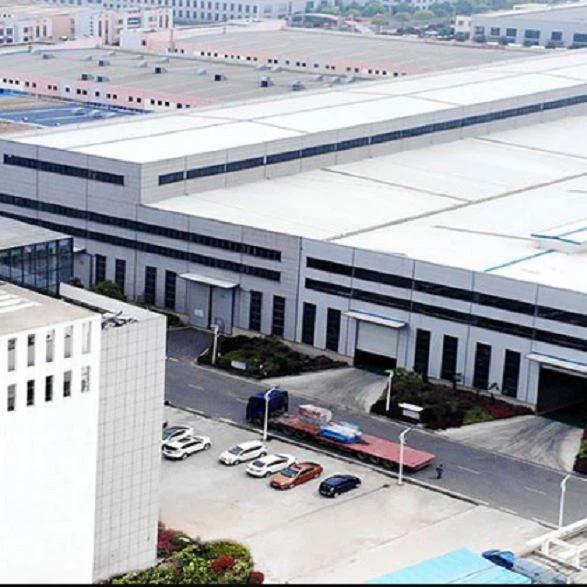
Our company was founded in 2014, with its headquarter located in XingTai. Our company is operated by a professional management team specialized in scientific research ,safe production,quality control and sales operation.We have highly automatic production lines and R&D facilities of international standard we emphasizes safety & environment protect management ,precise process control and quality supervision according to SHEQ standards (lSO9001/ISO14001/OHSAS18001).We also stick to sustainable development with social responsibilities so as to in prove the core competitiveness.Also, we have a trading company, Our sales team is consisted of up to 30 elites of high professionalism, providing our clients first-class service of high efficiency.
FAQ
As one of the leading iron rusting agent manufacturers and suppliers in China, we warmly welcome you to wholesale bulk high quality iron rusting agent in stock here from our factory. Contact us for free sample.
anti rust agent for iron, treatment to prevent iron rust, removal agent for iron rust