Why Choose Us
Team
Our company has a professional management team engaged in scientific research, safety production, quality control, and sales operations
Production Line
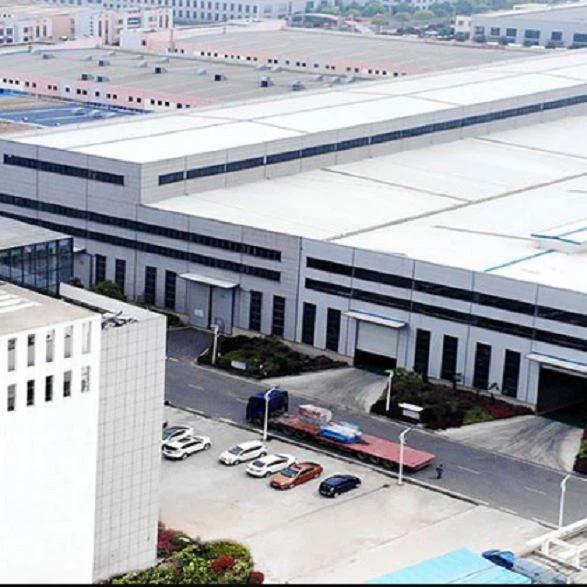
We have highly automated production lines and international standard research and development facilities
Security Management
We emphasize safety and environmental management
Our Product
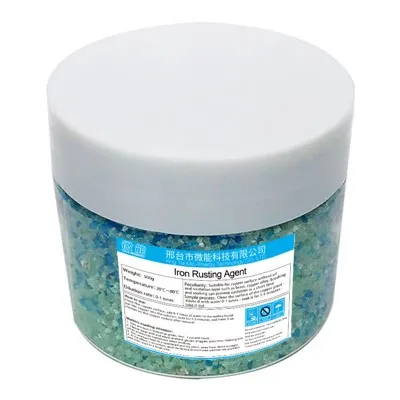
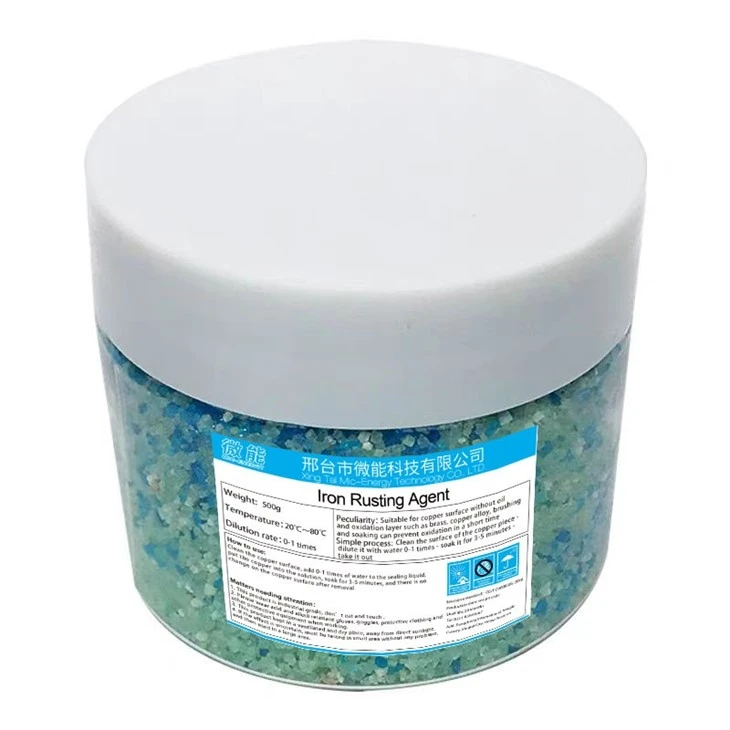
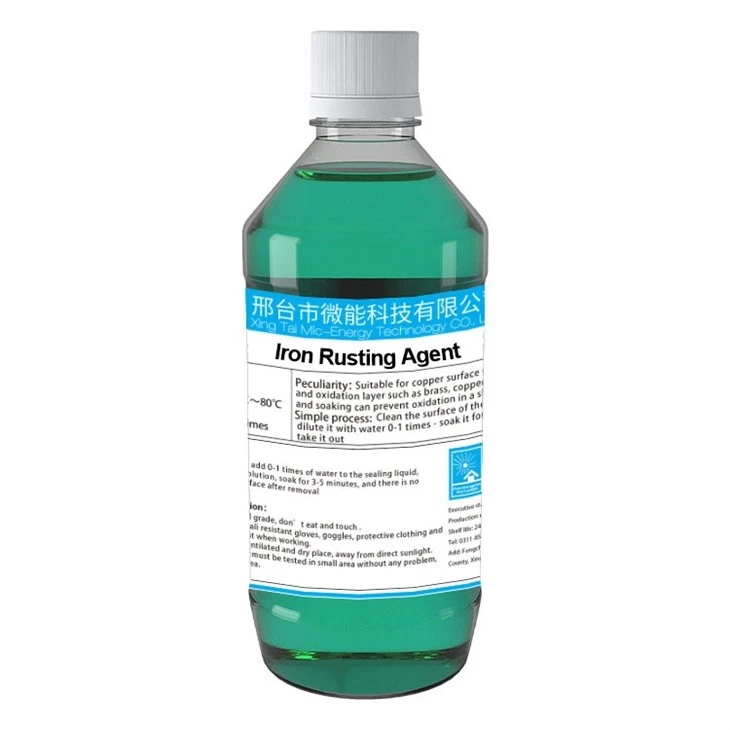
Degreaser;Metal cleaning agent; Antirust agent;Phosphating agent;Silane agent;Cutting solution;Copper blackening agent;Iron rusting agent.

Iron Rusting Agent Manufacturers
Our iron rusting agent manufacturers creates diversified rusted plates with high-quality products and high-end technology. Steel rust agents make weather-resistant steel plates, ordinary carbon steel, cold-rolled plates, hot-rolled plates, pattern steel, ordinary iron plates, etc. quickly rust, and cooperate with rust-fixing agents.

This Best iron rusting agent can promote the rapid rusting and solidification of various metals. The rust produced is very distinctive, showing the imprint of time and becoming a visual focus.

Professional Iron Rusting Liquid
Our company independently developed the rust-causing potion. After years of improvement, it is acid-free and more environmentally friendly. It can effectively reduce the phenomenon of rust and skin peeling, and has the advantage of not damaging the steel plate matrix!

Heavy Duty Iron Rusting Liquid
This heavy duty iron rusting liquid is applied by spraying and roller coating, and is used for steel plates, weather-resistant steel plates, iron plates and other substrates. Spray in mist form. After the rust water dries, spray clean water or spray rust water again for 1-2 times to continue rusting. The more the dosage, the deeper the rust will be. If it splashes into your eyes, rinse immediately with water. Avoid working at high temperatures.

Why does weathering steel need surface corrosion treatment? In the early stages of use, the corrosion of weathering steel is very uneven, and it takes about half a year to have a completely rusted appearance. The rapid rusting potion for weathering steel can quickly make rust oil even on the steel surface within 3 hours, and can increase the corrosion resistance of the embroidery layer.
What is Professional Iron Rusting Agent
Rust preventatives are a type of lubricant that contains additives to help protect metal surfaces from rust and corrosion. They are designed to create a barrier between the metal and the elements, preventing moisture and oxygen from coming into contact with the metal and causing rust.
Uses of Professional Iron Rusting Agent
Machine Tools
Machine tools, such as lathes, milling machines, and drill presses, are often subjected to harsh operating conditions that can cause rust and corrosion. Rust preventatives can be applied to these machines to protect their metal components from rust and prolong their lifespan.
Automotive Components
Rust preventatives can also be used on automotive components such as engine parts, brake systems, and suspension components. These parts are often exposed to moisture and road salt, which can cause rust and corrosion over time. By applying rust preventatives, you can protect these components and extend their lifespan.
Storage of Metal Parts
Metal parts that are not in use, such as spare parts or equipment that is being stored, can be susceptible to rust and corrosion. Rust preventatives can be applied to these parts to protect them while they are in storage, ensuring that they are ready to use when needed.
Applications of Professional Iron Rusting Agent
Rust preventatives can be applied in a variety of ways, depending on the specific application. Here are some common methods of application:
Spray Application
Rust preventatives can be applied using a spray bottle or sprayer. This method is useful for large components or areas that are difficult to reach with other methods.

Dip Application
In dip application, the metal part is submerged in a bath of rust preventative. This method is useful for small parts or components that require a more thorough coating.
Brush or Wipe Application
For small or hard-to-reach areas, rust preventatives can be applied using a brush or cloth. This method is useful for precise application or when a spray or dip application is not practical.
How to Choose the Professional Iron Rusting Agent Preventative
Type of Rust Preventative
There are different types of rust preventatives, such as oil-based, solvent-based, water-based, and dry film. Each type has its advantages and disadvantages depending on the application. For example, oil-based rust preventatives are ideal for heavy-duty applications as they offer better protection and can withstand extreme conditions, while water-based rust preventatives are more environmentally friendly and easier to remove.
Corrosion Protection
The rust preventative you select should provide excellent corrosion protection. It should form a barrier that prevents moisture and other corrosive agents from coming into contact with the metal surface. It should also be able to resist wear and tear to ensure long-lasting protection.
Surface Compatibility
The rust preventative should be compatible with the metal surface it is applied to. It should not react with the metal, causing it to corrode or discolor. If the rust preventative is not compatible with the metal, it may not provide adequate protection.
Temperature Range
The rust preventative should be able to withstand the temperatures that the machine tool is exposed to. If the machine tool operates at high temperatures, the rust preventative should be able to resist heat without breaking down or evaporating. Similarly, if the machine tool operates at low temperatures, the rust preventative should not become too thick or hard.
Application Method
The rust preventative should be easy to apply using the available application methods, such as spray, brush, or wipe. The application method should be practical, efficient, and cost-effective.
Drying Time
The rust preventative should have a reasonable drying time to allow for efficient application and to avoid causing any delays in production.
Environmental Considerations
Consider the environmental impact of the rust preventative you select. Choose a product that is eco-friendly, does not contain harmful chemicals, and can be easily disposed of.
Choosing the Right Rust Preventative
By comparing these characteristics, you can select a rust preventative that is most suitable for your machining application needs. It is always best to consult with a reputable supplier or manufacturer for recommendations to ensure that you select the best product for your needs.
Carboxylic acid
Carboxylic acid is the main component of rust inhibitors. This acid plays a key role in rust inhibitors. It neutralizes the alkali in the cleaning agent to achieve rust removal and rust prevention effects. Different rust inhibitor manufacturers may choose different carboxylic acid types, so the specific carboxylic acid formulations vary from company to company.
Sulfonic acids
Sulfonic acids are a major component of rust inhibitors. Sulfonic acid compounds play a key role in rust inhibitors, neutralizing the alkali in the cleaning agent to achieve rust removal and rust prevention effects. Different rust inhibitor manufacturers may choose different sulfonic acid compounds as their main ingredients to adapt to different metals and specific usage environments.
Inorganic salt
The inorganic salt component in the rust inhibitor plays a key role. These inorganic salts usually work together with ingredients such as carboxylic acids, nitrogen heterocycles, long-chain carboxylic acids and sulfonic acids to achieve rust prevention and rust removal effects on metals. Specifically, inorganic salts can chemically react with metal surfaces to form a protective film that prevents the metal from coming into contact with water and oxygen, thereby preventing corrosion. Different rust inhibitor brands may use different inorganic salt formulas to adapt to the needs of different metals and specific environments. Therefore, inorganic salts are an integral part of rust inhibitors and are crucial for improving the corrosion resistance of metals.
Wax
Wax is one of the key components of the three-in-one rust inhibitor and has natural rust-preventive properties. It can form a protective film on the metal surface to effectively prevent oxidation and corrosion processes. In addition, wax also has a lubricating effect, making the metal surface smoother, thereby reducing friction and wear. These characteristics together ensure that metal parts are fully protected during use and extend their service life.
Phosphoric acid
Phosphoric acid is mainly used as a raw material in anti-rust agents to form phosphate film anti-rust coatings. Specifically, 20% phosphate is the main component of the rust fixing agent, which can effectively inhibit the corrosion of metal parts and form a stable chemical protective layer. This chemical protective layer helps extend the life of the metal and improves its corrosion resistance.
Paraffin
Paraffin wax is one of the key ingredients in rust inhibitors and has excellent antioxidant, anti-corrosion and anti-wear properties. These properties enable paraffin wax to effectively protect metal surfaces from the effects of oxidation and corrosion. In addition, paraffin wax can improve the gloss of metal surfaces, making them smoother. In anti-rust agents, paraffin wax not only serves as the main component, but also acts as a wetting agent, helping the coating to better cover the steel surface and enhancing the uniformity and adhesion of the coating film.
Phytate
Phytate is the main component of water-based metal rust inhibitors and has natural non-toxic and efficient metal chelating capabilities. This compound is an organic chemical product extracted from food crops. When used for metal rust prevention, it can quickly chelate with the metal surface to form a dense single-molecule complex protective film. This protective film can effectively inhibit metal corrosion. The surface of the treated material can maintain its original color and can enter subsequent processes such as painting without washing.
Acid
Acid is one of the key ingredients in the three-in-one rust inhibitor, which mainly plays a cleaning and rust-preventive role. Specifically, acids dissolve oxides and dirt on metal surfaces, leaving them cleaner. In addition, acids can neutralize alkaline substances on the metal surface, thereby effectively preventing metal corrosion. This dual effect ensures that the metal surface is fully protected and extends the service life of the metal.
Nitrogen heterocycles
The nitrogen heterocyclic components in rust inhibitors mainly include derivatives of imidazoline and benzenetriazole and its derivatives. These nitrogen heterocyclic compounds have excellent anti-rust properties and can be effectively adsorbed on the metal surface to form a protective film to prevent the rust process. Derivatives of imidazoline and benzenetriazole and their derivatives are often used in combination with other ingredients such as esters, nitrogen-containing organic compounds, etc. to provide comprehensive anti-rust protection. The use of these nitrogen heterocyclic compounds in anti-rust agents greatly enhances the anti-rust effect of the product.
Bentonite
Bentonite, also known as bentonite, is an earthy mineral that ranges in color from creamy white to olive green. Bentonite clay has a greater ability to absorb moisture than ordinary clay. This property makes it rust inhibitors, as adsorbing moisture can help prevent metal from rusting.
Methenamine
Methenamine is mainly used as an additive in rust inhibitors. This ingredient plays a key role in rust inhibitors and helps improve the anti-rust effect of products. Methenamine is often used in combination with other key ingredients to form a comprehensive rust prevention solution. Its specific chemical properties make it an integral part of rust inhibitors, helping to protect metal surfaces from the effects of rust.
How to use Professional Iron Rusting Agent
Preparation work
Make sure that oil stains, oxide scale and other contaminants on the metal surface are clean, and stir the bath liquid to ensure that the anti-rust agent ingredients are evenly distributed.
Precautions
The usage temperature of rust inhibitors is generally kept at normal temperature, and it is best to keep it at 10-30°C in winter.
The drying temperature is 70-80℃, the drying time depends on the metal parts, and no water dripping is required. After drying, the indoor ambient temperature is 22±5℃ and the ambient humidity is 60±10%.
The anti-rust and packaging sites must be ventilated and dry. Anti-rust agents, spray tools, and liquid storage tanks must meet the requirements and must not contain any pollution.
After the dried, cooled, clean and dry parts are transferred to the rust-proof packaging site, rust-proof packaging must be carried out immediately.
Water, steam and any pollutants are not allowed to come into direct contact with the human body during the rust-proof packaging process. Protective gloves should be worn during handling.
It is recommended to monitor the pH value and refractometer to evaluate whether rehydration or tank change is needed. It is recommended to change the tank once every 15 days. When the pH value of the anti-rust tank drops or rises significantly or there are too many metal impurities, it is recommended to change the tank immediately.
Our company was founded in 2014, with its headquarter located in XingTai. Our company is operated by a professional management team specialized in scientific research ,safe production,quality control and sales operation.We have highly automatic production lines and R&D facilities of international standard we emphasizes safety & environment protect management ,precise process control and quality supervision according to SHEQ standards (lSO9001/ISO14001/OHSAS18001).We also stick to sustainable development with social responsibilities so as to in prove the core competitiveness.Also, we have a trading company, Our sales team is consisted of up to 30 elites of high professionalism, providing our clients first-class service of high efficiency.
FAQ
Hot Tags: professional iron rusting agent, China professional iron rusting agent manufacturers, suppliers, factory, agent for safeguarding iron against rust, agent for protecting iron from rust, agent to treat iron rust, agent for removing rust from iron, protecting iron from rust agent, rust removing from iron agent