

What is Degreaser
A degreaser is a specific type of cleaner that is formulated to eliminate grease, wax, abrasive dust, oils, resin, soils, carbon, dye, soot, scum, fingerprints, cutting fluids, and other types of contaminants found in industrial settings. Some of these industrial settings you would commonly use degreasers on include motor repair shops, metal fabrication sites, factories, airplane hangars, production lines, and essentially any environment that houses heavy-duty machinery equipment.
Why Choose Us
Team
Our company has a professional management team engaged in scientific research, safety production, quality control, and sales operations
Production Line
We have highly automated production lines and international standard research and development facilities
Security Management
We emphasize safety and environmental management
Our Product
Degreaser;Metal cleaning agent; Antirust agent;Phosphating agent;Silane agent;Cutting solution;Copper blackening agent;Iron rusting agent.
-
![Heavy Duty Degreaser For Copper Liquid]() Heavy Duty Degreaser For Copper LiquidProduct name:Degreaser . Usage:Oil remover. Label:custom. Certification:MSDS. MOQ:100ml. Sample:free sample can be sent to check qualityread more
Heavy Duty Degreaser For Copper LiquidProduct name:Degreaser . Usage:Oil remover. Label:custom. Certification:MSDS. MOQ:100ml. Sample:free sample can be sent to check qualityread more -
![Degrease Steel Metal Parts Powder]() Degrease Steel Metal Parts PowderProduct name:Degrease . Usage:Remover oil. Label:custom. Certification:MSDS. MOQ:100ml. Sample:free sample can be sent to check qualityread more
Degrease Steel Metal Parts PowderProduct name:Degrease . Usage:Remover oil. Label:custom. Certification:MSDS. MOQ:100ml. Sample:free sample can be sent to check qualityread more -
![Degreaser for Metal Liquid]() Degreaser for Metal LiquidProduct name:Degrease . Usage:Remover oil. Label:custom. Certification:MSDS. MOQ:100ml. Sample:free sample can be sent to check qualityread more
Degreaser for Metal LiquidProduct name:Degrease . Usage:Remover oil. Label:custom. Certification:MSDS. MOQ:100ml. Sample:free sample can be sent to check qualityread more -
![Cleaner Degreaser for Aluminum Powder]() Cleaner Degreaser for Aluminum PowderProduct name:Degrease . Usage:Remover Oil. Label:custom. Certification:MSDS. MOQ:100ml. Sample:free sample can be sent to check qualityread more
Cleaner Degreaser for Aluminum PowderProduct name:Degrease . Usage:Remover Oil. Label:custom. Certification:MSDS. MOQ:100ml. Sample:free sample can be sent to check qualityread more -
![Heavy Duty Degreaser for Aluminum Liquid]() Heavy Duty Degreaser for Aluminum LiquidProduct name:Degrease . Usage:Remover Oil. Label:custom. Certification:MSDS. MOQ:100ml. Sample:free sample can be sent to check qualityread more
Heavy Duty Degreaser for Aluminum LiquidProduct name:Degrease . Usage:Remover Oil. Label:custom. Certification:MSDS. MOQ:100ml. Sample:free sample can be sent to check qualityread more -
![Heavy Duty Degreaser for Copper Liquid]() Heavy Duty Degreaser for Copper LiquidProduct name:Degrease . Usage:Remover Oil. Label:custom. Certification:MSDS. MOQ:100ml. Sample:free sample can be sent to check qualityread more
Heavy Duty Degreaser for Copper LiquidProduct name:Degrease . Usage:Remover Oil. Label:custom. Certification:MSDS. MOQ:100ml. Sample:free sample can be sent to check qualityread more -
![Industrial Copper Polishing Degreaser Powder]() Industrial Copper Polishing Degreaser PowderProduct name:Degrease . Usage:Remover Oil. Label:custom. Certification:MSDS. MOQ:100ml. Sample:free sample can be sent to check qualityread more
Industrial Copper Polishing Degreaser PowderProduct name:Degrease . Usage:Remover Oil. Label:custom. Certification:MSDS. MOQ:100ml. Sample:free sample can be sent to check qualityread more


What do I look for when selecting a degreaser


Flammability: Degreasers often contain very flammable alcohols and hydrocarbon solvents. They can be cheap and effective, but can dangerous without proper ventilation, or around open flames, sparks (e.g. welding), or hot surfaces. Nonflammable degreasers avoid these safety issues, but are generally more expensive. Some nonflammable cleaners can be very toxic, containing hazardous solvents like Perchloroethylene, trichloroethylene or n-propyl bromide. High flashpoint (often called “high flash”) solvents have vapors that are less likely to combust in normal ambient temperatures (say below 140°F/60°C).
Dielectric strength: If you plan to powered equipment, or need to switch it on before the solvent has flashed off, consider a degreaser with a high dielectric strength. Make sure you know the amperage and voltage of the circuits you are trying to clean before spraying anything onto the circuits, and evaluate the suitability of any cleaner in your application. Dielectric strength is the maximum electric field that the material can withstand before its insulating properties break down. The lower the dielectric strength, the more likely it will breakdown and allow electricity to flow through it and short out.
Plastic / rubber compatibility: More care needs to be taken when cleaning plastic packaging, plastic components, rubber gaskets and seals. If the degreaser is incompatible with the plastic, it can craze (create small cracks), embrittle, or soften the material. Rubber seals may swell, shrink, or dissolve if exposed to a harsh solvent. A new degreaser should always be tested before being used extensively.
Toxicity: N-Propyl Bromide (nPB), Trichloroethylene (TCE) and Perchloroethylene (Perc) are highly toxic chemicals commonly used in degreasers to provide cleaning performance in a nonflammable formula. There are documented court cases where workers suffered major health effects when exposed to high levels of these chemicals. Workers reported headaches, dizziness, and even loss of full body control. There are also possible links to reproductive problems and cancer. All of this has caused maintenance facilities to reconsider their solvent choices, especially with manual cleaning when exposure tends to be higher.
Environmental issues: Volatile organic compounds (VOCs), solvents that add to smog, or solvents with high global warming potential (GWP) have been a focus of a number of regulators. Some state (e.g. CARB or California Air Review Board), municipal, and even industry-specific regulations restrict the use of high VOC or high GWP materials.
Carburettor cleaner (without disassembly)
Degreasers are a mechanic's best friend with a huge number of applications and uses. One of those is cleaning carburettors without disassembly.
A carburettor is a device that mixes air and fuel at an appropriate ratio for combustion in an internal combustion engine.
Over time, contaminants like gum, varnish, resin, paraffin and other deposits can build up in the valves, decreasing the efficiency and performance of the engine.
Degreasers help remove these contaminants without having to disassemble the carburettor itself. This saves a huge amount of time for professionals and can even be done by your everyday car enthusiast too.
Cleaning your brakes (also without disassembly)
Keeping your car brakes clean is important for a whole host of reasons. Safety is the obvious one but taking care of your brakes also increases their efficiency, and reduces noise and stopping distances while prolonging their lifespan too.
Degreasers are a highly effective and easy way to clean your brakes without having to pull them apart and put them back together again.
As an aerosol, you simply spray using the extension tube provided and watch the grease, oil and other deposits dissolve away. It's a process that literally takes minutes, if not less, making it easily one of the best solutions for getting the job done.
There's a huge range of brake degreasers available too, each with its own unique traits like high-pressure sprays, fast-drying solvents and there even water-based brake degreasers too.
Cleaning food production equipment
Cleanliness and hygiene are some of the most important aspects of the food production and processing business if not the most important.
The industry is highly regulated and extremely high standards must be met at all times. Failure to do so can make businesses liable for sanction and at worst, potentially make consumers ill.
Food grade degreasers play a vital role in removing and protecting food processing machinery from contaminants, cutting through grease, animal fats and oils quickly and easily.
These degreasing agents have been rigorously developed so they are safe to use on nearly all surfaces.
Cleaning hard surfaces
While some degreasers are made for removing heavy-duty contaminants, there are plenty of situations where light contaminants are just as much of a problem.
Hard surfaces like workbenches, walls and glass are perfect examples of this, requiring degreasers that will do the job effectively without damaging the surface itself. Hard Surface Cleaners are degreasers designed precisely for this purpose.
They are non-toxic, pH neutral, non-flammable and can be used on just about any washable substrate or surface. Ready to use with a dual applicator trigger, it does all the hard work so you don't have to.
Cleaning your workshop
If you've let things get away from you with regards to cleanliness in your workshop and/or garage, a strong degreaser will be the first thing you'll want by your side.
This task often requires a powerful degreaser, especially if it's been a while since the last scrub and a solid workshop degreaser will have your back covered.
As a non-abrasive, non-corrosive solution it's safe to use on your surfaces and machinery and won't damage bright metals like brass or aluminium.
It is even an appropriate option for fibreglass, plastics, glass, laminates and painted surfaces. It's a fantastic option that'll get you results and give you peace of mind.
Maintaining mechanical parts, tools and equipment
If you've ever worked in an industry that heavily utilises machinery, tools and equipment, you'll understand the incredible number of mechanical parts there are and how much cleaning of those parts is required.
Parts degreasers take time and hard labour out of this process due to their industrial strength formula that cuts through even the toughest contaminants.
It's ideal for heavy-duty mechanical parts and equipment like engines, auto-parts, industrial machinery, hydraulic systems, conveyors, chains and more.
Parts degreasers are often used as sprays but also exist as concentrates for basin washers, often a more practical option for handheld pieces and tools.
Removing labels and adhesives
Old labels and adhesives can be a real nuisance to remove by hand, a process that is slow, intricate and exhausting.
Degreasers can make this task a whole lot easier with a formula that can remove adhesive labels and uncured adhesives.
These degreasers often have a few other elements like natural d-Limonene oil that help penetrate and lift the adhesive while also leaving a pleasing scent.
The other advantage of this is that it leaves no oily residue, meaning there'll be no sign the previous adhesive label was ever there.
Removing oil stains from garages and driveways
This is fantastic for the workplace and home, both being places you'll often find annoying and unsightly oil stains from cars.
The nature of these stains means these degreaser cleaners work in a slightly different way to others featured on this list.
They are first applied usually as an aerosol on the stain. They are then left for a few hours, over which time a powder forms. The residue is then brushed away with a stiff brush taking the stain along with it. It's an incredibly easy way to solve a pesky problem.

- Know when to use a degreaser; in many cases, an all-purpose cleaner will do the job. Degreasers are used for removing heavily soiled areas and water-insoluble soils
- Never mix degreasers with any other cleaning solutions
- While some degreasers are fast-acting, it's best to allow them to “dwell” on a surface for a few minutes to help dissolve soils
- Wear protective clothing; gloves are a must. If cleaning tile and grout manually, goggles should be worn
- Some degreasers come in multiple sizes for different needs. Ready-to-use (RTU) degreasers have a special advantage. Water may be "hard" water or contain minerals, which can impact performance.
- Some degreasers are used with auto scrubbers to clean floors; in winter months, a blue pad may prove more effective than a red pad
- If mopping floors, use a dual-bucket cleaning system to help separate rinse water from the cleaning solution; this will keep the cleaning solution cleaner.
While using cleaning chemicals and degreasers, you should use proper protective gear, such as gloves, face shields, and goggles, to keep yourself safe. For added protection, you may also require safety supplies like eyewash.
Wrap electrical components such as the distributor, coil, and other components with plastic to keep them safe. This helps reduce the risk of fire outbreaks.
Directly use the solvent degreaser from the container, or to clean an area, apply the solvent degreaser using a brush or a sprayer.
If you unintentionally come in contact with the chemical, remove any contaminated clothing right away. Wash your skin and hair under running water until instructed to stop by a doctor or the information centre.
If the burning sensation does not stop or if the contact was directly made on bare skin, immediately seek professional medical assistance.

What Are The Different Types Of Industrial Degreasers
Solvent-based degreasers
The most commonly used industrial degreasers are solvent-based degreasers. They are formulated with solvents such as hydrocarbons, alcohols, and chlorinated solvents, which are highly effective at dissolving grease and oil. These degreasers are highly used in heavy industries such as automotive, aerospace, and manufacturing. Speciality of our solvent based degreaser is that it does not contain any objectionable solvent, has a solvent odor, and appears as a clear liquid.
Water-based degreasers
Water-based degreasers are becoming increasingly popular as they are environmentally friendly and do not pose the same health risks which may be possible using solvent-based degreasers. These degreasers are formulated with surfactants and emulsifiers that help to break down and remove grease and oil. Industries where chemical contamination is a concern mostly prefer the use of water- based degreasers. Eg: food and beverage industry. It is suitable for spray and ultrasonic washing techniques and helps to achieve desired Millipore results and particle size. It has an aqueous base and provides good cleaning for all types of machined components.
Alkaline degreasers
These degreasers are formulated using alkaline substances such as sodium hydroxide or potassium hydroxide. They are highly effective at breaking down grease and oil and are thus used in the Alkaline degreasers. They are often used in heavy industries such as metalworking and engineering.
Enzyme-based degreasers
Enzyme-based degreasers are formulated with natural enzymes that break down grease and oil. Often industries where greasy surfaces and equipment need to be cleaned regularly use enzyme- based degreasers. It includes the hospitality industry. They are also used in oil and gas production, where they can help to remove hydrocarbons from equipment and surfaces.
Acidic degreasers
Acidic degreasers are formulated with acids such as hydrochloric acid or phosphoric acid, which arehighly effective at breaking down mineral deposits and rust. They are often used in industries suchas manufacturing and construction.
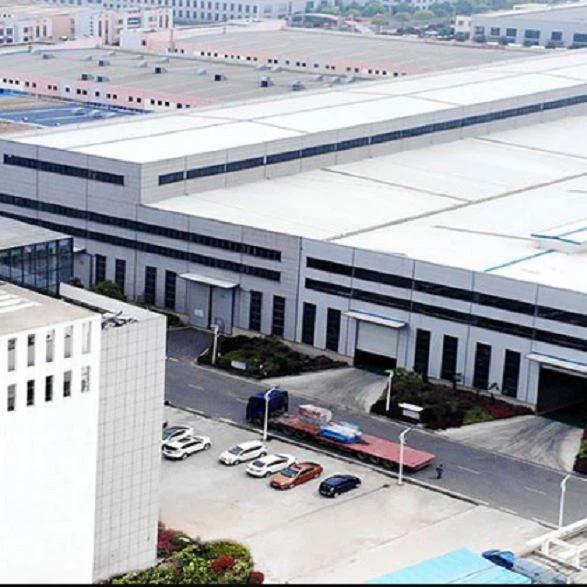
Our company was founded in 2014, with its headquarter located in XingTai. Our company is operated by a professional management team specialized in scientific research ,safe production,quality control and sales operation.We have highly automatic production lines and R&D facilities of international standard we emphasizes safety & environment protect management ,precise process control and quality supervision according to SHEQ standards (lSO9001/ISO14001/OHSAS18001).We also stick to sustainable development with social responsibilities so as to in prove the core competitiveness.Also, we have a trading company, Our sales team is consisted of up to 30 elites of high professionalism, providing our clients first-class service of high efficiency.
FAQ
As one of the leading degreaser manufacturers and suppliers in China, we warmly welcome you to wholesale bulk high quality degreaser in stock here from our factory. Contact us for free sample.
liquid degreaser, high performance cleaner, equipment degreaser