

The salt spray test is a critical evaluation method for the corrosion resistance of electroless nickel coatings, which are widely used in aerospace, automotive, electronics, and mechanical engineering due to their uniform thickness, excellent wear resistance, and chemical stability. However, there is no single "standard" answer to the question of "how many hours of salt spray an electroless nickel coating can withstand," as the test duration is influenced by multiple factors, including coating composition, thickness, post-treatment processes, and specific application requirements. This article explores the key determinants of salt spray performance for electroless nickel coatings, typical industry specifications, and practical considerations for interpreting test results.

Key Factors Affecting Salt Spray Duration of Electroless Nickel Coatings
The corrosion resistance of electroless nickel coatings in a salt spray environment is not inherent but is shaped by the coating's intrinsic properties and external processing conditions. Understanding these factors is essential for determining appropriate test durations and ensuring coating performance meets application needs.
Coating Composition: Phosphorus Content as a Core Variable
The phosphorus content in electroless nickel coatings is the most significant factor affecting their corrosion resistance. Electroless nickel coatings are generally classified into low-phosphorus (1-4%), medium-phosphorus (5-9%), and high-phosphorus (10-14%) based on phosphorus content. Low-phosphorus coatings, with a crystalline structure, exhibit poor salt spray resistance, typically failing (showing red rust) within 24-72 hours. Medium-phosphorus coatings, with a mixed crystalline-amorphous structure, offer moderate corrosion resistance, enduring 100-500 hours of salt spray. High-phosphorus coatings, with a fully amorphous structure, provide the best corrosion resistance, often withstanding 500-2000 hours or more, as the amorphous structure lacks grain boundaries that act as corrosion initiation sites.

Coating Thickness: A Fundamental Guarantee of Corrosion Resistance
Coating thickness directly impacts salt spray durability. Thinner coatings (5-10 μm) are prone to pinholes and defects, allowing corrosive media to penetrate to the substrate quickly, resulting in short salt spray lifetimes (often less than 100 hours). Thicker coatings (20-50 μm) provide a more complete physical barrier. For example, a 30 μm high-phosphorus electroless nickel coating can withstand 1000+ hours of salt spray, while the same composition at 10 μm may fail in 300 hours. However, excessive thickness (over 50 μm) can cause internal stress and cracking, reducing corrosion resistance.
Post-Treatment Processes: Enhancing Coating Protection
Post-treatment significantly improves the salt spray performance of electroless nickel coatings by sealing pores or forming additional protective layers. Passivation (using chromate or non-chromate solutions) creates a thin oxide film, extending salt spray duration by 20-50%. Sealing with organic resins (epoxy or polyurethane) or inorganic compounds (silicates) can double or triple the salt spray life; a sealed high-phosphorus coating may endure 3000+ hours. Heat treatment (150-200°C for 1-4 hours) reduces internal stress and improves adhesion, slightly enhancing salt spray resistance by 10-15%.
Substrate Material and Surface Preparation
The substrate material affects coating adhesion and corrosion behavior. Ferrous substrates (steel) are more prone to rust if the coating is defective, while non-ferrous substrates (aluminum, copper) form their own oxide layers, providing secondary protection. Poor surface preparation (oil, rust, or roughness) leads to uneven coatings and pinholes, reducing salt spray duration. For example, a steel substrate with inadequate degreasing may cause a high-phosphorus coating to fail in 200 hours, compared to 800 hours on a properly prepared surface.
Typical Industry Standards and Recommended Salt Spray Durations
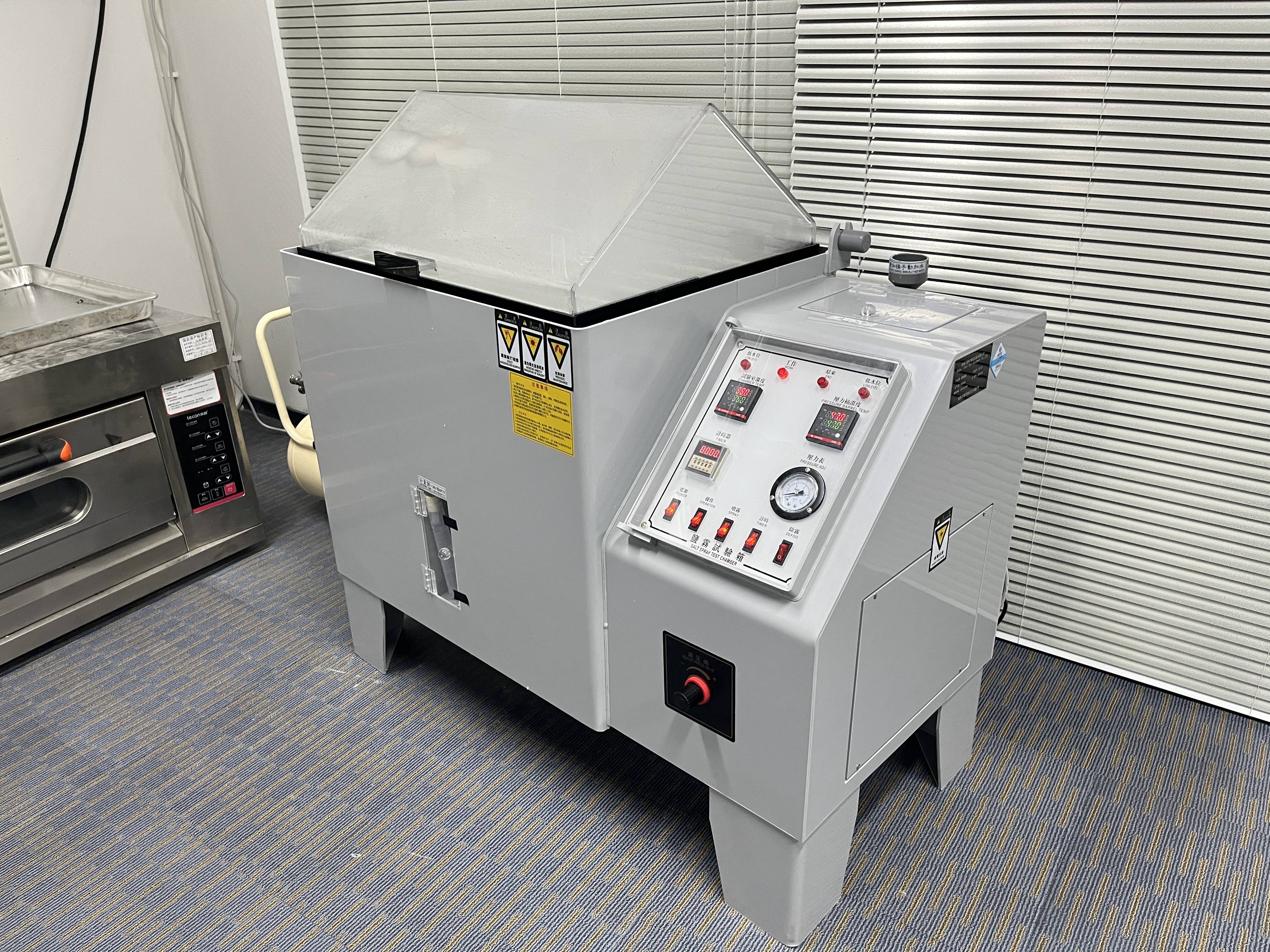
Various industries have established salt spray test standards based on their application environments, defining minimum duration requirements for electroless nickel coatings. These standards typically reference ASTM B117 (Standard Practice for Operating Salt Spray (Fog) Apparatus) as the test method, with variations in evaluation criteria (e.g., red rust, white rust, or coating blistering).
Aerospace and Defense Industry
Aerospace components (e.g., fasteners, engine parts) operate in harsh environments (humidity, salt fog), requiring high corrosion resistance. Standards like AMS 2404 (Electroless Nickel Plating, Low Phosphorus) specify 500 hours of neutral salt spray (NSS) without red rust for medium-phosphorus coatings. AMS 2405 (High Phosphorus) requires 1000+ hours of NSS. For marine aerospace applications, post-sealed coatings must pass 2000 hours of NSS to ensure reliability in coastal or oceanic environments.
Automotive Industry
Automotive parts (brake components, fuel system parts) face road salt and moisture. The ISO 4527 standard mandates 240 hours of NSS for low-phosphorus coatings on steel substrates. High-phosphorus coatings for undercarriage parts must endure 500 hours. Luxury or off-road vehicle components often require post-sealed coatings with 1000 hours of NSS resistance to meet extended service life expectations.
Electronics and Electrical Industry
Electronics (connectors, printed circuit boards) require corrosion resistance to prevent electrical failure. IPC-A-600 (Acceptability of Printed Boards) specifies 96 hours of NSS for electroless nickel coatings on copper substrates, with no white rust allowed. For marine electronics (e.g., boat navigation systems), high-phosphorus coatings with silicate sealing must pass 500 hours of NSS to withstand saltwater exposure.
General Industrial and Consumer Goods
General industrial parts (pumps, valves) and consumer goods (hardware, tools) have lower requirements. The ASTM B733 standard recommends 100-200 hours of NSS for medium-phosphorus coatings. Low-phosphorus coatings are used for non-critical parts, with a minimum of 24 hours. Consumer hardware (e.g., door handles) often uses sealed electroless nickel, requiring 300-500 hours of NSS to maintain appearance and functionality.
Interpreting Salt Spray Test Results: Beyond Duration
While salt spray duration is a key metric, interpreting results requires considering test conditions, failure criteria, and the gap between accelerated tests and real-world environments. Misinterpreting results can lead to incorrect coating selection and potential application failures.
Test Conditions: Neutral vs. Acidic Salt Spray
Most standards use neutral salt spray (NSS, 5% NaCl, pH 6.5-7.2), but acidic salt spray (ASS, pH 3.1-3.3) is more aggressive and used for harsh environments. A coating that withstands 500 hours of NSS may only last 100 hours of ASS. Marine and offshore industries often use ASS to simulate seawater acidity, while automotive uses NSS to simulate road salt conditions. Clearly defining test type is essential for comparing results.
Failure Criteria: Defining "Failure"
Failure criteria vary by industry: aerospace defines failure as any red rust, while consumer goods may allow 5% white rust. A coating with 1000 hours of NSS but 10% red rust fails aerospace standards but passes general industrial ones. Additionally, coating blistering or adhesion loss may be failures even without rust. Establishing clear criteria before testing ensures results align with application needs.
Accelerated Test vs. Real-World Corrosion
Salt spray tests are accelerated and do not directly correlate to real-world service life. A coating with 1000 hours of NSS may last 5-10 years in a temperate inland environment but only 1-2 years in a coastal marine environment. Factors like temperature, humidity, and chemical exposure in real environments differ from test chambers. Use salt spray results as a relative metric, not an absolute service life predictor.

Optimizing Electroless Nickel Coatings for Salt Spray Performance
To achieve the required salt spray duration, optimize coating parameters based on application needs. For harsh environments (marine, aerospace), select high-phosphorus coatings (10-14% P) with 25-40 μm thickness, followed by non-chromate passivation and silicate sealing. For general industrial use, medium-phosphorus coatings (5-9% P) with 15-25 μm thickness and simple passivation suffice. Regular quality control (coating thickness, phosphorus content, adhesion tests) ensures consistent performance.

Corrosion Resistance Guidelines for Electroless Nickel Coatings
The salt spray duration of electroless nickel coatings ranges from 24 hours to 3000+ hours, determined by phosphorus content, thickness, post-treatment, substrate preparation, and industry standards. High-phosphorus, thick, sealed coatings offer the best performance, meeting aerospace and marine requirements. Medium-phosphorus coatings balance cost and performance for automotive and electronics. When selecting coatings, align test conditions and failure criteria with real-world environments, and use salt spray results as part of a comprehensive evaluation. By understanding these factors, manufacturers can ensure electroless nickel coatings provide reliable corrosion protection for their specific applications.