

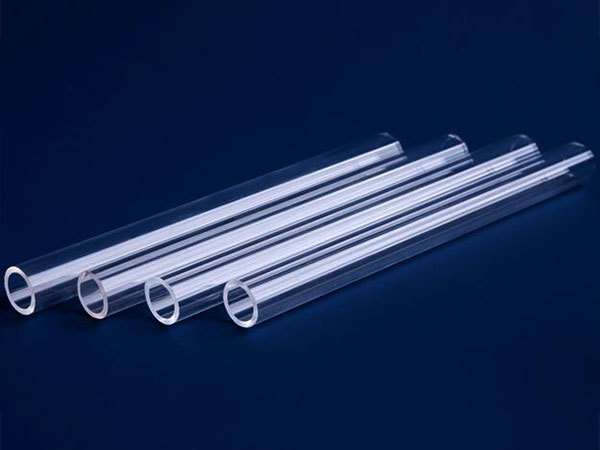
Quartz, a mineral composed of silicon dioxide (SiO₂), is one of the most abundant and versatile materials on Earth. Its unique combination of physical, chemical, and optical properties-such as high thermal stability, excellent chemical resistance, low thermal expansion, and exceptional transparency to ultraviolet (UV) and infrared (IR) radiation-makes it indispensable in a wide range of industries. Among the various forms of quartz used in practical applications, quartz tubes stand out due to their structural flexibility and adaptability to diverse operational environments. This article explores the practical applications of quartz, with a specific focus on how quartz tubes drive innovation and efficiency across key sectors.

Industrial Heating and Thermal Processing: Quartz Tubes as Heat-Resistant Vessels
In industrial settings, where high temperatures, corrosive atmospheres, and precise temperature control are common requirements, quartz tubes play a critical role as reliable heat-resistant components. Unlike metal or glass alternatives, quartz tubes can withstand continuous temperatures up to 1200°C (with specialized grades reaching 1400°C) without deformation, making them ideal for processes that demand long-term thermal stability.
Heat Treatment of Metals and Alloys
Metal processing industries rely on quartz tubes for annealing, hardening, and tempering operations-processes that involve heating metals to specific temperatures to alter their mechanical properties (e.g., strength, ductility). Quartz tubes are used to create sealed or semi-sealed chambers that protect metals from oxidation during heating. For example, in the annealing of copper wires, quartz tubes act as a barrier between the hot wire and atmospheric oxygen, preventing the formation of copper oxide (which degrades conductivity). The low thermal expansion of quartz ensures that the tubes do not crack when exposed to rapid temperature changes, a common issue with glass or ceramic vessels. Additionally, the transparency of quartz tubes allows operators to visually monitor the heating process, ensuring uniformity and reducing the risk of defects.
Semiconductor Wafer Processing
The semiconductor industry, which produces microchips and electronic components, depends on ultra-clean and high-temperature environments for wafer fabrication. Quartz tubes are a staple in processes like diffusion and oxidation, where wafers are heated to high temperatures in the presence of reactive gases. In diffusion, for instance, boron or phosphorus gases are introduced into a quartz tube containing wafers; the tube's chemical inertness prevents it from reacting with the gases, ensuring precise doping of the wafers. Moreover, quartz tubes can be easily cleaned and sterilized, maintaining the ultra-pure conditions required for semiconductor manufacturing. Any contamination in the tube could lead to defects in the microchips, making quartz's non-reactive nature a critical advantage.
Ceramic and Glass Production
In the production of advanced ceramics and specialty glasses, quartz tubes are used to heat raw materials (e.g., alumina, silica) to molten or sintering temperatures. Unlike metal tubes, which can leach impurities into the molten materials, quartz tubes are chemically inert and do not contaminate the final product. For example, in the manufacturing of optical glass (used in lenses and prisms), quartz tubes ensure that the glass remains free of metal ions that would distort light transmission. Additionally, the high thermal shock resistance of quartz tubes allows for rapid heating and cooling cycles, reducing production time and energy consumption compared to traditional ceramic vessels.
Electronics and Optoelectronics: Quartz Tubes in Signal Transmission and Component Protection
The electronics and optoelectronics industries require materials that can withstand high voltages, resist electrical interference, and transmit signals efficiently. Quartz, with its excellent electrical insulation properties and transparency to electromagnetic radiation, is well-suited for these applications. Quartz tubes, in particular, are used to protect sensitive electronic components and facilitate signal transmission in harsh environments.
Fiber Optic Communication Systems
Fiber optic cables, which transmit data using light signals, are the backbone of modern communication networks (e.g., internet, 5G). While the core of fiber optic cables is typically made of ultra-pure silica glass, quartz tubes play a crucial role in their manufacturing process. During the production of optical fibers, a "preform" (a large glass rod) is heated and stretched into thin fibers. Quartz tubes are used to encase the preform during the heating process, creating a controlled atmosphere that prevents contamination and ensures uniform stretching. Additionally, quartz tubes are used in the "drawing tower" (the machine that stretches the preform) to guide the fiber and maintain its stability. The transparency of quartz tubes allows operators to monitor the fiber-drawing process, ensuring that the fiber diameter remains consistent- a key factor in signal transmission quality. Without quartz tubes, the production of high-performance fiber optic cables would be significantly more challenging, as alternative materials would either contaminate the fiber or lack the required thermal stability.
High-Voltage Insulators and Bushings
In power transmission and distribution systems, high-voltage insulators are essential to prevent electrical leakage and ensure the safe flow of electricity. Quartz tubes are used to manufacture insulators and bushings (components that connect electrical equipment to power lines) due to their exceptional electrical insulation properties and resistance to electrical breakdown. Unlike porcelain insulators (a traditional alternative), quartz tubes have a higher dielectric strength (ability to withstand voltage without conducting electricity) and are less prone to cracking due to thermal shock. For example, in high-voltage transformers, quartz tube bushings protect the electrical connections from moisture and dust, while also withstanding the high temperatures generated by the transformer. Additionally, quartz tubes are resistant to corrosion from chemicals and pollutants, making them suitable for outdoor applications (e.g., power lines in coastal areas, where saltwater can corrode metal components).
LED and Laser Manufacturing
Light-emitting diodes (LEDs) and lasers are widely used in applications ranging from lighting to medical devices. Quartz tubes are integral to the production of these optoelectronic components, particularly in the "epitaxy" process-where thin layers of semiconductor materials (e.g., gallium nitride) are grown on a substrate. During epitaxy, the substrate is heated to high temperatures in a quartz tube, and reactive gases are introduced to form the semiconductor layers. The quartz tube's chemical inertness ensures that it does not react with the gases, while its transparency allows for precise control of the heating process using infrared lamps. Additionally, quartz tubes are used to encapsulate LED chips, protecting them from moisture and mechanical damage while allowing light to pass through. For lasers, quartz tubes are used in the "gain medium" (the component that amplifies light), as their low optical loss ensures that the laser beam retains its intensity and coherence.
Scientific Research and Laboratory Applications: Quartz Tubes as Versatile Experimental Tools
In scientific research and laboratory settings, where precision, purity, and reproducibility are paramount, quartz tubes are widely used as experimental vessels and components. Their ability to withstand extreme temperatures, resist chemical attack, and transmit a broad range of electromagnetic radiation makes them indispensable for a variety of analytical and experimental techniques.
Analytical Chemistry: Spectroscopy and Chromatography
Analytical chemistry relies on techniques like spectroscopy (studying the interaction of light with matter) and chromatography (separating mixtures) to identify and quantify substances. Quartz tubes are used in these techniques due to their transparency to UV, visible, and IR radiation- a property that is critical for accurate measurements. For example, in UV-visible spectroscopy, samples are placed in quartz cuvettes (small tubes) that allow light to pass through without absorbing it. Unlike glass cuvettes, which absorb UV light, quartz cuvettes ensure that the light interacts only with the sample, providing accurate data on the sample's composition. In gas chromatography (GC), quartz tubes are used as "columns" (the component that separates the mixture into its individual components). The inner surface of the quartz tube is coated with a stationary phase, and the mixture (in gas form) is passed through the tube. The quartz tube's chemical inertness prevents it from reacting with the sample or the stationary phase, ensuring that the separation is accurate and reproducible. Additionally, quartz tubes can withstand the high temperatures required for GC (up to 400°C), making them suitable for analyzing high-boiling-point compounds.
Materials Science: Synthesis of Nanomaterials
Materials science research often involves the synthesis of nanomaterials (particles with sizes between 1 and 100 nanometers), which have unique properties used in applications like drug delivery, catalysis, and electronics. Quartz tubes are used in techniques like "chemical vapor deposition (CVD)" and "solvothermal synthesis" to create nanomaterials in a controlled environment. In CVD, a quartz tube is heated to high temperatures, and precursor gases are introduced into the tube; the gases react on the surface of a substrate (inside the tube) to form nanomaterial films. The quartz tube's chemical inertness ensures that the precursor gases do not react with the tube, while its transparency allows for monitoring of the film growth. In solvothermal synthesis, a solution containing the nanomaterial precursors is heated in a sealed quartz tube (called an "autoclave") under high pressure. The quartz tube's ability to withstand high pressure and temperature ensures that the reaction proceeds safely, and its non-reactive nature prevents contamination of the nanomaterials. Without quartz tubes, the synthesis of high-quality nanomaterials would be difficult, as alternative materials would either react with the precursors or fail under the extreme reaction conditions.
Environmental Science: Air and Water Quality Testing
Environmental scientists use quartz tubes to monitor air and water quality, particularly in the analysis of pollutants like volatile organic compounds (VOCs) and heavy metals. For example, in air quality testing, a quartz tube coated with a sorbent material (e.g., activated carbon) is used to trap VOCs from the air. The tube is then heated to release the VOCs, which are analyzed using gas chromatography. The quartz tube's chemical inertness ensures that the VOCs do not react with the tube, and its high thermal stability allows for efficient release of the pollutants during heating. In water quality testing, quartz tubes are used in "inductively coupled plasma mass spectrometry (ICP-MS)", a technique that detects heavy metals in water. The water sample is introduced into a quartz tube, where it is ionized by a plasma; the ions are then detected to quantify the heavy metal concentration. The quartz tube's transparency to the plasma's radiation ensures that the ionization process is efficient, and its non-reactive nature prevents contamination of the sample.
Medical and Healthcare: Quartz Tubes in Diagnostic and Therapeutic Devices
The medical and healthcare industries demand materials that are biocompatible (non-toxic to living tissue), sterile, and resistant to chemical sterilization methods (e.g., autoclaving, ethylene oxide). Quartz meets these requirements, and quartz tubes are used in a range of diagnostic and therapeutic devices to improve patient care and treatment outcomes.
Medical Imaging: X-Ray and Ultrasound Equipment
Medical imaging techniques like X-ray and ultrasound rely on precise components to generate clear images of the human body. Quartz tubes are used in X-ray equipment as "window materials" that allow X-rays to pass through while protecting the X-ray source from contamination. Unlike metal windows, which absorb some X-rays, quartz tubes have low X-ray absorption, ensuring that more X-rays reach the patient's body- improving image quality and reducing radiation exposure. In ultrasound equipment, quartz tubes are used to encase the piezoelectric crystals (components that generate ultrasound waves). The quartz tube's acoustic transparency (ability to transmit sound waves) ensures that the ultrasound waves are not distorted, while its biocompatibility and sterility make it safe for use in contact with the patient's skin. Additionally, quartz tubes are resistant to the disinfectants used to clean ultrasound probes, ensuring that the equipment remains sterile between uses.
Therapeutic Devices: UV Sterilization and Laser Therapy
UV sterilization is a common method used to kill bacteria, viruses, and fungi in medical equipment (e.g., surgical instruments, hospital rooms). Quartz tubes are used in UV sterilization devices as "enclosures" for the UV lamps. Unlike glass, which blocks UV light, quartz is transparent to UV radiation, allowing the light to pass through and sterilize the surrounding area. For example, in UV water purifiers used in hospitals, quartz tubes encase the UV lamp and are in direct contact with the water; the quartz tube's chemical inertness ensures that it does not leach any substances into the water, and its transparency allows the UV light to kill harmful microorganisms. In laser therapy (used to treat conditions like cancer, skin disorders, and eye diseases), quartz tubes are used in the laser delivery system. The quartz tube guides the laser beam to the treatment site, and its low optical loss ensures that the laser retains its intensity- critical for effective therapy. Additionally, quartz tubes are biocompatible, making them safe for use in minimally invasive procedures (e.g., laser eye surgery).
Pharmaceutical Manufacturing: Drug Synthesis and Packaging
The pharmaceutical industry requires ultra-pure conditions for drug synthesis and packaging to ensure the safety and efficacy of medications. Quartz tubes are used in drug synthesis processes like "flow chemistry", where reactants are passed through a tube (instead of a traditional flask) to produce drugs. Quartz tubes are ideal for flow chemistry because they are chemically inert (preventing reaction with the drug components) and can withstand the high temperatures and pressures used in some synthesis reactions. For example, in the production of antibiotics, quartz tubes are used to mix and heat the reactants, ensuring that the drug is synthesized without contamination. In drug packaging, quartz tubes are used as "vials" for sensitive drugs (e.g., vaccines, biologics). The quartz vial's impermeability to gases and moisture ensures that the drug remains stable during storage, and its transparency allows for visual inspection of the drug (e.g., checking for particulate matter). Additionally, quartz vials can be sterilized using high temperatures or UV radiation, making them suitable for use in sterile pharmaceutical environments.
Renewable Energy: Quartz Tubes in Solar and Wind Power Systems
As the world shifts towards renewable energy sources to reduce carbon emissions, quartz has emerged as a key material in the production of solar panels and wind turbines. Quartz tubes, with their high thermal stability and durability, play a vital role in improving the efficiency and lifespan of these renewable energy systems.
Solar Photovoltaic (PV) Panels
Solar PV panels convert sunlight into electricity using semiconductor materials (e.g., silicon). Quartz tubes are used in two critical stages of solar panel manufacturing: the production of silicon wafers and the encapsulation of the panel. In silicon wafer production, quartz tubes are used in the "Czochralski process"-the most common method for growing single-crystal silicon ingots (which are sliced into wafers). During this process, a quartz crucible (a large tube-shaped vessel) holds molten silicon, and a seed crystal is dipped into the molten silicon to grow the ingot. The quartz crucible's chemical inertness prevents it from reacting with the molten silicon, ensuring that the ingot is pure. Additionally, the high thermal stability of quartz allows the crucible to withstand the high temperatures (over 1400°C) required to melt silicon. In solar panel encapsulation, quartz tubes are used to coat the panel with a protective layer (e.g., anti-reflective coating) that improves light absorption. The quartz coating is transparent to sunlight, scratch-resistant, and resistant to UV radiation (which can degrade other coatings over time), extending the lifespan of the solar panel.
Concentrated Solar Power (CSP) Systems
Concentrated Solar Power (CSP) systems use mirrors or lenses to focus sunlight onto a receiver, which heats a heat-transfer fluid (e.g., molten salt) to generate electricity. Quartz tubes are used in CSP receivers as "absorber tubes" that absorb the concentrated sunlight and transfer heat to the fluid. Unlike metal absorber tubes, which can corrode when exposed to high temperatures and the heat-transfer fluid, quartz tubes are chemically inert and can withstand temperatures up to 1000°C. Additionally, the high thermal conductivity of quartz ensures efficient heat transfer from the tube to the fluid, improving the overall efficiency of the CSP system. For example, in parabolic trough CSP systems (the most common type), long quartz absorber tubes are placed along the focal line of the parabolic mirrors; the tubes absorb the concentrated sunlight and heat the fluid inside, which is then used to generate steam and drive a turbine. The durability of quartz tubes ensures that the CSP system can operate for decades with minimal maintenance.
Wind Turbine Components
Wind turbines rely on durable components that can withstand harsh weather conditions (e.g., high winds, rain, extreme temperatures). Quartz tubes are used in the manufacturing of wind turbine blades and generators to improve their strength and durability. In wind turbine blades (which are typically made of composite materials like fiberglass), quartz tubes are used as "reinforcement fibers" that are embedded in the composite. The high tensile strength of quartz (higher than glass fibers) makes the blades more resistant to bending and fatigue, extending their lifespan. Additionally, quartz fibers are resistant to UV radiation and moisture, preventing degradation of the blade material over time. In wind turbine generators, quartz tubes are used as "insulators" for the electrical windings. The electrical insulation properties of quartz ensure that the generator operates safely, even in high-humidity environments, and its resistance to high temperatures prevents overheating of the windings.
Cornerstones of Modern Industry and Catalysts for Future Progress
Quartz, with its remarkable combination of physical, chemical, and optical properties, is a material that touches nearly every aspect of modern life. From industrial heating to medical devices, and from renewable energy to electronics, quartz's versatility makes it irreplaceable in countless applications. Among the various forms of quartz, quartz tubes stand out as a key component, driving innovation and efficiency across industries. Their ability to withstand extreme temperatures, resist chemical attack, transmit radiation, and maintain purity makes them essential for processes that demand reliability and precision.
As technology continues to advance, the demand for quartz and quartz tubes is only expected to grow. In the semiconductor industry, for example, the shift towards smaller and more powerful microchips will require even more precise quartz components. In renewable energy, the expansion of solar and wind power will rely on durable quartz tubes to improve the efficiency and lifespan of energy systems. In healthcare, the development of new diagnostic and therapeutic devices will depend on the biocompatibility and sterility of quartz.
In short, quartz is not just a mineral-it is a foundational material that enables the technologies and industries that shape our world. And as we look to the future, quartz tubes will remain at the forefront of innovation, helping to solve some of the most pressing challenges of our time, from climate change to healthcare access.