

Cement Hardening and Softening
Cement hardening is a complex chemical process that involves hydration reactions between cement particles and water. When cement is mixed with water, calcium silicates and aluminates react to form calcium silicate hydrates (C-S-H) and calcium aluminate hydrates (C-A-H), which are the primary binding compounds responsible for cement's strength. This process transforms the cement from a plastic state into a hardened material with significant compressive strength.
The hardening process is influenced by several factors including temperature, humidity, and the presence of admixtures. Higher temperatures accelerate hydration, while lower temperatures slow it down. Humidity affects the availability of water for hydration reactions. Understanding these factors is crucial because they also play a role in softening cement - the process of reversing or preventing complete hardening.
Chemical Softening Agents
Acids as Cement Softeners
Acids can effectively soften hardened cement through chemical reactions. Hydrochloric acid (HCl) and sulfuric acid (H₂SO₄) are commonly used for this purpose. These acids react with calcium hydroxide (Ca(OH)₂), a byproduct of cement hydration, forming water-soluble calcium salts. For example, hydrochloric acid reacts with calcium hydroxide to produce calcium chloride and water: Ca(OH)₂ + 2HCl → CaCl₂ + 2H₂O.
The effectiveness of acid treatment depends on concentration and exposure time. Higher concentrations and longer exposure times generally produce better results, but they can also damage surrounding materials if not properly controlled. Safety precautions are essential when using acids, including proper ventilation and protective equipment.
Organic Acids and Chelating Agents
Organic acids like acetic acid (CH₃COOH) offer a milder alternative to mineral acids for cement softening. They react with calcium compounds in cement but at a slower rate, making them easier to control. Chelating agents such as EDTA (ethylenediaminetetraacetic acid) are particularly effective because they form stable complexes with calcium ions, effectively dissolving cement components without aggressive chemical reactions.
These organic compounds are often used in situations where precise control over the softening process is required, such as in restoration work or when working near sensitive materials. Their slower reaction rates allow for more controlled application and reduced risk of damage to surrounding structures.
Physical Methods for Softening Cement
Mechanical Abrasion
Mechanical methods provide non-chemical alternatives for softening cement. Abrasive techniques like sanding, grinding, or shot blasting can remove surface layers of hardened cement. These methods are particularly useful for surface preparation before applying new coatings or adhesives.
The effectiveness of mechanical abrasion depends on the hardness of the abrasive material and the pressure applied. Harder abrasives like silicon carbide or aluminum oxide can remove cement more quickly but may also damage softer materials if not carefully controlled. Proper dust collection systems are essential when using these methods to protect workers' health.
Thermal Methods
Heat can be used to soften cement through several mechanisms. Controlled heating can accelerate hydration reactions in fresh cement, potentially preventing full hardening if applied early enough. For hardened cement, thermal shock from rapid heating and cooling cycles can create micro-cracks that weaken the material.
Infrared heating or hot air blowers are commonly used for this purpose. The effectiveness depends on temperature control - too much heat can cause thermal degradation of cement components, while insufficient heat may not produce the desired softening effect. Thermal methods are often used in combination with other techniques for optimal results.

Biological Softening Approaches
Microorganisms
Certain microorganisms can produce organic acids that gradually dissolve cement components. Bacteria like Acidithiobacillus thiooxidans and fungi such as Aspergillus niger are known to produce acids that can attack cementitious materials. These biological processes occur over extended periods and are typically used in environmental applications rather than immediate construction needs.
The effectiveness of biological softening depends on environmental conditions including temperature, pH, and nutrient availability. While this method is environmentally friendly, it is slow and difficult to control, making it unsuitable for most construction applications but potentially useful for long-term environmental remediation projects.
Enzymatic Treatment
Enzymes can be used to break down specific components of cement. For example, enzymes that target calcium compounds or silica can be applied to soften cement surfaces. These biological catalysts offer specificity in their action, potentially allowing for more controlled softening compared to general acid treatments.
Enzyme effectiveness depends on their specificity and concentration. While promising for certain applications, enzymatic treatments are still in experimental stages for cement softening and face challenges in terms of cost, availability, and application methods.
Environmental Factors Affecting Cement Softening
Temperature Effects
Temperature plays a significant role in both cement hardening and softening processes. Higher temperatures accelerate chemical reactions, including those involved in cement hydration and acid-based softening. In cold weather, cement hardening slows down, potentially allowing more time for softening treatments before full hardening occurs.
Extreme temperature fluctuations can also cause thermal stress in hardened cement, leading to micro-cracking and reduced strength. This effect can be utilized in softening applications by creating controlled thermal cycles to weaken cement structures.
Humidity and Moisture
Moisture availability affects both cement hydration and softening processes. High humidity environments can accelerate cement hardening by providing more water for hydration reactions. Conversely, dry conditions can slow hardening and potentially make cement more susceptible to softening treatments.
In softening applications, moisture can act as a medium for chemical reactions or as a physical agent when used in pressure washing or steam cleaning methods. Proper moisture control is essential for optimizing both hardening and softening processes.
Practical Applications of Cement Softening
Construction and Demolition
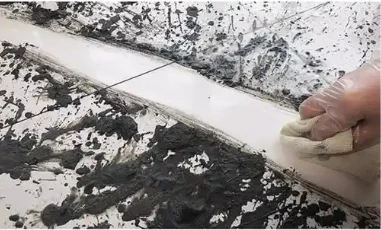
In construction, cement softening techniques are used for surface preparation before applying new coatings or adhesives. Chemical softening agents can create better bonding surfaces by removing surface layers of hardened cement. In demolition work, softening methods can help break down concrete structures more efficiently, reducing the need for purely mechanical demolition techniques.
These applications require careful timing - softening treatments must be applied before cement fully hardens for surface preparation, or after hardening for demolition purposes. The choice of method depends on factors like project timeline, environmental considerations, and cost constraints.
Restoration and Conservation
For historic preservation and restoration projects, cement softening techniques offer a way to remove or modify cementitious materials without damaging original structures. Chemical methods must be carefully controlled to avoid harming historical materials. Physical methods like laser ablation or micro-abrasion provide precise control for delicate restoration work.
These applications often require specialized knowledge of both cement chemistry and historical materials. The goal is to achieve sufficient softening for modification or removal while preserving the integrity of original architectural elements.
Future Directions in Cement Softening Research
Advanced Chemical Formulations
Ongoing research focuses on developing more effective and environmentally friendly chemical softening agents. This includes work on biodegradable acids, enzyme-based treatments, and smart materials that can be activated under specific conditions. These innovations aim to improve control over the softening process while reducing environmental impact.
Nanotechnology Applications
Emerging research explores nanotechnology applications for cement softening, including nanoparticles that can penetrate cement microstructure and facilitate softening. These nanoscale approaches offer potential for more precise and efficient softening methods, though they are still in early stages of development.
Sustainable Softening Methods
There is increasing interest in developing sustainable cement softening methods that minimize waste and energy consumption. This includes research into biological methods that utilize natural processes, as well as methods that allow for cement recycling and reuse after softening treatment.