

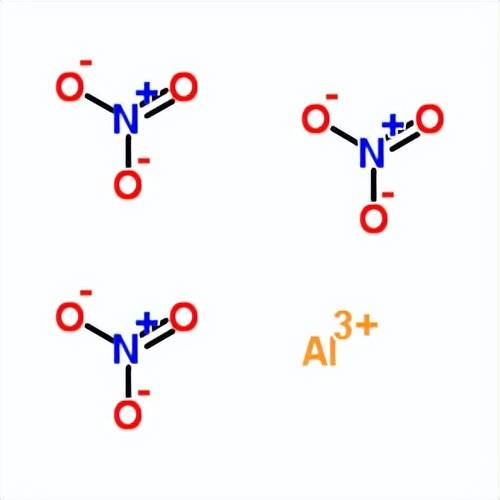
Aluminum nitrate, with the chemical formula Al(NO₃)₃, is a white crystalline solid that is highly soluble in water. It is a versatile compound with a wide range of applications across various industries, including industrial manufacturing, agriculture, scientific research, environmental protection, and more. Its unique chemical properties, such as its ability to act as a catalyst, a coagulant, and a source of aluminum ions, make it an essential material in many processes. In this article, we will explore the diverse uses of aluminum nitrate in detail, breaking down its applications into different fields to provide a comprehensive understanding of this important compound.

Industrial Applications of Aluminum Nitrate
The industrial sector is one of the primary areas where aluminum nitrate finds extensive use. Its chemical characteristics make it suitable for a variety of manufacturing processes, from the production of pigments and dyes to the fabrication of ceramics and metals. Below are some key industrial applications of aluminum nitrate.
Aluminum Nitrate in Pigment and Dye Production
In the production of pigments and dyes, aluminum nitrate plays a crucial role as a mordant and a precursor. A mordant is a substance that helps fix dyes to fabrics or other materials, improving their color fastness and durability. Aluminum nitrate, when used as a mordant, forms complexes with dye molecules, enhancing their adhesion to textile fibers such as cotton, wool, and silk. This not only ensures that the colors remain vibrant even after repeated washing but also allows for a wider range of color shades to be achieved.
Additionally, aluminum nitrate is used as a precursor in the synthesis of certain inorganic pigments. For example, in the production of chrome yellow pigments (which are widely used in paints, inks, and plastics), aluminum nitrate is reacted with other chemicals to form stable pigment particles. The presence of aluminum ions helps control the particle size and morphology of the pigments, resulting in products with consistent color properties and good dispersibility. This is particularly important in industries where high-quality and uniform pigments are required to meet strict quality standards.
Aluminum Nitrate in Ceramic Manufacturing
Ceramic manufacturing is another industry where aluminum nitrate is commonly used. Ceramics are materials that are made by shaping and firing inorganic, non-metallic substances at high temperatures. Aluminum nitrate is used in this process as a flux and a binder. A flux is a substance that lowers the melting point of the ceramic material, making it easier to shape and fuse during firing. By adding aluminum nitrate to the ceramic mixture, manufacturers can reduce the firing temperature, which not only saves energy but also prevents the ceramic from cracking or deforming during the process.
Furthermore, aluminum nitrate acts as a binder in ceramic manufacturing, helping to hold the ceramic particles together before firing. This improves the strength and integrity of the green ceramic (the ceramic before firing), making it easier to handle and shape. After firing, the aluminum nitrate decomposes, leaving behind aluminum oxide, which is a hard and durable material that enhances the mechanical properties of the final ceramic product. This makes aluminum nitrate an essential additive in the production of a wide range of ceramics, including tiles, pottery, and advanced ceramic components used in electronics and aerospace.
Aluminum Nitrate in Metal Surface Treatment
Metal surface treatment is a process that is used to improve the appearance, corrosion resistance, and durability of metal surfaces. Aluminum nitrate is used in this process as a corrosion inhibitor and a coating agent. When applied to metal surfaces, aluminum nitrate forms a thin, protective layer that prevents the metal from reacting with oxygen and other corrosive substances in the environment. This layer acts as a barrier, reducing the rate of corrosion and extending the lifespan of the metal product.
In addition to its role as a corrosion inhibitor, aluminum nitrate is also used in the electroplating process. Electroplating is a technique where a thin layer of metal is deposited onto the surface of another metal using an electric current. Aluminum nitrate is used as an electrolyte in some electroplating processes, providing aluminum ions that are deposited onto the metal surface. This results in a smooth, uniform coating that improves the metal's appearance and provides additional protection against corrosion. This application is particularly important in the automotive and aerospace industries, where metal components need to withstand harsh environmental conditions.
Agricultural Uses of Aluminum Nitrate
While aluminum is not considered an essential nutrient for plants, aluminum nitrate can still be used in agriculture for specific purposes. Its high solubility in water and the presence of nitrate ions (which are a source of nitrogen, an essential plant nutrient) make it suitable for certain agricultural applications. However, it is important to note that excessive use of aluminum nitrate can be harmful to plants, as high levels of aluminum ions can inhibit root growth and nutrient uptake. Therefore, its use in agriculture is carefully controlled and limited to specific situations.
Aluminum Nitrate as a Nitrogen Source for Plants
Nitrogen is one of the most important nutrients for plant growth, as it is a key component of proteins, nucleic acids, and chlorophyll. Aluminum nitrate contains nitrate ions (NO₃⁻), which are easily absorbed by plant roots and converted into ammonia (NH₄⁺) for use in plant metabolism. In some cases, aluminum nitrate can be used as a nitrogen fertilizer, especially in situations where other nitrogen sources are not available or suitable. For example, in hydroponic systems (where plants are grown in a nutrient solution without soil), aluminum nitrate can be added to the solution to provide a source of nitrogen. However, it is important to use aluminum nitrate in moderation in hydroponic systems, as high levels of aluminum ions can be toxic to plants.
Another situation where aluminum nitrate may be used as a nitrogen source is in the cultivation of certain acid-loving plants. Some plants, such as blueberries, rhododendrons, and azaleas, thrive in acidic soils with a pH range of 4.0 to 5.5. Aluminum nitrate, when added to the soil, can help lower the pH of the soil (due to the hydrolysis of aluminum ions), making it more suitable for these plants. At the same time, the nitrate ions in aluminum nitrate provide the plants with the nitrogen they need for growth. However, it is crucial to monitor the soil pH and aluminum ion concentration regularly to avoid over-acidification and aluminum toxicity.
Aluminum Nitrate in Soil Amendment
Soil amendment is the process of adding materials to soil to improve its physical, chemical, and biological properties. Aluminum nitrate can be used as a soil amendment in certain cases, particularly to adjust the soil pH and improve the availability of other nutrients. As mentioned earlier, aluminum nitrate can lower the pH of alkaline soils, making them more acidic. This is beneficial for plants that require acidic soil conditions, as it allows them to absorb nutrients such as iron, manganese, and zinc more efficiently. These nutrients are often less available in alkaline soils, as they form insoluble compounds that cannot be taken up by plant roots. By lowering the soil pH with aluminum nitrate, these nutrients become more soluble and available for plant uptake.
In addition to adjusting soil pH, aluminum nitrate can also improve soil structure. When added to clay soils, which are heavy and have poor drainage, aluminum nitrate can help flocculate the clay particles. Flocculation is the process where small clay particles clump together to form larger aggregates, which improves soil porosity and drainage. This allows water and air to penetrate the soil more easily, creating a better environment for root growth. However, it is important to use aluminum nitrate sparingly as a soil amendment, as excessive use can lead to soil acidification and aluminum toxicity, which can harm plants and soil organisms.

Scientific Research Applications of Aluminum Nitrate
Aluminum nitrate is widely used in scientific research, particularly in chemistry, materials science, and biology. Its unique chemical properties make it a valuable reagent for a variety of experiments and studies. Below are some of the key scientific research applications of aluminum nitrate.
Aluminum Nitrate as a Reagent in Chemical Synthesis
In chemical synthesis, aluminum nitrate is used as a reagent to prepare a wide range of compounds. For example, it is used in the synthesis of aluminum oxide (Al₂O₃), which is a versatile material with applications in ceramics, catalysts, and electronics. Aluminum nitrate can be decomposed by heating to form aluminum oxide, nitrogen dioxide (NO₂), and oxygen (O₂). This reaction is often used in the laboratory to prepare pure aluminum oxide for research purposes.
Aluminum nitrate is also used in the synthesis of coordination compounds. Coordination compounds are substances that consist of a central metal ion surrounded by a set of ligands (molecules or ions that bind to the metal ion). Aluminum nitrate, as a source of aluminum ions (Al³⁺), can react with various ligands to form coordination complexes. These complexes have unique chemical and physical properties and are used in a variety of research areas, including catalysis, spectroscopy, and medicinal chemistry. For example, some aluminum nitrate-based coordination complexes have been studied for their potential use as catalysts in organic reactions, such as the hydrolysis of esters and the oxidation of alcohols.
Aluminum Nitrate in Materials Science Research
Materials science is a field that focuses on the design, synthesis, and characterization of materials with specific properties. Aluminum nitrate is used in materials science research to prepare a variety of advanced materials, such as nanomaterials, thin films, and composites. For example, in the synthesis of aluminum-based nanomaterials, aluminum nitrate is used as a precursor. By controlling the reaction conditions (such as temperature, pH, and concentration), researchers can synthesize aluminum oxide nanoparticles with different sizes, shapes, and surface properties. These nanoparticles have a wide range of applications, including in catalysis, drug delivery, and sensors.
Aluminum nitrate is also used in the preparation of thin films. Thin films are thin layers of material that are deposited onto a substrate (such as a metal, glass, or silicon wafer). They are used in a variety of devices, including solar cells, transistors, and optical coatings. Aluminum nitrate can be used as a precursor in the sol-gel process, which is a common method for preparing thin films. In the sol-gel process, aluminum nitrate is dissolved in a solvent to form a sol (a colloidal suspension), which is then applied to the substrate and dried to form a gel. The gel is then heated to remove the solvent and decompose the aluminum nitrate, leaving behind a thin film of aluminum oxide. This process allows for the preparation of thin films with uniform thickness and high purity, making it suitable for research in materials science.
Aluminum Nitrate in Biological and Environmental Research
In biological and environmental research, aluminum nitrate is used to study the effects of aluminum ions on living organisms and the environment. Aluminum is the most abundant metal in the Earth's crust, and under certain conditions (such as acidic soils), it can be released into the environment in soluble forms, which can be toxic to plants, animals, and humans. Aluminum nitrate is used in laboratory studies to simulate the presence of soluble aluminum ions in the environment, allowing researchers to investigate their effects on biological systems.
For example, in plant biology research, aluminum nitrate is used to study the mechanisms of aluminum toxicity in plants. Researchers expose plant roots to different concentrations of aluminum nitrate and observe the effects on root growth, nutrient uptake, and gene expression. This research helps to understand how plants respond to aluminum stress and to develop strategies to improve plant tolerance to aluminum toxicity. In environmental research, aluminum nitrate is used to study the transport and fate of aluminum ions in soil and water systems. By adding aluminum nitrate to soil or water samples, researchers can monitor how aluminum ions interact with other substances (such as organic matter, clay particles, and other ions) and how they are transported through the environment. This information is crucial for assessing the environmental impact of aluminum and for developing strategies to mitigate its harmful effects.
Environmental Protection Applications of Aluminum Nitrate
Environmental protection is an important area where aluminum nitrate is used, primarily for water treatment. Its ability to act as a coagulant makes it effective in removing impurities from water, such as suspended solids, organic matter, and heavy metals. Below are some of the key environmental protection applications of aluminum nitrate.
Aluminum Nitrate as a Coagulant in Water Treatment
Water treatment is a process that is used to remove contaminants from water to make it safe for drinking, industrial use, or discharge into the environment. Coagulation is an important step in water treatment, where a coagulant is added to water to destabilize the suspended particles, causing them to clump together (flocculate) and settle out. Aluminum nitrate is a commonly used coagulant in water treatment, as it is effective in removing a wide range of impurities.
When aluminum nitrate is added to water, it dissociates into aluminum ions (Al³⁺) and nitrate ions (NO₃⁻). The aluminum ions hydrolyze in water to form a series of hydroxoaluminum species, such as Al(OH)₂⁺, Al(OH)₂⁺, and Al(OH)₃. These species have a positive charge, which attracts the negatively charged suspended particles in water (such as clay, silt, and organic matter). The attraction between the positive hydroxoaluminum species and the negative suspended particles causes the particles to clump together, forming larger flocs. These flocs are then removed from the water by sedimentation or filtration, resulting in clear, clean water.
Aluminum nitrate is particularly effective in removing organic matter from water. Organic matter in water can cause a variety of problems, such as taste and odor issues, the formation of disinfection byproducts (such as trihalomethanes), and the growth of microorganisms. By coagulating the organic matter, aluminum nitrate helps to reduce these problems, improving the quality of the treated water. It is also effective in removing heavy metals from water, such as lead, mercury, and cadmium. The hydroxoaluminum species formed by aluminum nitrate can adsorb heavy metal ions, forming insoluble complexes that are removed during sedimentation or filtration.
Aluminum Nitrate in Wastewater Treatment
Wastewater treatment is similar to water treatment but focuses on treating water that has been contaminated by industrial, agricultural, or domestic activities. Aluminum nitrate is used in wastewater treatment for the same reasons as in water treatment: to remove suspended solids, organic matter, and heavy metals. However, wastewater often contains higher concentrations of contaminants, so the use of aluminum nitrate may need to be adjusted accordingly.
In industrial wastewater treatment, aluminum nitrate is used to treat wastewater from a variety of industries, such as textile, printing, and dyeing. These industries generate wastewater that contains high levels of organic matter, dyes, and other contaminants. Aluminum nitrate is effective in coagulating these contaminants, making them easier to remove. For example, in textile wastewater treatment, aluminum nitrate can remove dye molecules by forming complexes with them, which then flocculate and settle out. This helps to reduce the color and organic content of the wastewater, making it suitable for discharge or reuse.
In agricultural wastewater treatment, aluminum nitrate is used to treat wastewater from livestock farms, crop irrigation, and other agricultural activities. This wastewater often contains high levels of nutrients, such as nitrogen and phosphorus, which can cause eutrophication (the excessive growth of algae and other aquatic plants) in water bodies. Aluminum nitrate can help to remove phosphorus from agricultural wastewater by forming insoluble aluminum phosphate (AlPO₄), which settles out of the water. This reduces the amount of phosphorus that is discharged into the environment, preventing eutrophication and protecting aquatic ecosystems.

Other Miscellaneous Uses of Aluminum Nitrate
In addition to the applications mentioned above, aluminum nitrate has a number of other miscellaneous uses in various fields. These uses are less common but still important, highlighting the versatility of this compound.
Aluminum Nitrate in Fireworks and Pyrotechnics
Fireworks and pyrotechnics are devices that produce light, color, and sound through chemical reactions. Aluminum nitrate is used in some fireworks and pyrotechnic compositions as an oxidizer. An oxidizer is a substance that provides oxygen to support the combustion of other materials (such as fuels) in the pyrotechnic mixture. Aluminum nitrate, when heated, decomposes to release oxygen, which helps to fuel the combustion reaction and produce bright colors and intense light.
For example, in the production of red fireworks, aluminum nitrate is often used in combination with strontium salts (such as strontium carbonate or strontium nitrate). The aluminum nitrate provides oxygen to support the combustion of the strontium salt, which emits a red light when heated. Similarly, aluminum nitrate can be used in other colored fireworks, such as green (with barium salts) and blue (with copper salts), to enhance the intensity and brightness of the colors. However, it is important to note that the use of aluminum nitrate in fireworks and pyrotechnics is regulated, as these devices can be dangerous if not handled properly.
Aluminum Nitrate in the Production of Explosives
Aluminum nitrate is also used in the production of certain explosives, although this application is less common than its use in other fields. Explosives are substances that undergo a rapid chemical reaction, releasing large amounts of energy, gas, and heat. Aluminum nitrate can be used as an oxidizer in explosive compositions, providing oxygen to support the combustion of the fuel component (such as aluminum powder, sulfur, or charcoal).
One example of an explosive that may contain aluminum nitrate is ammonium nitrate-fuel oil (ANFO), although ANFO typically uses ammonium nitrate as the oxidizer. However, in some cases, aluminum nitrate may be added to ANFO or other explosive compositions to modify their properties, such as increasing their power or sensitivity. It is important to emphasize that the production and use of explosives are highly regulated and require specialized knowledge and equipment. The use of aluminum nitrate in explosives is strictly controlled to prevent misuse and ensure safety.
Aluminum Nitrate in Laboratory Demonstrations and Education
Aluminum nitrate is often used in laboratory demonstrations and education to teach students about chemistry concepts such as solubility, chemical reactions, and coordination chemistry. For example, a common laboratory demonstration involves dissolving aluminum nitrate in water and adding a solution of sodium hydroxide (NaOH) to observe the formation of a precipitate. When sodium hydroxide is added to aluminum nitrate solution, aluminum hydroxide (Al(OH)₃) is formed as a white precipitate. If more sodium hydroxide is added, the precipitate dissolves, forming a soluble complex ion (Al(OH)₄⁻). This demonstration helps students understand the concepts of precipitation reactions and the formation of complex ions.
Aluminum nitrate is also used in education to teach students about the properties of nitrates. For example, students can heat aluminum nitrate to observe its decomposition reaction, which produces aluminum oxide, nitrogen dioxide (a brown gas), and oxygen. This demonstration helps students learn about thermal decomposition and the properties of nitrogen oxides. Additionally, aluminum nitrate can be used in experiments to study the effect of concentration, temperature, and pH on chemical reactions, providing students with hands-on experience in chemical research.
Application and extended value in various fields
Aluminum nitrate is a versatile compound with a wide array of applications that span industrial manufacturing, agriculture, scientific research, environmental protection, and even specialized fields like pyrotechnics and education. Its ability to act as a mordant, flux, coagulant, reagent, and oxidizer-rooted in its chemical properties such as high solubility, aluminum ion release, and thermal decomposition-makes it an indispensable material in numerous processes.
In industry, it enhances the quality of pigments, optimizes ceramic production, and protects metal surfaces, contributing to the durability and performance of everyday and high-tech products alike. In agriculture, while its use is limited by potential aluminum toxicity, it serves as a targeted nitrogen source and soil amendment for acid-loving plants, supporting crop growth in specific soil conditions. For scientific research, it acts as a foundational reagent in chemical synthesis, a precursor for advanced materials like nanomaterials and thin films, and a tool to study aluminum's environmental and biological impacts, driving innovation in multiple disciplines.
In environmental protection, its role as a coagulant in water and wastewater treatment is particularly critical, helping remove contaminants, organic matter, and heavy metals to safeguard water quality and aquatic ecosystems. Even in miscellaneous uses, from enhancing fireworks colors to educating students about chemical reactions, aluminum nitrate demonstrates its adaptability.
However, it is essential to recognize that the utility of aluminum nitrate is balanced by the need for careful handling and controlled use. Excessive application in agriculture can harm plants and soil, while its use in pyrotechnics and explosives requires strict regulation to ensure safety. By understanding its properties and tailoring its use to specific needs, aluminum nitrate will continue to play a vital role in advancing industries, supporting research, and addressing environmental challenges. Its versatility underscores why it remains a key compound in both industrial practice and scientific exploration, with ongoing potential for new applications as technology and research progress.