


In modern industrial production, metal materials are widely used in various fields due to their excellent properties. However, metals are easily affected by factors such as corrosion and wear in natural environments, which can reduce their performance and service life. In order to improve the corrosion resistance, wear resistance, decorative properties and other properties of metals, metal surface treatment technology has emerged, and metal surface treatment agents are the core elements of this technology.
There are various types of metal surface treatment agents, which can be mainly divided into the following categories based on their functions and uses. Firstly, there is a cleaning agent, which is the first step in metal surface treatment and is used to remove impurities such as oil stains, dust, rust, etc. from the metal surface. Common cleaning agents include alkaline cleaning agents, acidic cleaning agents, and solvent based cleaning agents. Alkaline cleaning agents remove oil stains through saponification, emulsification, and other processes, and have the advantages of low cost and good cleaning effect; Acidic cleaning agents are mainly used to remove rust and oxide scale from metal surfaces; Solvent based cleaning agents have a good cleaning effect on some insoluble oil stains.
Secondly, there is a rust inhibitor, whose main function is to form a protective film on the metal surface, preventing oxygen, moisture, and other substances from coming into contact with the metal, thereby preventing the metal from rusting. Rust inhibitors include gas-phase rust inhibitors, water-based rust inhibitors, and oil-based rust inhibitors. Gas phase rust inhibitor forms a protective film on the metal surface through the gas generated by volatilization, which is suitable for metal products in sealed packaging; Water based rust inhibitors use water as a solvent, which is environmentally friendly and cost-effective; Oil based rust inhibitors have better protective performance and longer protection time.
There are also phosphating agents. Phosphating treatment forms an insoluble phosphate protective film on the metal surface, which can improve the corrosion resistance and coating adhesion of the metal. Phosphating agents can be divided into zinc based phosphating agents, manganese based phosphating agents, iron based phosphating agents, etc., depending on their composition and processing technology. Different types of phosphating agents are suitable for different metal materials and application scenarios. For example, zinc based phosphating agents are commonly used in fields such as automotive parts and mechanical manufacturing, providing good protective performance and coating substrates.
Passivation agent is also an important metal surface treatment agent. Passivation treatment can form a dense oxide film on the metal surface, thereby improving the corrosion resistance of the metal. Passivation treatment is a commonly used surface protection method for metal materials such as stainless steel. By using passivators, the corrosion resistance of stainless steel can be further improved and its service life can be extended.
The principle of action of metal surface treatment agents varies, but overall they form a protective film or change the properties of the metal surface through chemical reactions or physical actions. Taking cleaning agents as an example, the alkaline substances in alkaline cleaning agents undergo saponification reaction with oil stains, converting them into soap and glycerol that are soluble in water, thereby achieving the goal of removing oil stains. Rust inhibitors form a continuous protective film on metal surfaces through adsorption, chemical reactions, and other means to prevent external corrosive substances from coming into contact with the metal. Phosphating agents undergo chemical reactions on metal surfaces, generating insoluble phosphate crystals that are tightly arranged on the metal surface, forming a protective film with a certain thickness and porosity. This not only improves the corrosion resistance of the metal, but also provides a good adhesion foundation for subsequent coatings.
Metal surface treatment agents have a wide range of applications in various fields. In the automotive manufacturing industry, metal surface treatment agents are widely used for the treatment of car bodies, engines, components, etc. By using cleaning, phosphating, passivation and other treatment processes, the corrosion resistance and coating adhesion of automotive metal parts can be improved, ensuring the appearance quality and service life of the car. In the aerospace field, the performance requirements for metal materials are extremely high. Metal surface treatment agents can help improve the strength, hardness, wear resistance, and other properties of metals, ensuring the safe operation of aerospace equipment in extreme environments. In the electronics and electrical industry, metal surface treatment agents are used for cleaning and protecting electronic components, ensuring stable and reliable performance of electronic devices. In addition, metal surface treatment agents also play an important role in industries such as construction, machinery manufacturing, and hardware products.
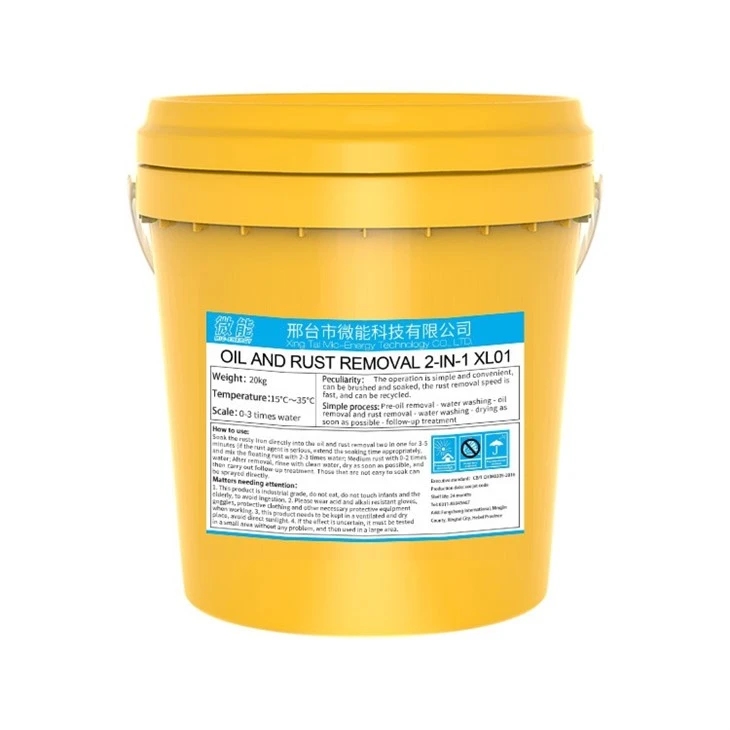
With the continuous advancement of technology and the increasing demand for environmental protection, the development of metal surface treatment agents has shown some new trends. On the one hand, the research and application of environmentally friendly metal surface treatment agents have become a hot topic. For example, surface treatment agents without phosphorus and chromium are gradually gaining popularity to reduce environmental pollution. On the other hand, multifunctional integrated metal surface treatment agents are also constantly developing. This treatment agent can achieve multiple functions in one process step, such as cleaning, rust prevention, phosphating, etc., simplifying the production process and improving production efficiency. In addition, with the development of nanotechnology, the application of nanomaterials in metal surface treatment agents has provided new ways to improve the surface properties of metals.
Metal surface treatment agents play a crucial role in modern industry. It can not only improve the performance and service life of metals, but also meet the diverse needs of different industries for metal surface quality. With the continuous innovation and development of technology, metal surface treatment agents will open up broader space for the application of metal materials, promoting the development and progress of various industries.