

In the modern food industry, desiccant packs have become an indispensable part of food packaging. They play a crucial role in absorbing moisture, preventing food from going moldy, deteriorating, and extending the shelf life of food. However, with the increasing attention to food safety, a question has been lingering in the minds of consumers: Are all desiccant packs of food safe? To answer this question, we need to conduct an in - depth analysis from multiple aspects, especially focusing on the core of Food grade desiccant.
The definition and core standards of Food grade desiccant
What is Food grade desiccant?
Food grade desiccant refers to a type of drying material that meets the relevant national food safety standards and can be in direct or indirect contact with food. Unlike industrial desiccants, which may contain toxic and harmful substances such as calcium oxide with excessive impurities, Food grade desiccant has strict requirements on its raw materials, production process, and packaging materials. Its main function is to maintain the low - humidity environment inside the food packaging, thereby ensuring the quality and safety of food. For example, in the packaging of mooncakes, biscuits, and dried fruits, we often see small packets of Food grade desiccant. These desiccants are carefully selected to avoid any adverse impact on food.
Core standards for Food grade desiccant
Different countries and regions have formulated strict standards for Food grade desiccant. In China, the "National Food Safety Standard for Food Additives" and "Food Safety National Standard for Food Contact Materials and Products" clearly stipulate the types of raw materials that can be used for Food grade desiccant, such as silica gel, activated alumina, calcium chloride (food grade), etc. At the same time, the standards also have strict requirements on the content of heavy metals, microorganisms, and other harmful substances in the desiccant. For instance, the content of lead in silica gel Food grade desiccant must not exceed 1mg/kg, and the total number of colonies must not exceed 100cfu/g. In the European Union, the EC No. 1935/2004 regulation also puts forward clear requirements for the safety of food contact materials, including Food grade desiccant. These standards are the core guarantee for ensuring the safety of Food grade desiccant. Only desiccants that meet these standards can be used in food packaging.
Common types of Food grade desiccant and their safety performance
Silica gel Food grade desiccant
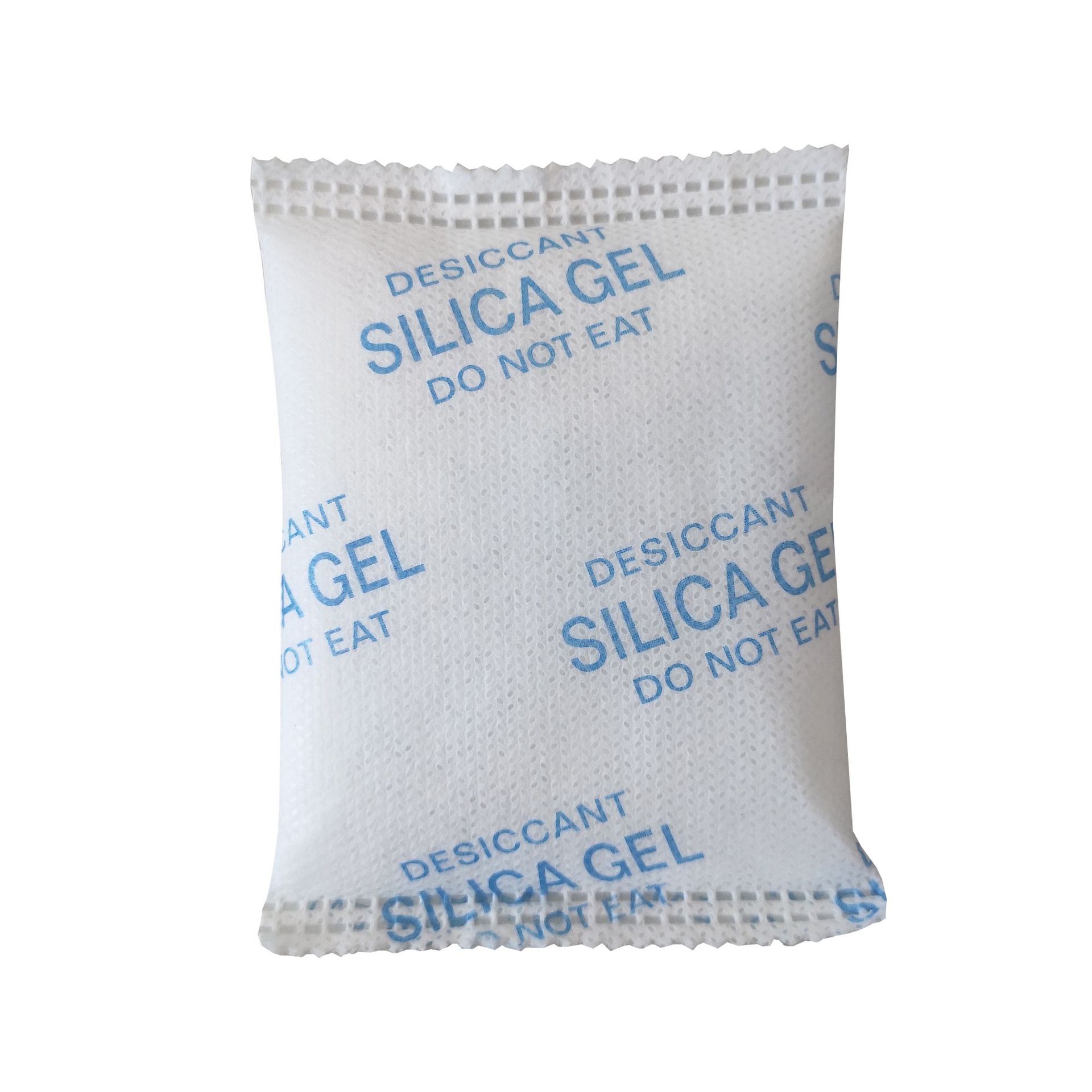
Silica gel is one of the most commonly used raw materials for Food grade desiccant. It is a kind of amorphous silica with a porous structure, which has a strong adsorption capacity for water vapor. From the perspective of safety performance, silica gel Food grade desiccant has significant advantages. First of all, it is non - toxic and tasteless. Even if it is accidentally ingested by children or pets, it will not be absorbed by the human body. It will be excreted naturally with the feces, and will not cause harm to the digestive system. Secondly, silica gel has good chemical stability. It does not react with most food ingredients, such as acids, alkalis, and oils, so it will not cause pollution to food. In addition, the packaging of silica gel Food grade desiccant is usually made of non - toxic and breathable materials, such as Tyvek paper and composite fiber paper. These packaging materials can prevent the desiccant particles from leaking and ensure that the desiccant is in direct contact with food without any safety risks. However, it should be noted that some low - quality silica gel desiccants on the market may not meet the food grade standards. They may contain excessive heavy metals or impurities, which will pose a threat to food safety. Therefore, when choosing food with silica gel desiccant, consumers should pay attention to checking whether the desiccant package has the "food grade" logo and the relevant certification marks.
Calcium chloride Food grade desiccant
Calcium chloride is another common raw material for Food grade desiccant. It has a strong hygroscopic capacity and can absorb water vapor several times its own weight. In terms of safety performance, calcium chloride Food grade desiccant also has certain guarantees, but it is different from silica gel desiccant. First of all, food - grade calcium chloride is 经过 strict purification, and the content of harmful substances such as heavy metals and impurities is controlled within the scope of food safety standards. It will not cause pollution to food when used in food packaging. Secondly, calcium chloride has a certain degree of deliquescence. After absorbing water, it will form a solution. Therefore, the packaging of calcium chloride Food grade desiccant must have good water resistance and sealing performance to prevent the solution from leaking and contacting food. If the packaging is damaged, the calcium chloride solution may corrode the food packaging or even contaminate the food. In addition, calcium chloride is slightly irritating. If it comes into contact with the skin or eyes, it may cause a certain degree of discomfort. Therefore, when using food with calcium chloride desiccant, consumers should avoid damaging the desiccant package. If the desiccant is accidentally spilled, it should be cleaned up in time and avoid contact with the skin and eyes.
Activated alumina Food grade desiccant
Activated alumina is a kind of porous aluminum oxide with a large specific surface area and strong adsorption capacity. It is also widely used in Food grade desiccant. In terms of safety performance, activated alumina Food grade desiccant has the characteristics of non - toxicity, odorlessness, and good chemical stability. It does not react with food ingredients and will not cause harm to food safety. At the same time, activated alumina has a high adsorption efficiency for water vapor, which can effectively maintain the dry environment inside the food packaging. However, activated alumina Food grade desiccant also has some limitations. For example, its adsorption capacity is easily affected by the temperature and humidity of the environment. In a high - temperature and high - humidity environment, its adsorption effect may be reduced. In addition, the production cost of activated alumina is relatively high, so it is not as widely used as silica gel and calcium chloride desiccants in food packaging.
Potential safety risks of non - standard food desiccant packs and related cases
Problems of non - standard food desiccant packs
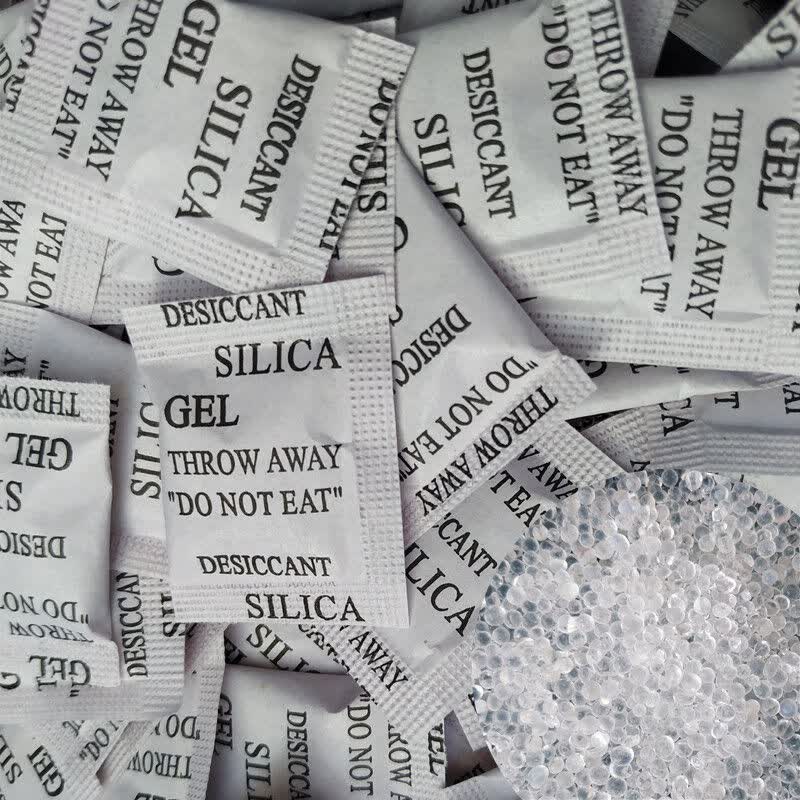
Although Food grade desiccant has strict standards and safety guarantees, there are still some non - standard food desiccant packs on the market. These desiccant packs do not meet the food grade standards and have many potential safety risks. First of all, the raw materials of non - standard desiccant packs may be industrial grade desiccants. These desiccants may contain toxic and harmful substances such as lead, arsenic, and mercury. When they are in contact with food, these harmful substances will migrate into the food, causing food pollution and endangering human health. Secondly, the production process of non - standard desiccant packs is not up to standard. There may be problems such as incomplete purification of raw materials and poor sealing of packaging, which will lead to the leakage of desiccant particles or the entry of harmful microorganisms into the desiccant, thus polluting the food. In addition, the packaging materials of non - standard desiccant packs may be unqualified. Some packaging materials may contain harmful plasticizers or solvents, which will migrate into the food under certain conditions and cause harm to human health.
Related cases of non - standard food desiccant packs
There have been many cases of food safety incidents caused by non - standard food desiccant packs at home and abroad. For example, in 2020, a food factory in a certain province in China used industrial grade calcium oxide desiccant in the packaging of candies. After the candies were sold on the market, several children accidentally ingested the desiccant. The industrial grade calcium oxide reacted with the water in the stomach to produce a large amount of heat, causing burns to the children's esophagus and stomach. After investigation, it was found that the food factory purchased the industrial grade calcium oxide at a low price to reduce production costs, and did not conduct any safety testing on it. Another example is that in 2019, a batch of imported dried fruits was inspected by the customs in a certain city in China. It was found that the desiccant packs in the dried fruit packaging did not meet the food grade standards. The content of lead in the desiccant exceeded the standard by 5 times, and the total number of colonies exceeded the standard by 10 times. These dried fruits were not allowed to enter the Chinese market and were returned or destroyed. These cases fully show that non - standard food desiccant packs have great potential safety risks and will cause serious harm to human health.
How to identify and use Food grade desiccant packs correctly
Methods to identify Food grade desiccant packs
In order to ensure the safety of food, consumers need to learn how to identify Food grade desiccant packs. First of all, check the logo on the desiccant package. Qualified Food grade desiccant packs should be clearly marked with "food grade", "non - toxic and tasteless", "do not eat" and other words. At the same time, there should be the name and address of the manufacturer, the production date, the shelf life, and the relevant certification marks, such as the QS mark (now replaced by the SC mark in China) and the ISO9001 quality management system certification mark. Secondly, observe the appearance of the desiccant. Food grade desiccant particles are usually uniform in size, clean in color, and free of impurities and peculiar smells. If the desiccant particles are uneven in size, discolored, or have a peculiar smell, it may be a non - standard desiccant. In addition, consumers can also check the packaging material of the desiccant. The packaging material of Food grade desiccant should be non - toxic, breathable, and have good sealing performance. It should not be easily damaged or leaked.
Correct use methods of Food grade desiccant packs
Even if it is a qualified Food grade desiccant pack, consumers need to use it correctly to ensure food safety. First of all, do not open the desiccant pack at will. The desiccant pack is sealed in the food packaging to maintain its adsorption capacity. If it is opened in advance, the desiccant will absorb the moisture in the air and lose its drying effect. Secondly, keep the desiccant pack away from children and pets. Although Food grade desiccant is non - toxic, it is not food. Children and pets may accidentally ingest it, which may cause choking or other discomfort. Therefore, after opening the food packaging, consumers should take out the desiccant pack in time and put it in a place that children and pets cannot reach. In addition, do not reuse the desiccant pack. After the desiccant absorbs water, its adsorption capacity will be reduced or lost. Reusing it will not achieve the drying effect and may even cause the growth of microorganisms, thus polluting the food.
Ensuring Safety of Food grade desiccant Packs
Through the above analysis, we can draw the following conclusion: Not all desiccant packs of food are safe. Only Food grade desiccant packs that meet the relevant national food safety standards have safety guarantees. Non - standard food desiccant packs, which use industrial grade raw materials, have unqualified production processes or packaging materials, have great potential safety risks and will cause serious harm to human health. Therefore, in the process of purchasing and using food, consumers should pay attention to identifying Food grade desiccant packs, choose food with qualified desiccant packs, and use the desiccant packs correctly. At the same time, the relevant regulatory authorities should strengthen the supervision of food desiccant packs, crack down on the production and sale of non - standard desiccant packs, and ensure the safety of food packaging and food quality. Only in this way can we truly protect the health and rights of consumers.