

What Are the Properties of Aluminum Nitrate?
Aluminum nitrate, a chemical compound with the formula Al(NO₃)₃, is an inorganic salt widely used in industrial and laboratory settings. Its unique combination of physical and chemical properties makes it valuable in applications ranging from catalysis to materials synthesis. This article explores the key characteristics of aluminum nitrate, including its structural features, physical and chemical behaviors, preparation methods, applications, and safety considerations.

1. Introduction to Aluminum Nitrate
Aluminum nitrate is a salt composed of aluminum ions (Al³⁺) and nitrate anions (NO₃⁻). It is highly soluble in water and typically exists in hydrated forms, with the nonahydrate Al(NO₃)₃·9H₂O being the most common. The compound is synthesized through reactions between aluminum-containing precursors and nitric acid, and its reactivity stems from the strong oxidizing nature of nitrate ions. Understanding its properties is essential for optimizing its use in chemical processes and industrial applications.
2. Physical Properties
Aluminum nitrate exhibits distinct physical traits that influence its handling and applications:
2.1 Appearance and State
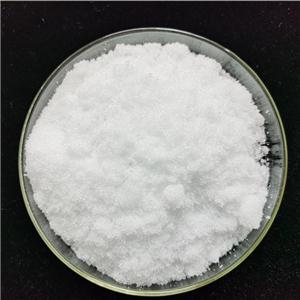
Pure aluminum nitrate is a white crystalline solid in its anhydrous form.
The nonahydrate form (Al(NO₃)₃·9H₂O) appears as colorless or slightly yellow crystals due to traces of impurities.
2.2 Solubility
It is hygroscopic and highly soluble in water, with solubility increasing with temperature. For example:
At 20°C: ~63.7 g/100 mL of water.
At 100°C: ~160 g/100 mL of water.
It is also soluble in ethanol and acetone but less so in nonpolar solvents.
2.3 Thermal Behavior
The nonahydrate melts at 73°C but decomposes upon further heating rather than boiling. Decomposition begins around 150°C, releasing toxic nitrogen oxides (NOₓ), oxygen, and water vapor, leaving aluminum oxide (Al₂O₃) as a residue:4Al(NO₃)₃→2Al₂O₃+12NO₂↑+3O₂↑4Al(NO₃)₃→2Al₂O₃+12NO₂↑+3O₂↑
2.4 Density and Molecular Weight
Nonahydrate density: ~1.72 g/cm³.
Molecular weight:
Anhydrous: 212.996 g/mol.
Nonahydrate: 375.134 g/mol.
3. Chemical Properties
Aluminum nitrate's reactivity is driven by the aluminum cation's Lewis acidity and the nitrate ion's oxidizing capacity.
3.1 Hydrolysis
In aqueous solutions, aluminum nitrate undergoes hydrolysis to form nitric acid and aluminum hydroxide, a reaction that becomes pronounced at elevated temperatures:
Al(NO₃)₃+3H₂O↔Al(OH)₃+3HNO₃Al(NO₃)₃+3H₂O↔Al(OH)₃+3HNO₃
This equilibrium gives solutions a pH of ~2–3, making them moderately acidic.
3.2 Oxidizing Agent
The nitrate ion (NO₃⁻) acts as a strong oxidizer in acidic conditions. For instance, aluminum nitrate can oxidize metals like copper:
3Cu+2Al(NO₃)₃→3Cu(NO₃)₂+2Al3Cu+2Al(NO₃)₃→3Cu(NO₃)₂+2Al
3.3 Coordination Chemistry
Al³⁺ ions form complexes with ligands such as water, ammonia, or organic donors. The hexaaquaaluminum ion [Al(H₂O)₆]³⁺ is common in aqueous solutions, influencing the compound's reactivity in synthesis.
4. Synthesis Methods
Aluminum nitrate is prepared via two primary routes:
4.1 Reaction of Aluminum with Nitric Acid
Aluminum metal reacts with concentrated nitric acid to produce anhydrous aluminum nitrate, water, and nitrogen dioxide:
Al+4HNO₃→Al(NO₃)₃+2H₂O+NO↑Al+4HNO₃→Al(NO₃)₃+2H₂O+NO↑
4.2 Neutralization of Aluminum Hydroxide
A safer method involves neutralizing aluminum hydroxide with nitric acid:
Al(OH)₃+3HNO₃→Al(NO₃)₃+3H₂OAl(OH)₃+3HNO₃→Al(NO₃)₃+3H₂O
The solution is then evaporated to crystallize the hydrated form.
5. Applications of Aluminum Nitrate
The compound's properties enable diverse industrial and scientific uses:
5.1 Catalysis
Serves as a catalyst in organic synthesis, such as the Friedel-Crafts alkylation of aromatic compounds.
5.2 Nuclear Industry
Used in uranium extraction by converting uranium oxides into water-soluble nitrates.
5.3 Textile and Leather Industries
Acts as a mordant in dyeing and a tanning agent for leather.
5.4 Corrosion Inhibition
Forms protective oxide layers on metals, reducing corrosion.
5.5 Laboratory Reagent
A precursor for synthesizing alumina nanoparticles and other aluminum compounds.
6. Safety and Handling
Despite its utility, aluminum nitrate poses health and environmental risks:
6.1 Health Hazards
Corrosive: Causes skin and eye irritation upon contact.
Toxic fumes: Decomposition releases NOₓ gases, which are respiratory hazards.
6.2 Storage and Disposal
Store in cool, dry areas away from combustibles.
Neutralize waste with bases (e.g., sodium bicarbonate) before disposal.

7. Conclusion
Aluminum nitrate's solubility, acidity, and oxidizing power make it indispensable in industries ranging from textiles to nuclear technology. However, its reactive nature demands careful handling to mitigate risks. Ongoing research continues to uncover novel applications, such as in advanced materials and sustainable chemistry, ensuring its relevance in future innovations.