

Quartz tubes are cylindrical structures made from high-purity quartz, a mineral composed primarily of silicon dioxide (SiO₂). This material is renowned for its exceptional physical and chemical properties, which include an extremely high melting point (around 1713°C), excellent thermal stability, low thermal expansion coefficient, high transparency to ultraviolet (UV), visible, and infrared (IR) light, and remarkable chemical inertness. These characteristics make quartz tubes stand out among other materials, enabling them to perform in environments where many substances would fail.
Due to their unique combination of properties, quartz tubes have found extensive applications across various industries. From the high-tech semiconductor manufacturing plants to the research labs of material scientists, from the energy-producing solar farms to the medical facilities ensuring public health, quartz tubes play an indispensable role. This article aims to explore the diverse uses of quartz tubes in detail, categorizing them into different fields and delving into the specific mechanisms and advantages they offer in each application to provide a comprehensive understanding.
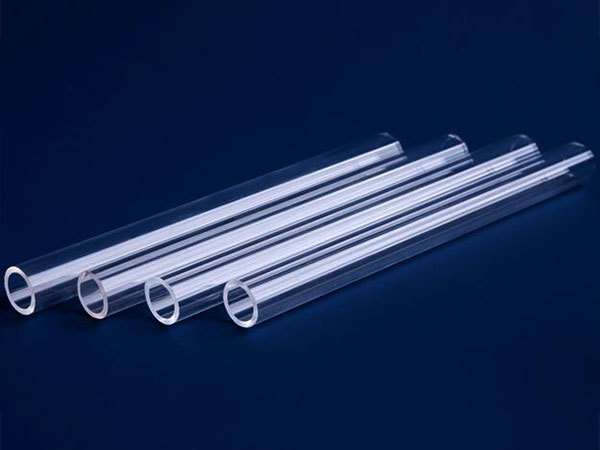
1.Regarding the industrial manufacturing of quartz tubes
The industrial sector relies heavily on materials that can withstand harsh conditions, maintain purity, and ensure precision. Quartz tubes meet all these requirements, making them a staple in several industrial processes.
1.1 Semiconductor Industry
The semiconductor industry is one of the most technologically advanced fields, where even the tiniest impurity or defect can render a whole batch of products useless. Quartz tubes are, therefore, a critical component in the fabrication of integrated circuits (ICs) and other semiconductor devices.
In the diffusion process, which is essential for creating the desired electrical properties in semiconductor wafers, quartz tubes act as the core reaction chamber. The wafers, usually made of silicon, are placed inside the quartz tube, which is then heated to high temperatures (often between 800°C and 1200°C) in a furnace. A gas containing the dopant (such as boron or phosphorus) is introduced into the tube. The high purity of the quartz (typically 99.99% or higher) ensures that no foreign particles or contaminants are released into the environment, which could otherwise mix with the dopant or the wafer surface, altering the electrical characteristics of the semiconductor. This level of purity is achieved through rigorous manufacturing processes, including melting and refining quartz sand to remove impurities like aluminum, iron, and other metals.
Oxidation is another key process in semiconductor manufacturing where quartz tubes are vital. During oxidation, a thin layer of silicon dioxide (SiO₂) is grown on the surface of the silicon wafer. This layer serves multiple purposes: as an insulator between different components of the IC, as a mask during etching processes to protect certain areas of the wafer, and as a passivation layer to prevent contamination. The quartz tube must withstand the high temperatures (900 - 1200°C) required for this process, and its chemical inertness ensures that it does not react with the oxygen or steam used in the oxidation reaction. This inertness is crucial because any reaction could lead to the formation of unwanted compounds that would deposit on the wafer, compromising the quality of the oxide layer. Moreover, the uniform heating provided by the quartz tube, due to its low thermal expansion coefficient, ensures that the oxide layer grows evenly across the entire wafer surface, which is essential for the performance and reliability of the final semiconductor device.
Ion implantation is a process where ions of dopants are accelerated and implanted into the semiconductor wafer to modify its electrical properties. Quartz tubes are used in the ion implantation system as part of the beamline, guiding the ion beam and maintaining a vacuum environment. The high vacuum compatibility of quartz, along with its ability to withstand the energetic ions, makes it suitable for this application. Additionally, the transparency of quartz allows for monitoring of the ion beam, ensuring that it is properly aligned and focused on the wafer.
1.2 Glass and Ceramic Industry
The production of specialty glasses and ceramics demands materials that can handle high temperatures and maintain the purity of the final product. Quartz tubes excel in these areas, making them valuable in this industry.
In the manufacturing of optical glasses, which are used in lenses, prisms, and other optical components, purity is of utmost importance. Even small amounts of impurities can affect the refractive index and transmission properties of the glass. Quartz tubes serve as crucibles or containers for melting the raw materials (such as silica, lead oxide, and other metal oxides) used in optical glass production. The high temperature resistance of quartz allows it to withstand the molten glass, which can reach temperatures above 1500°C, without melting or deforming. Its chemical inertness ensures that the molten glass does not react with the quartz, preventing the introduction of impurities. For example, in the production of high-precision lenses for cameras or telescopes, the use of quartz tubes guarantees that the glass has a uniform composition and optical properties, which is essential for clear image formation.
Ceramic materials, known for their hardness, heat resistance, and electrical insulation properties, also benefit from the use of quartz tubes in their production. In processes such as sintering, where ceramic powders are heated to high temperatures to form a solid mass, quartz tubes provide a controlled environment. The tube can be filled with inert gases (like nitrogen or argon) to prevent oxidation of the ceramic materials during sintering. The uniform heating provided by the quartz tube ensures that the ceramic part sinters evenly, avoiding cracks or defects. For instance, in the manufacturing of ceramic components for aerospace engines, which must withstand extreme temperatures and pressures, the use of quartz tubes in the sintering process helps ensure the structural integrity and performance of the parts.
1.3 Metallurgy
Metallurgy involves the extraction, purification, and processing of metals to create materials with desired properties. Quartz tubes find application in heat treatment processes, particularly annealing, which is crucial for improving the mechanical properties of metals.
Annealing is a process where metals are heated to a specific temperature (below their melting point) and then slowly cooled. This relieves internal stresses that may have been introduced during manufacturing processes such as rolling, forging, or machining, which can cause the metal to be brittle or prone to cracking. The quartz tube is used to enclose the metal parts during annealing, creating a controlled atmosphere. By filling the tube with inert gases (such as argon or helium) or reducing gases (such as hydrogen), oxidation of the metal surface is prevented. Oxidation can form a layer of metal oxide on the surface, which can affect the appearance, corrosion resistance, and mechanical properties of the metal.
The transparency of quartz is a significant advantage in annealing processes. It allows operators to visually inspect the metal parts during heating and cooling, ensuring that the process is proceeding as intended. For example, in the annealing of copper wires used in electrical applications, the transparency of the quartz tube allows workers to check for any discoloration or deformation of the wires, which could indicate problems with the annealing temperature or atmosphere. This visual inspection helps in maintaining the quality of the copper wires, ensuring that they have the required conductivity and flexibility.
Furthermore, the low thermal expansion coefficient of quartz ensures that the tube does not expand or contract significantly during temperature changes, which helps maintain a consistent atmosphere inside the tube. This stability is important for achieving uniform annealing results across all the metal parts being processed.
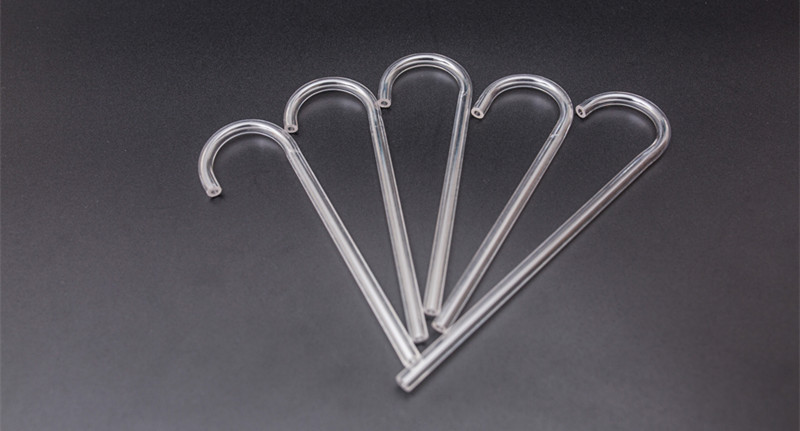
2. Quartz tube in scientific research and laboratory applications
Scientific research and laboratory work require precise control over experimental conditions and materials that do not interfere with the experiments. Quartz tubes are widely used in these settings due to their purity, chemical inertness, and ability to withstand various environmental conditions.
2.1 Chemical Analysis
Chemical analysis techniques rely on accurate measurements and minimal interference from the equipment used. Quartz tubes are ideal for these applications, providing a clean and inert environment for sample analysis.
Atomic absorption spectroscopy (AAS) is a technique used to determine the concentration of specific elements in a sample. In AAS, the sample is atomized (converted into free atoms) in a flame or graphite furnace, and the absorption of light by these atoms at a specific wavelength is measured. Quartz tubes are used as the atomization cell in some AAS systems, particularly those using a graphite furnace. The high purity of quartz ensures that there are no impurities that could absorb light at the same wavelength as the element being analyzed, which would lead to inaccurate results. Additionally, the chemical inertness of quartz prevents it from reacting with the sample or the reagents used, ensuring that the composition of the sample remains unchanged during analysis. For example, in the analysis of heavy metals in water samples using AAS, the use of a quartz tube as the atomization cell guarantees that the results are reliable and accurate, which is crucial for environmental monitoring and public health assessments.
Inductively coupled plasma mass spectrometry (ICP-MS) is a powerful analytical technique used for the detection and quantification of trace elements. In ICP-MS, the sample is introduced into an inductively coupled plasma (ICP), where it is ionized. The ions are then separated and detected based on their mass-to-charge ratio. Quartz tubes are used in the ICP-MS system as part of the sample introduction system. The quartz torch, which generates the plasma, is connected to a quartz tube that transports the sample (in the form of an aerosol) into the plasma. The high temperature resistance of quartz allows it to withstand the high temperatures of the plasma (around 6000 - 10,000 K) without melting or decomposing. Its chemical inertness prevents reactions with the plasma or the sample, ensuring that the ions generated are representative of the sample composition. The transparency of quartz also allows for easy observation of the plasma, which is useful for optimizing the instrument parameters.
2.2 Material Science Research
Material science research focuses on the development and characterization of new materials with unique properties. Quartz tubes provide a controlled environment for various experiments, enabling researchers to synthesize and study materials under precise conditions.
The synthesis of nanoparticles is a rapidly growing area of material science, as nanoparticles exhibit unique optical, electrical, and mechanical properties compared to their bulk counterparts. Quartz tubes are commonly used in the synthesis of nanoparticles via methods such as chemical vapor deposition (CVD) and solvothermal synthesis. In CVD, a vapor containing the precursor materials is introduced into a quartz tube, which is heated to a specific temperature. The precursor molecules react on the surface of a substrate (placed inside the tube) to form nanoparticles. The controlled atmosphere inside the quartz tube (including gas composition, pressure, and flow rate) allows researchers to control the size, shape, and composition of the nanoparticles. For example, in the synthesis of gold nanoparticles, which are used in biomedical imaging and drug delivery, the use of a quartz tube in CVD ensures that the nanoparticles have a uniform size and shape, which is essential for their biological applications.
Thin film deposition is another important area of material science, with applications in electronics, optics, and energy. Quartz tubes are used in thin film deposition techniques such as sputtering and evaporation. In sputtering, a target material is bombarded with ions, causing atoms to be ejected and deposited onto a substrate to form a thin film. The quartz tube can be used to enclose the sputtering chamber, maintaining a vacuum environment and controlling the gas atmosphere. The high temperature resistance of quartz allows for heating of the substrate during deposition, which can improve the adhesion and crystallinity of the thin film. In evaporation, the material to be deposited is heated until it evaporates, and the vapor condenses onto the substrate. Quartz tubes can be used as crucibles for heating the material, as they can withstand the high temperatures required for evaporation without reacting with the material.
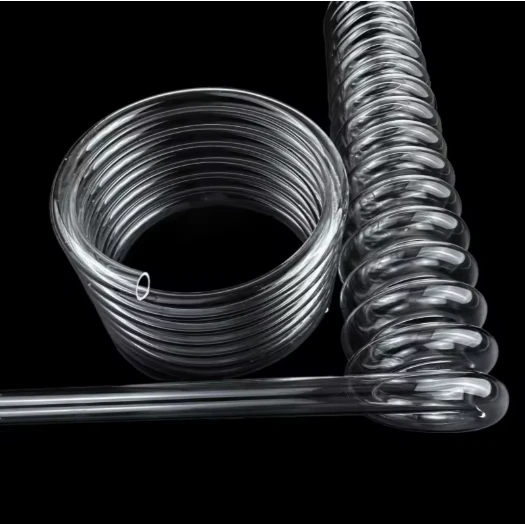
3. Quartz tubes in the energy sector
The energy sector is constantly seeking materials that can improve efficiency, durability, and safety. Quartz tubes contribute to these goals in both renewable and non-renewable energy applications.
3.1 Solar Energy
Solar energy is a clean and renewable source of energy, and the production of solar cells is a key area of development. Quartz tubes play an important role in the manufacturing of solar cells, helping to improve their efficiency and performance.
Similar to their use in the semiconductor industry, quartz tubes are used in the diffusion process for doping silicon wafers in solar cell production. Doping introduces impurities into the silicon to create a p-n junction, which is essential for the conversion of light into electricity. The high purity of the quartz tube ensures that the doping process is precise and uniform, which is crucial for the efficiency of the solar cell. A uniform p-n junction allows for better separation of electron-hole pairs generated by light absorption, increasing the amount of electricity produced.
In addition to diffusion, quartz tubes are used in the deposition of thin films on solar cells. These thin films, such as anti-reflective coatings and transparent conductive oxides, help to improve the light absorption and electrical conductivity of the solar cell. For example, an anti-reflective coating reduces the amount of light reflected from the surface of the solar cell, allowing more light to be absorbed and converted into electricity. Quartz tubes are used in the deposition processes (such as CVD or sputtering) for these thin films, providing a controlled environment that ensures the films are uniform and have the desired properties. The high temperature resistance of quartz allows for the deposition of films at elevated temperatures, which can improve their quality and adhesion to the solar cell substrate.
The transparency of quartz is also beneficial in solar cell production. It allows for monitoring of the deposition process, ensuring that the thin films are being deposited evenly and to the correct thickness. This helps in maintaining the quality and efficiency of the solar cells.
3.2 Nuclear Energy
Nuclear energy is a powerful source of electricity, but it requires materials that can withstand the harsh conditions inside a nuclear reactor, including high temperatures, radiation, and corrosive environments. Quartz tubes have certain applications in this field, particularly in specific reactor designs.
In some advanced reactor designs, quartz tubes are used as cladding materials for nuclear fuel rods. The cladding is a protective layer that surrounds the nuclear fuel, preventing the release of radioactive fission products into the reactor coolant and containing the fuel within the rod. Quartz is an excellent candidate for this application due to its high melting point, which allows it to withstand the high temperatures generated during nuclear fission (often exceeding 1000°C). Its radiation resistance is another key property, as it can endure the high levels of ionizing radiation present in the reactor without significant degradation. This radiation resistance ensures that the cladding remains intact over the lifetime of the fuel rod, preventing the release of radioactive materials.
Quartz tubes also exhibit good chemical inertness towards the reactor coolant, which can be water, gas, or liquid metal. This inertness prevents corrosion of the cladding, which could lead to leaks and the release of radioactive substances. Additionally, the low thermal neutron absorption cross-section of quartz is beneficial in nuclear reactors, as it does not absorb a significant number of thermal neutrons, which are necessary for sustaining the nuclear fission chain reaction.

4. Quartz tubes in the lighting industry
The lighting industry relies on materials that can handle high temperatures, transmit light efficiently, and withstand the chemical reactions that occur during operation. Quartz tubes are widely used in various lighting technologies for these reasons.
4.1 Fluorescent Lamps
Fluorescent lamps are a common type of lighting that is energy-efficient and produces a bright, uniform light. They consist of a glass tube coated with a phosphor on the inside, and a small amount of mercury vapor and an inert gas (such as argon) inside the tube. When an electric current is applied, the mercury vapor is excited, emitting ultraviolet (UV) light. The phosphor coating absorbs the UV light and re-emits it as visible light.
In some fluorescent lamps, a quartz tube is used as the inner tube to contain the mercury vapor. This is particularly important in high-output fluorescent lamps, which operate at higher temperatures. The high temperature resistance of quartz allows it to withstand the heat generated by the lamp, which can reach temperatures of several hundred degrees Celsius. The chemical inertness of quartz prevents it from reacting with the mercury vapor, ensuring that the mercury remains contained and the lamp operates safely. Additionally, the transparency of quartz to UV light allows the UV radiation emitted by the mercury vapor to pass through to the phosphor coating, maximizing the efficiency of the light conversion process.
The use of a quartz inner tube also helps to protect the outer glass tube from the corrosive effects of the mercury vapor. Without the quartz tube, the mercury could react with the outer glass, leading to degradation of the lamp and reduced lifespan. This makes quartz tubes an essential component in ensuring the longevity and performance of fluorescent lamps.
4.2 High-Intensity Discharge (HID) Lamps
High-intensity discharge (HID) lamps are used in applications where high levels of light are required, such as outdoor lighting, sports stadiums, and industrial facilities. Examples of HID lamps include metal halide lamps, high-pressure sodium lamps, and mercury vapor lamps. These lamps produce light by means of an electric arc discharge in a high-pressure gas mixture.
In HID lamps, the arc discharge is contained within a quartz tube, often referred to as the arc tube. The quartz tube must withstand the high temperatures (up to 3000°C) and pressures (several atmospheres) generated by the arc discharge. Its high melting point and thermal stability make it suitable for this harsh environment. The chemical inertness of quartz is also crucial, as it prevents reactions with the gases (such as argon, mercury, and metal halides) and the electrodes inside the lamp. These reactions could lead to the degradation of the tube or the contamination of the gas mixture, reducing the lamp's light output and lifespan.
The transparency of quartz to visible light ensures that the light generated by the arc discharge is efficiently transmitted out of the lamp. In metal halide lamps, which produce a white light similar to natural sunlight, the quartz arc tube allows for the proper emission of light from the metal halide salts, which are vaporized by the arc. This results in a high-quality light that is suitable for applications where color rendering is important, such as in retail stores or museums.

5. Quartz tubes in Medical and Pharmaceutical Fields
The medical and pharmaceutical fields require materials that are sterile, inert, and able to withstand rigorous cleaning and sterilization processes. Quartz tubes meet these requirements, making them valuable in various applications.
5.1 Sterilization
Sterilization is critical in healthcare, laboratories, and pharmaceutical production to prevent infections and ensure product safety. Ultraviolet (UV) sterilization is widely used, leveraging short-wavelength UV-C (200-280nm) to destroy microorganisms' DNA/RNA, halting reproduction. Quartz tubes are vital in such systems.
Quartz offers exceptional UV-C transmittance-far higher than glass-maximizing UV energy transfer and sterilization efficiency. It resists high temperatures from UV lamps, maintaining structural and optical integrity, and is inert, avoiding reactions with UV light or sterilized substances to prevent contamination.
In healthcare, quartz-based UV systems disinfect surfaces in operating rooms, labs, and patient areas, and sanitize medical tools post-cleaning. In pharmaceuticals, they sterilize air, water, and equipment in cleanrooms, meeting strict purity standards. They also purify water in healthcare and pharmaceutical facilities.