

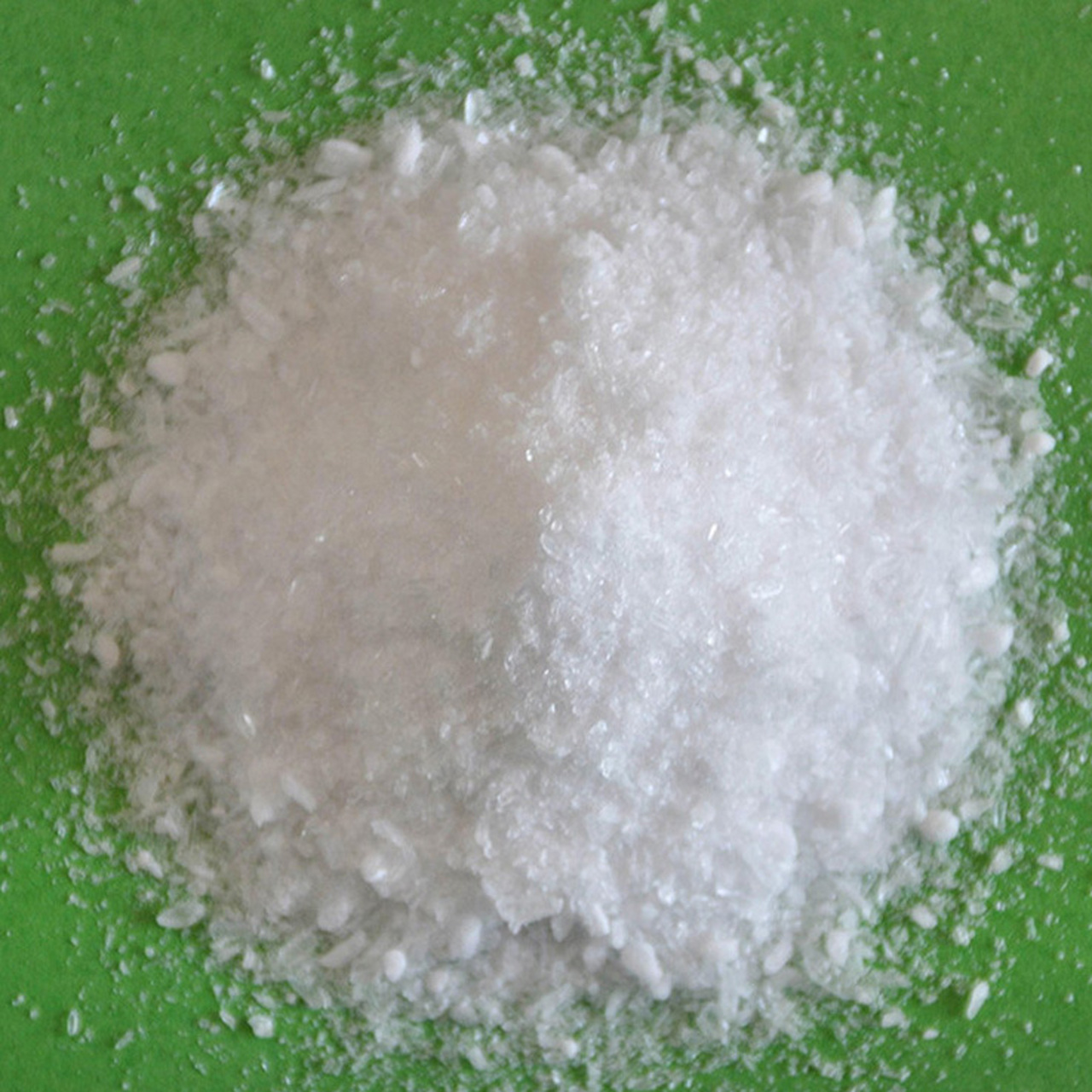
Ammonium sulfamate, also known as amidosulfonic acid ammonium salt, is a white crystalline powder with a chemical formula of NH₄SO₃NH₂. It is an important inorganic compound with a wide range of applications in various industries due to its unique chemical properties and physical characteristics. Understanding ammonium sulfamate is crucial as it plays a significant role in modern industrial processes and scientific research.

Chemical Properties
Ammonium sulfamate has a molar mass of approximately 114.12 g/mol. It is highly soluble in water, which makes it convenient for various aqueous - based applications. When dissolved in water, it dissociates into ammonium ions (NH₄⁺) and sulfamate ions (SO₃NH₂⁻). The sulfamate ion contains a sulfur atom in a +6 oxidation state, which endows it with certain oxidation - reduction properties.
It is a relatively stable compound under normal conditions, but it can react with strong oxidants. For example, in the presence of strong oxidizing agents like potassium permanganate, ammonium sulfamate can participate in redox reactions. These reactions are often used in chemical analysis to determine the concentration of ammonium sulfamate or other substances involved in the reaction system.
Preparation Methods
One of the common methods for preparing ammonium sulfamate is the reaction between sulfur trioxide (SO₃) and ammonia (NH₃). In this process, sulfur trioxide can be introduced in the form of fuming sulfuric acid. When ammonia gas is bubbled through fuming sulfuric acid, a rapid reaction occurs, and ammonium sulfamate is formed. The chemical reaction can be expressed as: NH₃ + H₂SO₄·xSO₃ → NH₄SO₃NH₂. This reaction is exothermic, so appropriate cooling measures need to be taken during the production process to control the reaction temperature and ensure product quality.
Another method involves the reaction of urea and sulfuric acid. Urea (CO(NH₂)₂) reacts with concentrated sulfuric acid to first form amidosulfonic acid, and then through the addition of ammonia or an ammonium - containing compound, ammonium sulfamate is obtained. This two - step process requires careful control of reaction conditions such as temperature, reaction time, and the molar ratio of reactants to achieve high - yield and high - purity products.
Applications
Agriculture
In agriculture, ammonium sulfamate is used as a nitrogen fertilizer. The ammonium ions in it can be absorbed by plants and serve as a source of nitrogen, which is essential for plant growth, especially for the synthesis of proteins, nucleic acids, and chlorophyll. Compared with some traditional nitrogen fertilizers, ammonium sulfamate has the advantage of slow - release in the soil to a certain extent. This slow - release property helps to reduce nitrogen loss through processes such as volatilization and leaching, improving the utilization rate of nitrogen by plants.
Industrial Cleaning
It is widely used in industrial cleaning agents. Its acidic nature makes it effective in removing scale, rust, and other deposits on metal surfaces. For example, in the cleaning of boilers, pipelines, and heat exchangers, ammonium sulfamate can dissolve calcium carbonate, calcium sulfate, and iron oxide deposits. When used in cleaning agents, it can be formulated with other surfactants and additives to enhance its cleaning performance. Moreover, compared with some strong mineral acids, ammonium sulfamate is less corrosive to metals, which helps to protect the equipment being cleaned while achieving good descaling results.
Electroplating Industry
In the electroplating industry, ammonium sulfamate is used as a leveling agent and brightener. During the electroplating process, it can adjust the deposition rate of metal ions on the substrate, resulting in a more uniform and smooth plating layer. It also helps to improve the brightness and luster of the electroplated product, enhancing the aesthetic and functional properties of the electroplated parts.
Chemical Synthesis
As an important chemical intermediate, ammonium sulfamate participates in many organic and inorganic synthesis reactions. It can be used to prepare various sulfonamide - containing compounds, which have applications in the pharmaceutical industry, such as in the synthesis of certain antibacterial and anti - inflammatory drugs. Additionally, it can be involved in the synthesis of some special - purpose polymers and materials with unique properties.

Safety and Precautions
Although ammonium sulfamate has many useful applications, it also requires proper handling. Inhalation of its dust may cause irritation to the respiratory tract, so appropriate respiratory protection equipment should be worn when working with it. Skin contact can also lead to irritation, and in case of contact, it is necessary to wash the affected area with plenty of water immediately. When storing ammonium sulfamate, it should be kept in a cool, dry place away from strong oxidants and combustible materials to prevent potential chemical reactions and safety hazards.
In conclusion, ammonium sulfamate is a versatile chemical compound with a wide range of applications in different fields. Its unique chemical properties and preparation methods contribute to its importance in modern industry and agriculture. As research continues, it is likely that more innovative applications of ammonium sulfamate will be discovered, further expanding its role in various sectors. At the same time, ensuring safe handling and use of ammonium sulfamate is crucial to fully realize its potential while minimizing risks.