

Cutting fluid in the metal cutting, grinding processing process, is used to cool and lubricate the tool and the work piece industrial liquid, the reasonable use of cutting fluid in cutting can not only reduce the tool and chip, tool and machining surface friction, but also reduce cutting force and cutting temperature, reduce tool wear, improve the quality of the machined surface.
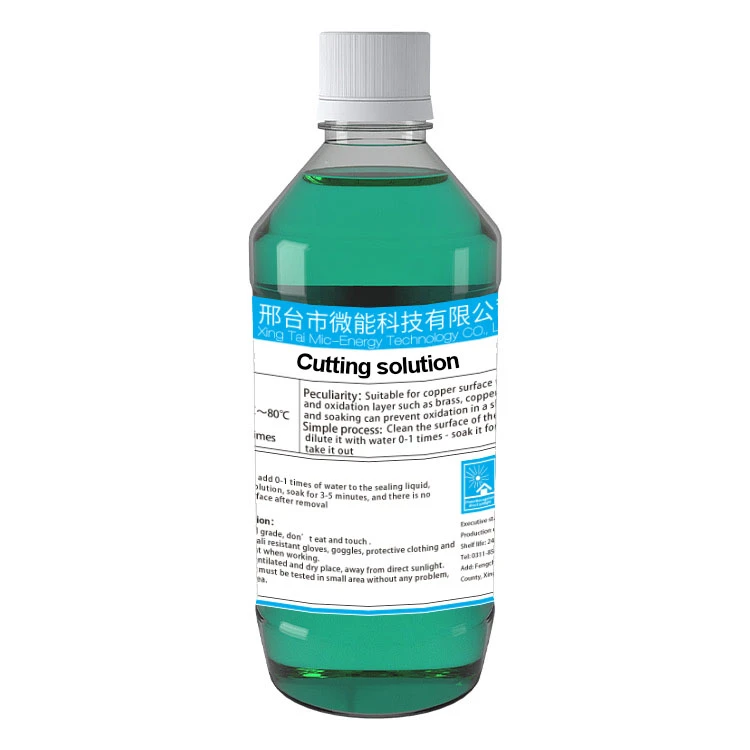
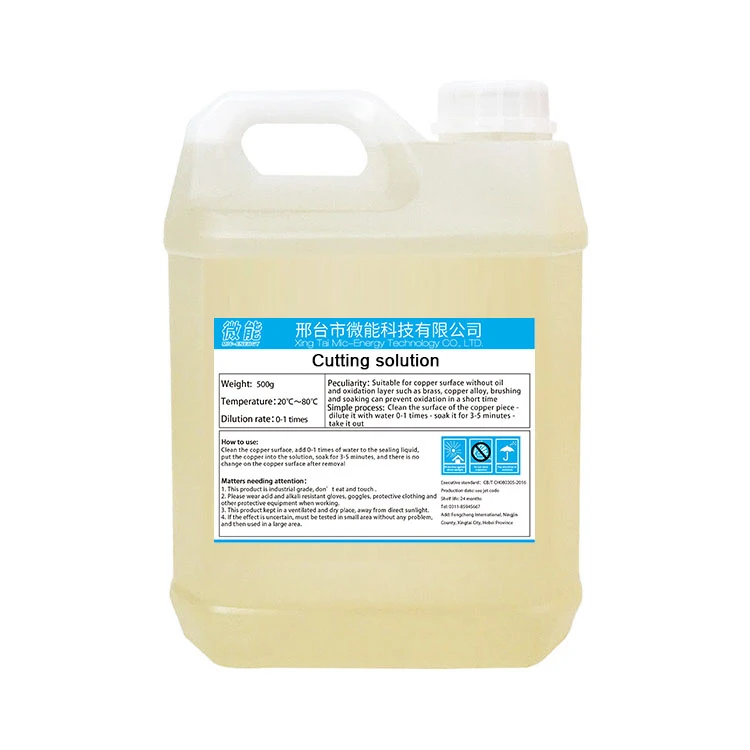
1. Classification of cutting fluid:
There are two main types of processing fluids used in the metal processing process: one is a water-insoluble processing fluid, also known as oil-based cutting fluid (cutting oil). The other is a water-soluble processing fluid, also known as water-based cutting fluid (according to different components can be divided into three types: emulsified, semi-synthetic, full synthetic). The former has outstanding lubricity and the latter has strong cooling capacity.
As far as cutting fluids are concerned, most of the current users prefer water-based products (soluble cutting fluids and emulsions), which accounts for about 70% of the market share; From the brand point of view of cutting fluid, most of the current market share is from foreign cutting fluid brands.
2. The role of cutting fluid:
Through practice, it has been proved that in the machining process, the selection of the appropriate metal cutting fluid can reduce the cutting temperature of 60 ~ 150℃, reduce the surface roughness of 1 ~ 2, reduce the cutting resistance of 15 ~30%, and exponentially improve the service life of the tool, saw blade, drill and so on. And can wash away iron pins from the cutting zone, thereby improving production efficiency and product quality. Therefore, it is widely used in the machining process, which has the following aspects
(1) Lubrication: the cutting fluid invades the tool, the work piece and the formation of an adsorption film between the cutting, reducing friction and bonding, reducing the cutting resistance, ensuring the cutting quality and extending the service life of the tool.
(2) Cooling effect: in the work piece cutting process, it can timely reduce the temperature of the cutting zone, cool the tool and the work piece, improve the cutting efficiency and cutting quality, and extend the tool life. The cooling performance of cutting liquid depends on its heat transfer coefficient, specific heat capacity, gasification heat, gasification speed, flow rate, flow rate and its own temperature. In general, the cooling performance of aqueous solution is the best, followed by emulsion, and oil is the worst.
(3) Cleaning effect: cutting chips, powder, sand, etc. generated by cutting/grinding processing, if accumulated on the cutting point, it will cause harm to the processing, resulting in damage to tools and scratches on the workpiece, so it must be quickly removed. In addition, long cutting chips may also be wrapped around the tool, which is very dangerous for the operation, so the processing fluid also plays a cleaning role.
(4) anti-rust effect: in the cutting process, the workpiece and the machine tool are susceptible to the surrounding media such as moisture, oxygen, hand sweat, acidic substances and dust in the air and produce rust, so the processing fluid itself is not only required to rust the machine tool, tools and workpieces, but also has good anti-rust ability for metal products.
(5) Pin breaking effect: In CNC machining such as screw thread, we can also add a pin breaking device in the lathe, use a high pressure pump to pressurize the cutting fluid (5 ~ 10MPa), through the special nozzle to the direction of the tool intermittent spray, the lathe machining process in the broken pin played a positive role, improve the automation of the lathe, reduce the manual labor of the operator, improve the safety factor.
3. Selection of cutting fluid
3.1 Selection according to the processing nature
(1) Rough machining due to the processing allowance and cutting amount are large, so in the cutting process to produce a large amount of cutting heat easy to make the tool wear rapidly, then should reduce the cutting area temperature, so should choose to cooling mainly emulsion or synthetic cutting fluid.
(2) Finishing In order to reduce the friction between the workpiece and the tool and ensure the machining accuracy and surface quality of the workpiece, it should be lubricated with good extreme pressure cutting oil or high concentration extreme pressure emulsion.
(3) semi-closed processing such as drilling, reaming and deep hole processing, chip removal and heat dissipation conditions are very poor, not only make the tool wear, easy to anneal, and the chip is easy to pull the workpiece has been processed surface. To this end, it is necessary to choose an extreme pressure emulsion or extreme pressure cutting oil with smaller viscosity, and increase the pressure and flow of the cutting fluid, so that on the one hand, cooling and lubrication can be carried out, and on the other hand, part of the chips can be washed out.
3.2 According to the workpiece material
(1) The emulsion is used in general roughing; When finishing, select the vulcanized emulsion.
(2) Processing brittle metals such as cast iron and cast aluminum, in order to avoid fine cutting blocking the cooling system or adhering to the machine tool is difficult to remove, generally do not use cutting fluid, but in the finishing process, in order to improve the surface processing quality of the workpiece, can choose good lubrication, small viscosity of kerosene or 7%~10% of the emulsion.
(3) When processing non-ferrous metals or copper alloys, it is not appropriate to use sulfur-containing cutting fluid to avoid corrosion of the workpiece.
(4) When processing magnesium alloy, do not use cutting fluid to avoid burning and fire. If necessary, it can be cooled by compressed air.
(5) Processing difficult-to-process materials, such as stainless steel, heat-resistant steel, etc., 10% to 15% of extreme pressure cutting oil or extreme pressure emulsion should be selected.
4. Future trends of cutting fluids:
Throughout the cutting fluid market in the 21st century, some emerging cutting technologies and corresponding products have been introduced. In the face of the improvement of human environmental awareness, the market has higher and higher requirements for the green environmental protection performance of cutting oil. For example, the method of replacing mineral oil as the base oil of cutting oil with biodegradable polyolefin synthetic substances that do not contain aromatic hydrocarbons, and replacing toxic anti-additives in water-based cutting fluid with tungstate and molybdate has been gradually promoted.
The pursuit of processing efficiency and production quality is the eternal theme of the industry, excellent performance, stability, long and durable cutting fluid products have gradually been favored by the market. Although this kind of production quality is expensive, market users are slowly getting used to comprehensive accounting of production costs to measure the cost performance of cutting fluid products.
With the processing classification becoming more and more fine, the cutting fluid also has a non-standardized development trend. For example, for high-speed grinding, some companies have developed high-performance grinding oil, which has changed the operation mode of replacing grinding oil with cutting fluid in the past.
In addition, there are new technologies such as liquid nitrogen as cutting fluid, selecting the appropriate amount of cutting fluid to achieve the best cutting effect, and dry cutting. In terms of the overall trend, the emerging cutting technology will pursue the goal of high efficiency, high performance, low pollution and low energy consumption, leading the continuous development of cutting fluid process technology.