

Introduction
In the realm of metal protection, rust is a persistent enemy. Dehydrating rust - preventive oil has emerged as a crucial solution to combat this problem. It is a specialized type of oil - based product designed to not only prevent rust formation but also to remove water from metal surfaces, which is a key factor in rust initiation. 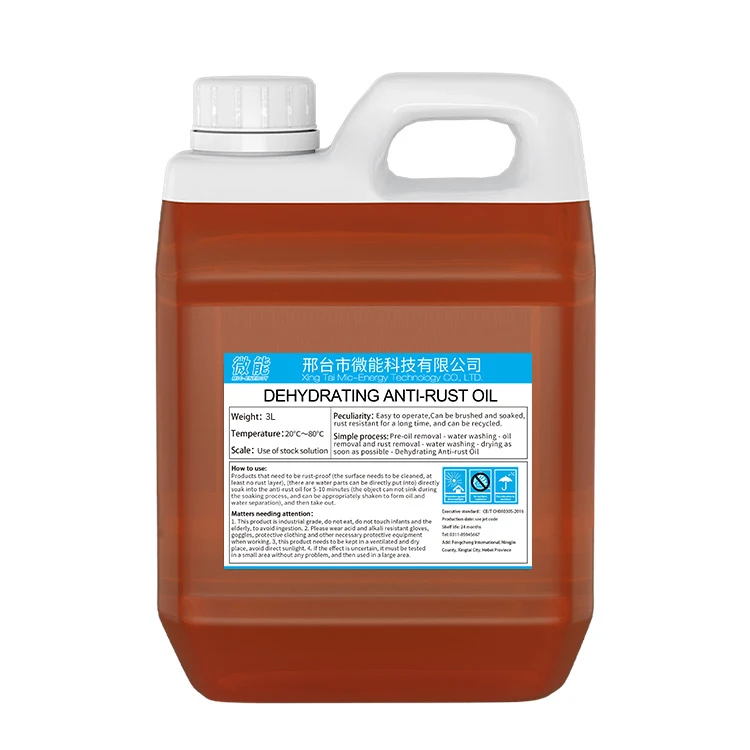
Composition
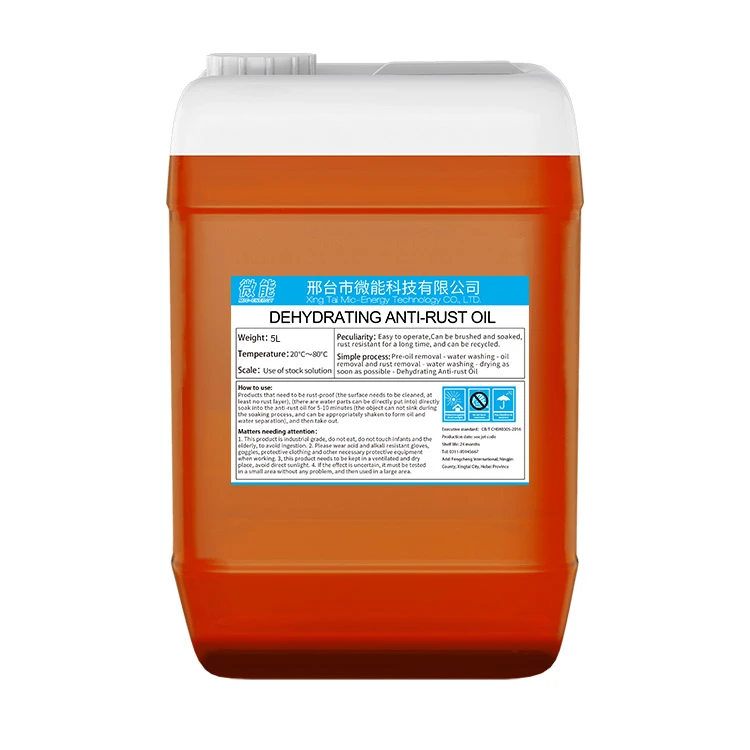
Dehydrating rust - preventive oils typically consist of a blend of base oils, rust inhibitors, and surfactants. The base oils can be mineral oils, synthetic oils, or a combination of both. Mineral oils are cost - effective and have good lubricating properties. Synthetic oils, on the other hand, offer enhanced performance in extreme conditions, such as high temperatures or high humidity environments.
Rust inhibitors are essential components. These can be organic or inorganic compounds. Organic rust inhibitors often work by forming a molecular film on the metal surface. This film acts as a barrier, preventing oxygen and water from coming into contact with the metal. Inorganic rust inhibitors, like phosphates, can react with the metal surface to form a protective layer.
Surfactants are added to improve the oil's ability to displace water. They reduce the surface tension between the oil and water, allowing the oil to spread easily over the wet metal surface and push the water away.
Working Principle
1.Water Displacement
When applied to a wet metal surface, the surfactants in the dehydrating rust - preventive oil immediately start to work. The hydrophilic (water - loving) heads of the surfactant molecules are attracted to the water molecules, while the hydrophobic (water - hating) tails are attracted to the oil phase. This causes the oil to spread out over the water - covered surface, gradually displacing the water.
2.Rust Prevention
Once the water is displaced, the rust inhibitors in the oil come into play. They form a protective layer on the metal surface. This layer can be either a physical barrier, like a thin film of organic compounds, or a chemically - modified layer, such as the case with inorganic rust inhibitors. This protective layer prevents oxygen and moisture from reaching the metal, thus inhibiting the rust - forming electrochemical reactions.
Application Areas
1.Automotive Industry
In the automotive industry, dehydrating rust - preventive oil is widely used. It is applied to various metal parts during the manufacturing process, such as engine components, chassis parts, and body panels. These parts are often exposed to water, especially in areas with high humidity or during rainy seasons. The oil helps to protect these parts from rust, ensuring the longevity and performance of the vehicle.
2.Marine Industry
The marine environment is extremely harsh for metals due to the high salt content in seawater. Dehydrating rust - preventive oil is used on ships, boats, and offshore platforms. It is applied to the hulls, engine parts, and other metal components. The oil not only protects against rust but also helps to displace the seawater that constantly splashes onto the metal surfaces.
3.Industrial Machinery
Industrial machinery, such as manufacturing equipment, construction machinery, and agricultural machinery, is also a major application area. These machines are often used in outdoor or humid environments. Applying dehydrating rust - preventive oil can prevent rust from weakening the metal parts, reducing maintenance costs and downtime.
Advantages
1.High - Efficiency Protection
Compared to some other rust - prevention methods, dehydrating rust - preventive oil provides a high level of protection. It can quickly and effectively displace water and form a long - lasting protective layer, significantly reducing the risk of rust formation.
2.Ease of Application
The oil is relatively easy to apply. It can be sprayed, brushed, or dipped onto the metal surface. This makes it suitable for a wide range of applications, from large - scale industrial production to small - scale maintenance work.
3.Cost - Effectiveness
In terms of cost, dehydrating rust - preventive oil offers good value for money. It is less expensive than some advanced rust - prevention technologies, such as electroplating or painting in some cases. And considering the savings in terms of reduced corrosion damage and maintenance costs, its cost - effectiveness is even more pronounced.
Challenges and Future Developments
1.Environmental Concerns
One of the main challenges facing dehydrating rust - preventive oils is environmental impact. Some traditional oils may contain volatile organic compounds (VOCs) that can contribute to air pollution. Also, the disposal of used oil can be a problem if not properly managed. In response to this, the industry is increasingly focusing on developing more environmentally friendly formulations.
2.Future Developments
Future research and development in dehydrating rust - preventive oils will likely focus on creating more sustainable products. This includes the use of biodegradable base oils and environmentally friendly rust inhibitors. Additionally, there will be an emphasis on improving the performance of the oil in even more extreme conditions, such as in high - temperature and high - pressure industrial environments.
In conclusion, dehydrating rust - preventive oil plays a vital role in protecting metals from rust. With continuous advancements in technology and a growing focus on environmental sustainability, it is expected to continue evolving and providing even better protection for metal products in various industries.