

Metal phosphate treatment, also known as phosphating, is a crucial surface treatment process that has been widely used in various industries for decades. This process involves the formation of a phosphate conversion coating on the surface of metal substrates through a chemical reaction. The resulting coating not only provides corrosion resistance but also serves as an excellent base for subsequent coatings, such as paints and adhesives.
The history of phosphate treatment can be traced back to the early 20th century. In 1907, the first patent for phosphating was granted to a German chemist named Albert Monica. Initially, the process was primarily used in the automotive industry to improve the corrosion resistance of metal parts. Over the years, with the continuous development of technology, phosphate treatment has evolved and found applications in a wide range of industries, including aerospace, electronics, and household appliances.
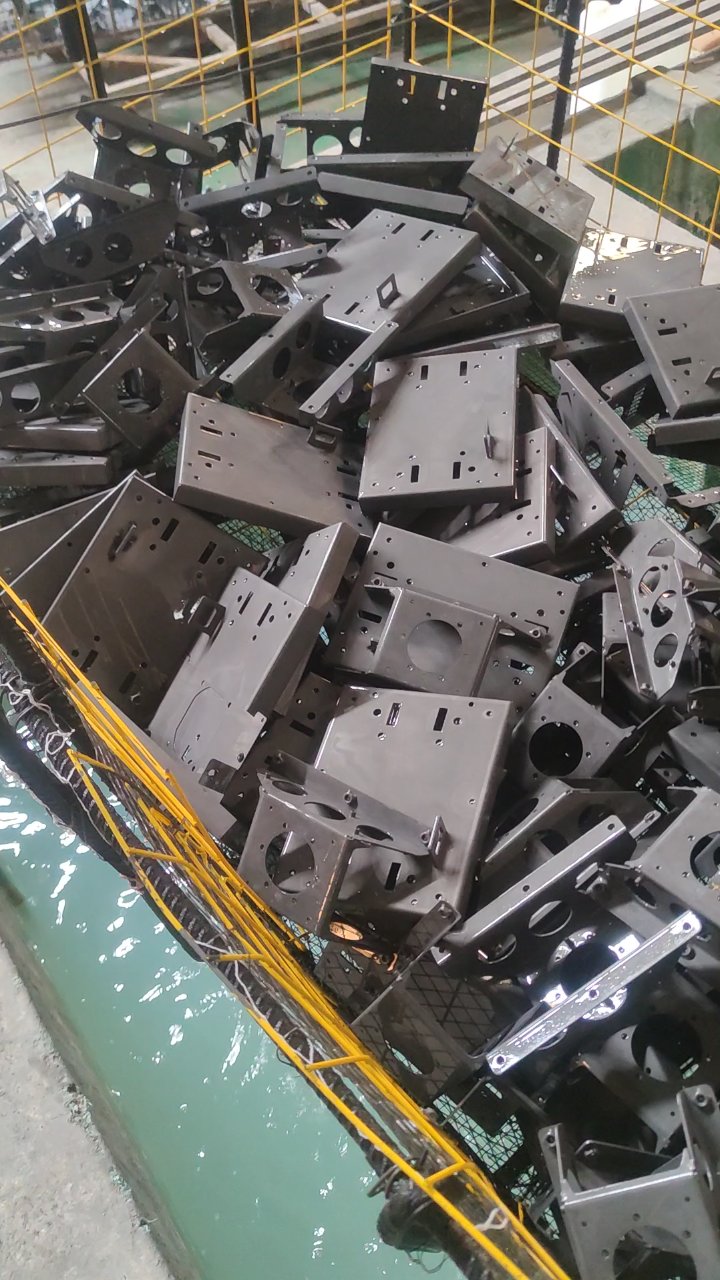
The principle behind phosphate treatment is based on a chemical reaction between the metal surface and a phosphate-containing solution. When the metal is immersed in the phosphating bath, a series of reactions occur, leading to the formation of a insoluble phosphate film on the surface. The composition and structure of the film depend on various factors, such as the type of metal, the composition of the phosphating solution, and the process parameters.
For example, in the case of iron and steel, the phosphating process typically involves the following steps: first, the metal surface is cleaned to remove any dirt, oil, or rust. Then, it is immersed in a phosphating solution that contains phosphoric acid and metal phosphates, such as zinc or manganese phosphates. The acid reacts with the metal surface, causing the dissolution of a small amount of metal and the formation of hydrogen gas. This leads to a local increase in pH, which promotes the precipitation of metal phosphates on the surface, forming the protective film.
The phosphate treatment process is influenced by several factors, which need to be carefully controlled to ensure the quality and performance of the coating. One of the most important factors is the temperature of the phosphating solution. Different types of phosphating processes require different temperature ranges. For example, cold phosphating is carried out at room temperature, while hot phosphating requires the solution to be heated to a higher temperature, typically between 60 and 90 degrees Celsius. Higher temperatures can accelerate the reaction rate, resulting in a thicker and more dense coating, but they also require more energy and may lead to increased evaporation of the solution.

Another critical factor is the concentration of the phosphating solution. The concentration of phosphoric acid and metal phosphates in the solution affects the rate of film formation and the properties of the coating. If the concentration is too low, the film may be thin and uneven, while a too high concentration can result in excessive precipitation and poor coating quality.
The pH value of the solution is also an important parameter. The pH value affects the solubility of the metal phosphates and the rate of the chemical reaction. Typically, the phosphating solution is maintained at a slightly acidic pH, usually between 2 and 7, depending on the specific process.
In addition, the treatment time, the type and condition of the metal surface, and the presence of additives in the phosphating solution can all impact the outcome of the phosphate treatment. For example, some additives may be used to improve the corrosion resistance of the coating or to accelerate the reaction rate.
The phosphate coating formed through this process has several important applications. One of the main applications is in corrosion protection. The phosphate film acts as a barrier, preventing the contact between the metal and the surrounding environment, such as moisture, oxygen, and corrosive chemicals. This helps to extend the service life of metal components, especially in harsh environments.
In the automotive industry, phosphate treatment is widely used for the body panels, chassis components, and engine parts. The coating not only provides corrosion resistance but also improves the adhesion of the paint, ensuring a long-lasting and attractive finish.
Another important application is in the preparation for subsequent coatings. The phosphate film provides a rough and porous surface, which increases the mechanical interlocking between the metal and the coating, such as paint or powder coating. This results in better adhesion and durability of the coating system.
In the electronics industry, phosphate treatment is used for the surface treatment of components to improve their corrosion resistance and electrical properties.

Compared to other surface treatment technologies, such as electroplating and anodizing, phosphate treatment has several advantages. One of the main advantages is its cost-effectiveness. The equipment and materials required for phosphating are relatively inexpensive, and the process is relatively simple and easy to implement.
Another advantage is its versatility. Phosphate treatment can be applied to a wide range of metals, including steel, iron, aluminum, and zinc. It can also be used on various shapes and sizes of components, making it suitable for different industries and applications.
Phosphate treatment also offers good corrosion resistance, especially when combined with other coatings. The porous structure of the phosphate film can absorb and retain corrosion inhibitors, further enhancing the protection against corrosion.
However, phosphate treatment also has some limitations. For example, the coating thickness is relatively thin, typically ranging from 1 to 10 micrometers, which may not be sufficient for some high-corrosion environments. In such cases, additional coatings may be required.
In recent years, with the increasing emphasis on environmental protection, there have been efforts to develop more environmentally friendly phosphate treatment processes. For example, the use of non-toxic or low-toxic additives and the reduction of waste water and energy consumption are important directions for future development.
Another trend is the integration of phosphate treatment with other surface treatment technologies to achieve better performance. For example, combining phosphating with nanotechnology or surface modification techniques may lead to the development of new types of coatings with improved properties.
In conclusion, phosphate treatment of metal is a vital surface treatment process that offers numerous benefits in terms of corrosion resistance and coating adhesion. With ongoing technological advancements and environmental considerations, the future of phosphate treatment looks promising, with continued improvements in process efficiency and coating performance.