

The Background and Significance of Aluminum Blackening
Aluminum, as a lightweight, corrosion - resistant, and highly malleable metal, has found extensive application in numerous fields such as aerospace, automotive manufacturing, electronics, and daily necessities. However, the natural color of aluminum is a silver - white metallic luster, which cannot meet the special color requirements in some specific scenarios. For example, in the field of optical instruments, blackened aluminum components can effectively reduce light reflection and improve the accuracy of optical systems; in the automotive industry, some interior and exterior parts need to be blackened to enhance the overall aesthetic appeal and texture of the vehicle; in the electronics industry, blackened aluminum shells can play a certain role in anti - electromagnetic interference and heat dissipation. Therefore, the question of whether aluminum can be blackened has attracted widespread attention in the industry.
The key to realizing aluminum blackening lies in the selection and application of appropriate technologies and materials, among which the Aluminum blackening agent is a crucial factor. Different types of Aluminum blackening agents are matched with corresponding processes to achieve the desired blackening effect on the aluminum surface. In this article, we will explore in detail the various methods of aluminum blackening, the role of Aluminum blackening agents in different processes, the comparison of advantages and disadvantages of various processes, common problems and solutions, and the development prospects of aluminum blackening technology.
Chemical Blackening Process of Aluminum: The Core Role of Aluminum Blackening Agent
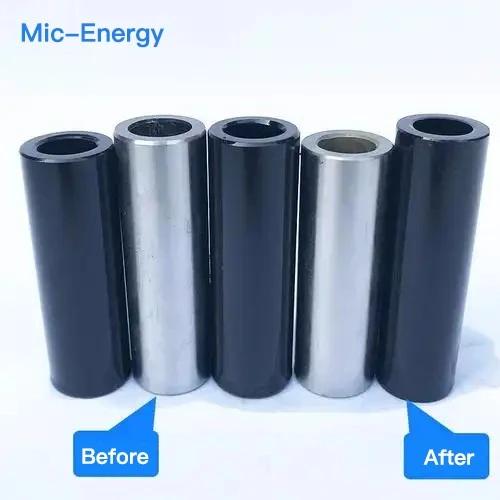
Chemical blackening is one of the most commonly used methods for aluminum blackening. It mainly uses a chemical reaction between the Aluminum blackening agent and the aluminum surface to form a black oxide film or compound film on the aluminum surface, thereby achieving the blackening effect.
Composition and Working Principle of Chemical Aluminum Blackening Agent
The chemical Aluminum blackening agent is usually a mixed solution composed of oxidants, complexing agents, accelerators, and stabilizers. The oxidant is the core component, which can oxidize the aluminum surface to form aluminum oxide. Common oxidants include potassium permanganate, sodium dichromate, hydrogen peroxide, etc. The complexing agent can form a stable complex with aluminum ions, preventing the precipitation of aluminum hydroxide and ensuring the uniformity of the oxide film. Common complexing agents include citric acid, tartaric acid, and ethylenediaminetetraacetic acid (EDTA). The accelerator can speed up the chemical reaction rate, shorten the blackening time, and common accelerators include sulfuric acid, hydrochloric acid, etc. The stabilizer can maintain the stability of the Aluminum blackening agent solution, prevent the decomposition of components, and extend the service life of the solution.
The working principle of the chemical blackening process is as follows: First, the aluminum workpiece is degreased and derusted to remove oil stains, oxides, and other impurities on the surface, ensuring that the Aluminum blackening agent can fully contact the aluminum matrix. Then, the treated aluminum workpiece is immersed in the Aluminum blackening agent solution. Under a certain temperature and time conditions, the oxidant in the solution reacts with aluminum to generate aluminum oxide. At the same time, the complexing agent complexes with aluminum ions to promote the continuous progress of the reaction. The accelerator accelerates the reaction rate, making the oxide film form quickly. Finally, a uniform, dense, and black oxide film is formed on the aluminum surface. After blackening, the aluminum workpiece needs to be washed and sealed to improve the corrosion resistance and wear resistance of the oxide film.
Operation Steps and Precautions of Chemical Blackening Process
The operation steps of the chemical blackening process are relatively simple, but each step needs to be strictly controlled to ensure the quality of the blackening effect. The specific steps are as follows:
Degreasing: Put the aluminum workpiece into the degreasing solution (usually composed of alkaline substances such as sodium hydroxide and sodium carbonate) and heat it to 50 - 80°C. Soak for 10 - 20 minutes to remove oil stains on the surface. After degreasing, take out the workpiece and rinse it with clean water to remove residual degreasing solution.
Derusting: If there is rust or oxide scale on the aluminum surface, the workpiece needs to be derusted. The derusting solution is usually a dilute acid solution (such as hydrochloric acid or sulfuric acid). Soak the workpiece in the derusting solution for 5 - 10 minutes, then take it out and rinse it with clean water.
Blackening: Prepare the Aluminum blackening agent solution according to the formula requirements. Heat the solution to the specified temperature (generally 60 - 90°C). Immerse the degreased and derusted aluminum workpiece into the solution and soak for 15 - 30 minutes. During the soaking process, stir the solution appropriately to ensure that the reaction is uniform. Observe the color change of the workpiece surface. When the surface turns into a uniform black, take out the workpiece.
Washing: Rinse the blackened aluminum workpiece with clean water several times to remove the residual Aluminum blackening agent solution on the surface, preventing the residual solution from continuing to react with the workpiece and affecting the quality of the oxide film.
Sealing: Put the washed workpiece into the sealing solution (such as boiling water, chromate solution, or silicone resin solution) and soak for a certain time (5 - 15 minutes). The sealing treatment can fill the pores of the oxide film, improve the corrosion resistance and gloss of the film.
When operating the chemical blackening process, the following precautions should be taken:
Control of solution concentration: The concentration of the Aluminum blackening agent solution has a great impact on the blackening effect. If the concentration is too high, the oxide film will be too thick and easy to fall off; if the concentration is too low, the blackening effect will be poor and the color will be uneven. Therefore, the concentration of the solution should be tested and adjusted regularly.
Control of temperature and time: The reaction temperature and time are also key factors affecting the blackening effect. High temperature and long time will lead to excessive oxidation of the aluminum surface, resulting in a loose oxide film; low temperature and short time will make the oxide film thin and the color not dark enough. It is necessary to strictly follow the process requirements to control the temperature and time.
Safety protection: The Aluminum blackening agent solution usually contains corrosive substances such as acids and alkalis. When operating, wear protective equipment such as gloves, goggles, and overalls to prevent the solution from contacting the skin and eyes. At the same time, the operation site should be well - ventilated to avoid the accumulation of harmful gases.
Wastewater treatment: The wastewater generated in the chemical blackening process contains a large number of heavy metal ions and harmful substances, which cannot be discharged directly. It should be treated in accordance with the relevant national environmental protection standards to meet the discharge requirements before discharge.

Electrolytic Blackening Process of Aluminum: Matching and Application of Aluminum Blackening Agent
Electrolytic blackening is another important method for aluminum blackening. Compared with chemical blackening, electrolytic blackening has the advantages of faster film formation speed, more uniform film thickness, and better corrosion resistance. In the electrolytic blackening process, the Aluminum blackening agent also plays an important role as the electrolyte.
Types and Characteristics of Electrolytic Aluminum Blackening Agent
The electrolytic Aluminum blackening agent is mainly divided into acidic electrolytes, alkaline electrolytes, and neutral electrolytes according to the pH value.
Acidic electrolytic Aluminum blackening agent: This type of agent usually contains sulfuric acid, phosphoric acid, chromic acid, and other components. It has the characteristics of fast film formation speed and high hardness of the oxide film. However, the acidic solution is highly corrosive, which is easy to corrode the equipment and has higher requirements for the material of the electrolytic cell. At the same time, the waste water generated is difficult to treat, which is not conducive to environmental protection.
Alkaline electrolytic Aluminum blackening agent: It is composed of sodium hydroxide, potassium hydroxide, sodium carbonate, and other substances. The alkaline solution has low corrosion to the equipment, and the operation is relatively safe. The oxide film formed is uniform and has good adhesion. However, the film formation speed of the alkaline electrolytic blackening process is relatively slow, and the hardness of the oxide film is slightly lower than that of the acidic electrolytic process.
Neutral electrolytic Aluminum blackening agent: This type of agent is a new type of electrolyte developed in recent years. It has the advantages of low corrosion, environmental protection, and stable performance. The neutral electrolyte can avoid the corrosion of equipment caused by acidic and alkaline solutions, and the waste water treatment is relatively simple. The oxide film formed has good comprehensive performance, including uniform color, high adhesion, and good corrosion resistance. However, the cost of the neutral electrolytic Aluminum blackening agent is relatively high, which limits its large - scale application to a certain extent.
Working Process and Process Parameters of Electrolytic Blackening
The working process of the electrolytic blackening process is as follows: First, the aluminum workpiece is pretreated, including degreasing and derusting, which is the same as the chemical blackening process, to ensure the cleanliness of the workpiece surface. Then, the pretreated aluminum workpiece is used as the anode, and an inert electrode (such as graphite or stainless steel) is used as the cathode. Both electrodes are immersed in the electrolytic Aluminum blackening agent solution. When a direct current is applied to the circuit, the aluminum anode undergoes an oxidation reaction under the action of the electric field, and aluminum ions are dissolved into the solution. At the same time, hydroxide ions in the solution react with aluminum ions to form aluminum hydroxide, which is further decomposed into aluminum oxide. Under the action of the electric field and the Aluminum blackening agent, the aluminum oxide is deposited on the surface of the aluminum workpiece to form a black oxide film.
The process parameters of electrolytic blackening have a crucial impact on the quality of the oxide film. The main process parameters include current density, electrolysis temperature, electrolysis time, and pH value of the electrolyte.
Current density: The current density directly affects the film formation speed and the quality of the oxide film. A higher current density can speed up the film formation speed, but if the current density is too high, the oxide film will be rough and loose, and even sparking will occur on the workpiece surface, which will damage the workpiece. A lower current density will result in a slow film formation speed and a thin oxide film. Generally, the current density for electrolytic blackening of aluminum is controlled between 1 - 5 A/dm².
Electrolysis temperature: The electrolysis temperature affects the reaction rate of the electrolyte and the structure of the oxide film. An appropriate increase in temperature can accelerate the reaction rate and improve the uniformity of the oxide film. However, if the temperature is too high, the evaporation of the electrolyte will be accelerated, the concentration of the solution will change, and the stability of the oxide film will be affected. If the temperature is too low, the reaction rate will be slow, and the oxide film will be uneven. The electrolysis temperature is usually controlled between 20 - 60°C.
Electrolysis time: The electrolysis time determines the thickness of the oxide film. With the increase of electrolysis time, the thickness of the oxide film increases gradually. However, when the thickness of the oxide film reaches a certain value, the growth rate will slow down. If the electrolysis time is too long, the oxide film will be too thick and easy to crack. If the electrolysis time is too short, the oxide film will be thin and the color will be light. The electrolysis time is generally controlled between 5 - 20 minutes.
pH value of the electrolyte: The pH value of the electrolytic Aluminum blackening agent solution affects the composition and performance of the oxide film. For acidic electrolytes, the pH value is usually controlled between 1 - 3; for alkaline electrolytes, the pH value is controlled between 10 - 13; for neutral electrolytes, the pH value is controlled between 6 - 8. The change of pH value will affect the solubility of aluminum ions in the solution and the reaction rate, thus affecting the quality of the oxide film. Therefore, it is necessary to monitor the pH value of the electrolyte regularly and adjust it in time.

Laser Blackening Process of Aluminum: The Auxiliary Role of Aluminum Blackening Agent
In recent years, with the development of laser technology, laser blackening has gradually become a new method for aluminum blackening. Laser blackening uses the high - energy density of the laser beam to irradiate the aluminum surface, causing a series of physical and chemical changes on the surface to form a black layer. Although the laser blackening process does not rely on the Aluminum blackening agent as the main reaction medium like chemical and electrolytic blackening, the Aluminum blackening agent can still play an auxiliary role in the pretreatment or post - treatment process.
Principle and Advantages of Laser Blackening
The principle of laser blackening is that when the laser beam irradiates the aluminum surface, the aluminum surface absorbs the laser energy and rapidly heats up to a high temperature. Under the action of high temperature, the aluminum surface undergoes oxidation, melting, and recrystallization. The oxide formed on the surface has a special micro - structure (such as micro - pits, micro - protrusions, etc.), which can absorb light of various wavelengths, thus showing a black appearance. In addition, the laser beam can also modify the surface of aluminum to form a black coating with a certain composition and structure.
The advantages of laser blackening are as follows:
High precision: The laser beam has good directionality and focusing performance, which can realize the blackening of local areas of the aluminum workpiece, especially for complex - shaped workpieces and precision components, which can ensure the accuracy of the blackening position and size.
No pollution: The laser blackening process does not use chemical reagents, so there is no problem of waste water, waste gas, and waste residue, which is in line with the requirements of environmental protection.
Good performance of the black layer: The black layer formed by laser blackening has high adhesion, good wear resistance, and corrosion resistance. It is not easy to fall off and fade, and has a long service life.
Fast processing speed: The laser processing speed is fast, which can improve the production efficiency and is suitable for mass production.
The Auxiliary Application of Aluminum Blackening Agent in Laser Blackening
Although the laser blackening process itself does not require the Aluminum blackening agent, in some cases, the Aluminum blackening agent can be used in the pretreatment or post - treatment of the laser blackening process to improve the blackening effect and the performance of the black layer.
In the pretreatment stage, if the aluminum surface has a thick oxide film or other impurities, it may affect the absorption of laser energy by the aluminum surface, resulting in uneven blackening. At this time, a dilute Aluminum blackening agent solution can be used to clean the aluminum surface. The Aluminum blackening agent can not only remove the oxide film and impurities on the surface but also form a thin and uniform pre - oxidation layer on the surface. This pre - oxidation layer can improve the absorption rate of laser energy, make the laser blackening effect more uniform, and reduce the energy required for laser processing.
In the post - treatment stage, after laser blackening, the black layer on the aluminum surface may have some defects, such as micro - cracks, pores, etc., which affect the corrosion resistance of the black layer. At this time, a special Aluminum blackening agent can be used for sealing treatment. The Aluminum blackening agent can penetrate into the defects of the black layer, fill the pores and cracks, and form a protective film on the surface of the black layer, thereby improving the corrosion resistance and wear resistance of the black layer. In addition, the Aluminum blackening agent can also adjust the color of the black layer to make the color more uniform and consistent.
Comparison of Different Aluminum Blackening Processes and Selection of Aluminum Blackening Agent
Comparison of Advantages and Disadvantages of Chemical, Electrolytic, and Laser Blackening Processes
The chemical blackening process has advantages like simple equipment, low cost, and easy operation, adapting to workpieces of various shapes. However, it has slow film formation, thin oxide films with general corrosion/wear resistance, and Aluminum blackening agents often contain harmful substances. It's suitable for low-cost products like daily hardware.
The electrolytic blackening process has fast film formation, uniform film thickness, and better corrosion/wear resistance. Process parameters can adjust film performance, but it needs large equipment investment, complex operations, and Aluminum blackening agents (electrolytes) corrode equipment. Wastewater is hard to treat, and it's unsuitable for workpieces with complex internal cavities. It fits high-demand products like automotive and mechanical parts.
The laser blackening process has high precision for local blackening, no pollution, and a high-performance black layer with good adhesion and durability. It has fast processing speed but high equipment and processing costs, and the effect depends on aluminum material. It's used in high-end fields like precision components and aerospace parts.
Selection Principles of Aluminum Blackening Agent
When selecting Aluminum blackening agents, consider multiple factors:
First, match the process. For chemical blackening, the agent needs good oxidation performance and stable concentration. For electrolytic blackening, electrolytes need proper conductivity; acidic ones need equipment corrosion protection, alkaline ones consider film speed, neutral ones balance cost and environmental protection. For laser blackening, auxiliary agents need good cleaning/sealing performance.
Second, meet workpiece performance. High corrosion/wear resistance needs acidic electrolytes for electrolytic blackening; cost-sensitive products use low-cost chemical blackening agents; precision parts need pollution-free auxiliary agents for laser blackening.
Third, control cost. Chemical blackening agents are low-cost; electrolytic ones vary (alkaline low, neutral high); laser auxiliary agents are cheap but equipment is expensive.
Fourth, comply with environmental protection. Choose low-harm, easy-to-treat agents for chemical blackening; prefer neutral electrolytes for electrolytic blackening; use non-toxic auxiliary agents for laser blackening.
Common Problems and Solutions in Aluminum Blackening Process
Common Problems
Uneven blackening: Caused by incomplete pretreatment (oil/oxides remaining), uneven Aluminum blackening agent concentration, uneven temperature, or uneven current density (electrolytic process).
Black layer peeling: Due to incomplete pretreatment, too high agent concentration, excessive oxidation (high temperature/long time), or improper electrolysis parameters (electrolytic process).
Poor corrosion resistance: Result from low-quality agents (porous films), inadequate sealing, insufficient stabilizers (chemical process), or unsealed micro-cracks (laser process).
Solutions
Uneven blackening: Strengthen pretreatment (use ultrasonic cleaning), stir the agent solution, improve temperature control, and optimize electrode arrangement (electrolytic process).
Black layer peeling: Enhance pretreatment, adjust agent concentration, control temperature/time, and optimize electrolysis parameters (electrolytic process).
Poor corrosion resistance: Select high-quality agents, strengthen sealing (boiling water/chromate for chemical, silicone for laser), add stabilizers (chemical process), and repair cracks (laser process).
Development Prospects of Aluminum Blackening Technology
Development Trend
Green environmental protection: Aluminum blackening agents will be non-toxic and easy to treat (e.g., low-cost neutral electrolytes). Laser blackening will be promoted, and wastewater recycling will be strengthened.
High performance: Optimize agent composition and process parameters to improve film density; combine with coating technology for anti-electromagnetic interference and high-temperature resistance.
High efficiency and low cost: Develop high-efficiency agents to shorten time; reduce agent raw material cost and laser equipment cost; improve automation.
Precision and customization: Use high-precision laser for micro-area blackening; develop intelligent electrolytic equipment for real-time parameter adjustment; customize black layer color via agent composition.
Challenges and Countermeasures
Challenge 1: Difficulty in developing high-performance, eco-friendly, low-cost Aluminum blackening agents due to complex reaction mechanisms and high R&D costs.
Countermeasure 1: Strengthen government-enterprise-research cooperation, increase R&D investment, and provide policy subsidies to promote agent development and application.
Challenge 2: Laser blackening's high equipment cost limits popularization; it's unsuitable for large-area blackening, and some aluminum alloys have low laser absorption.
Countermeasure 2: Improve laser equipment to reduce cost; develop large-area laser processing technology; modify aluminum surfaces to enhance laser absorption.
Challenge 3: Automation of blackening processes is low, leading to unstable quality and high labor costs.
Countermeasure 3: Develop intelligent control systems for real-time parameter monitoring and adjustment; promote automatic production lines to improve efficiency and quality stability.