

Chemicals play a crucial role in various fields such as industry, agriculture, medicine, and scientific research. However, the proper storage and transportation of chemicals are essential to ensure their stability, safety, and effectiveness. One of the key factors in this process is the selection of appropriate containers. The wrong choice of container can lead to chemical reactions, leakage, corrosion, and even pose serious threats to human health and the environment. For example, some strong acids may react violently with certain metals, causing the container to rupture and release toxic substances. Therefore, understanding what containers should be used for different chemicals is of great significance. This article will comprehensively discuss the types of containers suitable for chemicals, considering factors such as chemical properties, usage scenarios, and safety requirements.
Factors influencing the selection of chemical containers
Chemical properties
The chemical properties of a substance are the primary factor determining the type of container to use. Different chemicals have varying characteristics, including acidity, alkalinity, oxidizability, reducibility, volatility, and corrosiveness, all of which have a direct impact on the compatibility with container materials.
Acidity and alkalinity: Strong acids, such as hydrochloric acid (HCl), sulfuric acid (H₂SO₄), and nitric acid (HNO₃), are highly corrosive. They can react with many metal materials, generating hydrogen gas and soluble salts, which not only damage the container but also may cause explosions due to the accumulation of hydrogen. Therefore, containers made of non-metallic materials with good acid resistance, such as glass and plastic, are usually preferred. On the other hand, strong alkalis like sodium hydroxide (NaOH) and potassium hydroxide (KOH) can corrode glass (especially at high temperatures or in concentrated solutions) by reacting with silica (SiO₂) in the glass to form silicates. In such cases, plastic containers (e.g., polyethylene) or metal containers (e.g., stainless steel) that are resistant to alkalis are more suitable.
Oxidizability and reducibility: Oxidizing chemicals, such as potassium permanganate (KMnO₄), hydrogen peroxide (H₂O₂), and chlorine (Cl₂), have strong oxidizing properties. They can react with organic materials (such as some plastic containers) or reducing metals, leading to combustion, explosion, or the decomposition of the chemical. For oxidizing chemicals, containers made of inert materials like glass or certain types of stainless steel (with high chromium and nickel content) are often used. Reducing chemicals, on the other hand, are prone to oxidation when in contact with oxygen or oxidizing substances. Containers for these chemicals need to have good airtightness to prevent the entry of oxygen, and the material should not have oxidizing properties. For example, some reducing agents like sodium sulfite (Na₂SO₃) can be stored in plastic containers with airtight lids.
Volatility: Volatile chemicals, such as ethanol (C₂H₅OH), methanol (CH₃OH), and acetone (CH₃COCH₃), easily evaporate into the air. If the container is not airtight, the volatile components will escape, resulting in the loss of the chemical and potential safety hazards (e.g., the vapor of flammable volatile chemicals may form an explosive mixture with air). Therefore, containers for volatile chemicals must have excellent airtightness. Glass containers with ground glass stoppers (which can form a good seal) or plastic containers with screw-on caps and gaskets are commonly used. Additionally, the container should be stored in a cool and well-ventilated place to reduce the evaporation rate.
Corrosiveness: Corrosive chemicals can damage the container material by chemical reaction. The degree of corrosion depends on the type and concentration of the chemical, as well as the temperature and contact time. For highly corrosive chemicals, it is necessary to select materials that are completely inert to them. For example, hydrofluoric acid (HF) is highly corrosive to glass (it reacts with SiO₂ to form silicon tetrafluoride gas), so it must be stored in containers made of polytetrafluoroethylene (PTFE) or lead.
Usage scenarios
The usage scenario of the chemical, including storage, transportation, and laboratory operations, also affects the choice of container.
Storage: Storage containers need to be durable, stable, and able to maintain the chemical's properties for a long time. They should also be easy to label and identify. For large - volume storage of chemicals in factories or warehouses, plastic drums (e.g., polyethylene drums) or metal drums (e.g., stainless steel drums) are often used. These drums have large capacities and good mechanical strength, which can withstand the pressure and impact during storage. For small - volume storage in laboratories, glass bottles (e.g., reagent bottles) or small plastic containers are more suitable. Glass bottles are transparent, allowing for easy observation of the chemical's state, and they are inert to most chemicals.
Transportation: During transportation, chemicals may be subjected to vibration, impact, temperature changes, and other external factors. Therefore, transportation containers need to have higher mechanical strength, good shock resistance, and thermal stability. Metal containers, such as stainless steel tanks or aluminum alloy containers, are widely used for transporting large quantities of chemicals because of their high strength and durability. For some fragile or easily decomposed chemicals, shock - absorbing materials (e.g., foam plastic) should be used inside the container to reduce vibration and impact. In addition, the transportation container must comply with relevant national and international transportation regulations, such as having clear labels and warning signs.
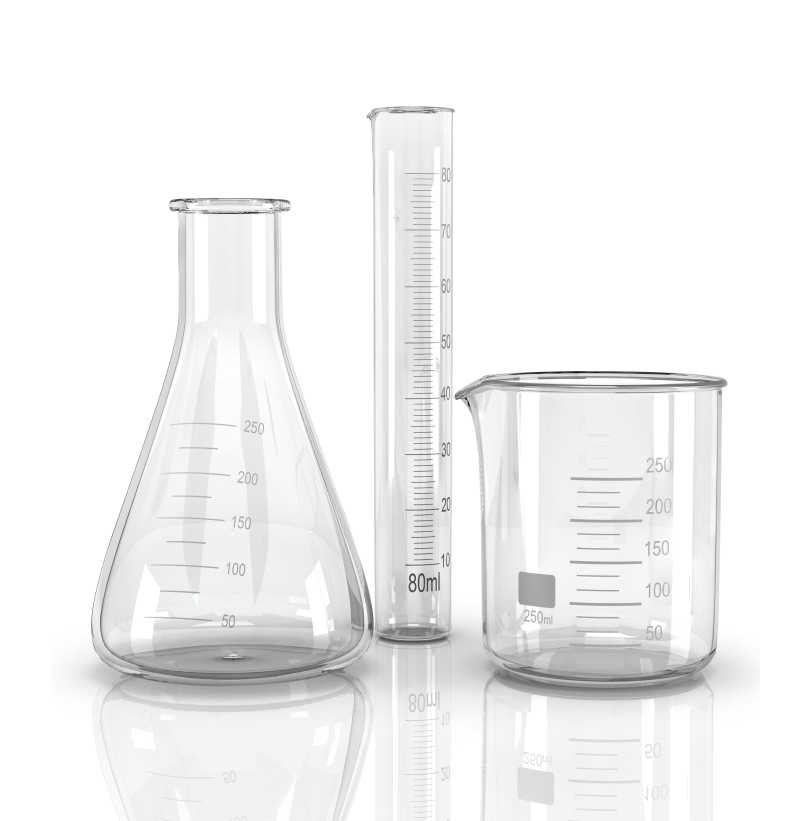
Laboratory operations: In laboratory operations, containers need to be easy to handle, clean, and sterilize (if necessary). Glass containers are commonly used in laboratories because they are transparent, easy to clean, and can be sterilized by heating (e.g., autoclaving). For example, beakers, flasks, test tubes, and pipettes made of glass are essential tools for chemical experiments. Plastic containers are also used in some cases, such as when dealing with chemicals that are corrosive to glass or when lightweight and unbreakable containers are required. For example, polyethylene beakers or centrifuge tubes are often used in biological laboratories.
Safety requirements
Safety is a top priority when selecting chemical containers. The container must be able to prevent the leakage of chemicals, avoid contact with humans and the environment, and reduce the risk of accidents.
Leakage prevention: The container should have a good seal to prevent the leakage of liquid or gaseous chemicals. For liquid chemicals, the container's lid or stopper must fit tightly, and gaskets made of compatible materials (e.g., rubber or PTFE) can be used to enhance the seal. For gaseous chemicals, pressure - resistant containers (e.g., steel cylinders) with pressure relief valves are used to prevent overpressure and leakage.
Compatibility with protective measures: The container should be compatible with the protective measures used during handling and use. For example, if gloves are required when handling a chemical, the container material should not react with the glove material. Additionally, the container should be easy to handle with protective equipment, such as having a suitable shape and size for gripping with gloved hands.
Fire and explosion prevention: For flammable and explosive chemicals, the container must be made of non - flammable materials and have good airtightness to prevent the escape of flammable vapors. Metal containers are often used for flammable liquids because they can conduct static electricity, reducing the risk of static ignition. However, it is necessary to ensure that the metal container is properly grounded to discharge static electricity. In addition, containers for explosive chemicals should be designed to withstand the pressure generated by an explosion, and they should be stored in a dedicated explosion - proof warehouse.

Common types of containers for chemicals and their applications
Glass containers
Glass is a widely used material for chemical containers due to its excellent chemical inertness, transparency, and heat resistance.
Types of glass containers: Common glass containers used for chemicals include reagent bottles, beakers, flasks, test tubes, and pipettes. Reagent bottles are divided into wide - mouth bottles and narrow - mouth bottles. Wide - mouth bottles are used to store solid chemicals, while narrow - mouth bottles are used for liquid chemicals. Beakers are used for mixing, heating, and measuring liquids. Flasks are available in different types, such as volumetric flasks (for accurate volume measurement), Erlenmeyer flasks (for reactions and titrations), and round - bottom flasks (for heating and distillation). Test tubes are used for small - scale reactions and sample storage. Pipettes are used for accurate transfer of small volumes of liquids.
Applications: Glass containers are suitable for storing and handling most chemicals, especially those with high purity requirements or that are sensitive to plasticizers or other additives in plastic containers. For example, acids (except hydrofluoric acid), bases (in dilute solutions), salts, and organic compounds (that do not react with glass) can be stored in glass reagent bottles. In laboratory experiments, glass beakers, flasks, and test tubes are used for various chemical reactions, such as acid - base neutralization reactions, oxidation - reduction reactions, and distillation processes.
Advantages and disadvantages: The advantages of glass containers include good chemical inertness (they do not react with most chemicals), transparency (easy to observe the state of the chemical), heat resistance (can be heated directly or in a water bath/oven within a certain temperature range), and easy cleaning and sterilization. However, glass containers also have some disadvantages. They are fragile and easy to break when subjected to impact or sudden temperature changes, which may cause the leakage of chemicals. In addition, glass is corroded by strong alkalis (especially concentrated solutions or at high temperatures) and hydrofluoric acid, so it cannot be used for these chemicals.
Plastic containers
Plastic containers are lightweight, unbreakable, and have good chemical resistance to certain chemicals, making them widely used in chemical storage and transportation.
Types of plastic materials and their containers: Common plastic materials used for chemical containers include polyethylene (PE), polypropylene (PP), polyvinyl chloride (PVC), polytetrafluoroethylene (PTFE), and polyethylene terephthalate (PET).
Polyethylene (PE): PE is a low - cost, lightweight, and flexible plastic. It has good chemical resistance to acids, bases, and most organic solvents. PE containers are commonly used for storing and transporting chemicals such as acids (e.g., hydrochloric acid, sulfuric acid), bases (e.g., sodium hydroxide, potassium hydroxide), and some organic compounds (e.g., ethanol, acetone). Examples of PE containers include plastic drums, plastic bottles, and plastic beakers.
Polypropylene (PP): PP has higher heat resistance than PE and good chemical resistance. It can withstand temperatures up to 120°C, making it suitable for use in microwave ovens or for storing hot chemicals. PP containers are used for storing and handling chemicals such as acids, bases, and some organic solvents that require higher temperature resistance. Common PP containers include plastic centrifuge tubes, plastic pipette tips, and plastic storage boxes.
Polyvinyl chloride (PVC): PVC has good chemical resistance to acids and bases, but it is not resistant to some organic solvents (e.g., ketones, esters). PVC containers are often used for storing water - based chemicals, such as aqueous solutions of acids and bases. However, PVC may release toxic substances (e.g., vinyl chloride monomer) at high temperatures or when in contact with certain chemicals, so it is not suitable for storing food - grade chemicals or chemicals that are sensitive to toxic substances.
Polytetrafluoroethylene (PTFE): PTFE is a highly inert plastic with excellent chemical resistance to almost all chemicals, including strong acids, strong bases, oxidizing agents, and organic solvents. It also has high heat resistance (can withstand temperatures up to 260°C) and low friction coefficient. PTFE containers are used for storing and handling highly corrosive chemicals such as hydrofluoric acid, concentrated nitric acid, and aqua regia. Examples of PTFE containers include PTFE beakers, PTFE test tubes, and PTFE valves.
Polyethylene terephthalate (PET): PET is a transparent, lightweight, and rigid plastic. It has good chemical resistance to acids and some organic solvents, but it is not resistant to strong bases and some oxidizing agents. PET containers are commonly used for storing food - grade chemicals, such as edible oils and food additives, as well as some non - corrosive liquids.
Advantages and disadvantages: The advantages of plastic containers include lightweight (easy to handle and transport), unbreakable (reducing the risk of chemical leakage due to breakage), good chemical resistance to certain chemicals, and low cost (compared to glass and metal containers). However, plastic containers also have some limitations. Some plastic materials may react with certain chemicals, especially organic solvents, leading to the dissolution of plasticizers or the degradation of the plastic itself, which can contaminate the chemical. In addition, most plastic containers have lower heat resistance than glass and metal containers, so they cannot be heated directly at high temperatures. Some plastic containers may also absorb volatile chemicals, affecting the purity and concentration of the chemical.
Metal containers
Metal containers are known for their high mechanical strength, durability, and good heat conductivity, making them suitable for storing and transporting large quantities of chemicals.
Types of metal materials and their containers: Common metal materials used for chemical containers include stainless steel, aluminum, iron, and lead.
Stainless steel: Stainless steel is an alloy of iron, chromium, nickel, and other elements. It has good corrosion resistance, mechanical strength, and heat resistance. The corrosion resistance of stainless steel depends on the content of chromium and nickel. For example, 304 stainless steel (containing 18% chromium and 8% nickel) has good corrosion resistance to most acids, bases, and organic solvents, making it suitable for storing and transporting chemicals such as nitric acid, sulfuric acid (dilute), and ethanol. 316 stainless steel (containing 16% chromium, 10% nickel, and 2% molybdenum) has better corrosion resistance than 304 stainless steel, especially to chloride ions, so it is used for storing and transporting chemicals containing chloride ions, such as seawater and hydrochloric acid (dilute). Stainless steel containers include stainless steel tanks, stainless steel drums, and stainless steel reactors.
Aluminum: Aluminum is a lightweight metal with good corrosion resistance. It forms a dense oxide film on its surface, which can prevent further corrosion by most chemicals. However, aluminum is corroded by strong acids (e.g., hydrochloric acid, sulfuric acid) and strong bases (e.g., sodium hydroxide), so it is not suitable for these chemicals. Aluminum containers are used for storing and transporting chemicals such as acetic acid, ammonia water, and some organic solvents (e.g., benzene, toluene). Common aluminum containers include aluminum cans and aluminum drums.
Iron: Iron is a low - cost metal with high mechanical strength, but it is prone to rusting (oxidation) in the presence of oxygen and water. Therefore, iron containers are usually coated with a layer of protective material (e.g., paint, zinc, or plastic) to prevent rusting. Iron containers coated with zinc (galvanized iron containers) have better corrosion resistance and are used for storing and transporting non - corrosive chemicals such as water, oil, and some solid chemicals. However, galvanized iron containers are corroded by acids and bases, so they cannot be used for these chemicals.
Lead: Lead has good corrosion resistance to some chemicals, especially acids such as sulfuric acid and hydrochloric acid (dilute). It is also used for storing and transporting hydrofluoric acid (but PTFE containers are more commonly used now due to the toxicity of lead). However, lead is a toxic metal, and its use is restricted in many fields due to environmental and health concerns. Lead containers are mainly used in some special industrial applications where other materials are not suitable.
Advantages and disadvantages: The advantages of metal containers include high mechanical strength (can withstand large pressure and impact), durability (long service life), good heat conductivity (suitable for heating or cooling chemicals), and large capacity (suitable for large - volume storage and transportation). However, metal containers also have some disadvantages. Most metals are corroded by certain chemicals (e.g., strong acids, strong bases, and oxidizing agents), so they require regular inspection and maintenance to prevent corrosion. In addition, metal containers are heavier than plastic and glass containers, which increases the cost of transportation. Some metals (e.g., lead, mercury) are toxic, so their use is subject to strict regulations to avoid environmental pollution and health hazards.
Ceramic containers
Ceramic containers are made of clay and other inorganic materials, fired at high temperatures. They have good chemical inertness, heat resistance, and stability.
Types of ceramic containers: Common ceramic containers used for chemicals include ceramic jars, ceramic crucibles, and ceramic tiles. Ceramic jars are used for storing solid chemicals or liquid chemicals that do not react with ceramic. Ceramic crucibles are used for heating and melting solids at high temperatures. Ceramic tiles are used as linings for chemical equipment or floors in chemical laboratories and factories to prevent corrosion.
Applications: Ceramic containers are suitable for storing and handling chemicals that are corrosive to metal or plastic, but not to ceramic. For example, some strong acids (e.g., sulfuric acid, nitric acid) and bases (e.g., sodium hydroxide, potassium hydroxide) can be stored in ceramic jars. In addition, ceramic crucibles are used in laboratory experiments for melting metals, calcining solids, and other high - temperature operations.
Advantages and disadvantages: The advantages of ceramic containers include good chemical inertness (they do not react with most chemicals), high heat resistance (can withstand high temperatures up to 1000°C or more), and good stability (not easily deformed or degraded). However, ceramic containers are fragile and easy to break when subjected to impact or sudden temperature changes, which limits their use in transportation and situations where shock resistance is required. In addition, ceramic containers are relatively heavy and have poor thermal conductivity compared to metal containers. They are also more expensive than plastic containers, so they are not widely used in large - volume storage and transportation.

Containers for special types of chemicals
Flammable and explosive chemicals
Flammable and explosive chemicals (e.g., gasoline, ethanol, ammonium nitrate) need containers that prevent fire/explosion and static buildup.
Material selection: Non-flammable materials are a must. Metal (stainless steel, aluminum) is preferred for liquids-its conductivity dissipates static, but containers must be grounded. For solids like ammonium nitrate, inert plastic (HDPE) or metal with anti-corrosion linings works, avoiding organic materials that react with oxidizing components.
Structural requirements: Airtight seals (rubber/PTFE gaskets) stop volatile vapor leaks. Pressure-relief valves are added for chemicals that release gas (e.g., acetone under heat). Small-scale lab storage uses glass bottles with ground stoppers, but only for low-volatility flammables (avoiding breakage risks).
Usage rules: Containers must be labeled with "Flammable/Explosive" signs. They're stored in cool, ventilated areas away from ignition sources, and never overfilled (leaving space for thermal expansion).
Toxic chemicals
Toxic chemicals (e.g., arsenic trioxide, mercury, cyanides) require leak-proof, non-reactive containers to prevent human/environmental exposure.
Material choices: Inert materials dominate. PTFE works for highly corrosive toxins (e.g., hydrocyanic acid) as it resists chemical reactions. Glass (borosilicate) is used for non-corrosive toxins (e.g., arsenic solutions) due to transparency and inertness. Metal (titanium) is rare but used for large-scale toxic liquid storage, with anti-leak welds.
Sealing and safety features: Double-seal designs (inner stopper + outer screw cap) are standard. Some containers have pressure sensors to detect leaks early. For volatile toxins (e.g., mercury vapor), airtight metal cans with absorbent liners (to trap spills) are used.
Handling notes: Containers are made of non-porous materials for easy decontamination. They're labeled with toxicity levels and emergency contact info, stored in locked, ventilated cabinets.
Radioactive chemicals
Radioactive chemicals (e.g., uranium-238, cobalt-60) require containers that block radiation and prevent leakage.
Radiation shielding materials: Lead is standard for gamma radiation (e.g., lead-lined steel drums). For alpha/beta radiation, thick plastic (HDPE) or aluminum works (e.g., plastic vials for radioactive isotopes). Lead glass is used for lab containers needing visibility (e.g., radioactive solution sampling).
Leakage prevention: Containers have double layers-inner layer (PTFE/inert metal) holds the chemical, outer layer (lead/steel) shields radiation. Welds are tested for integrity, and some have leak detectors.
Labeling and storage: Containers have radioactive symbols, half-life info, and handling instructions. They're stored in lead-lined cabinets or dedicated vaults, with distance maintained from non-radioactive areas.
Comprehensive recommendations for container selection and use
Selection steps
Analyze chemical properties: Prioritize corrosiveness, volatility, and toxicity-e.g., use PTFE for corrosive toxins, metal for flammables.
Match to scenario: Choose small glass for lab use, large metal drums for industrial transport, and shielded containers for radioactive chemicals.
Check compliance: Ensure containers meet local standards (e.g., OSHA for flammables, IAEA for radioactive materials).
Usage and maintenance
Regular inspection: Check for cracks (glass/plastic), rust (metal), or seal damage monthly. Replace damaged containers immediately.
Proper labeling: Include chemical name, hazard type, and expiration date-avoid faded labels.
Cleaning and disposal: Clean containers with compatible solvents (e.g., ethanol for organic residues) before reuse. Dispose of non-reusable containers as hazardous waste (e.g., lead-lined containers via specialized vendors).
Emergency response
Leak handling: For liquid leaks, use absorbent materials (non-flammable for flammables) and transfer the chemical to a backup container. For radioactive leaks, use lead gloves and contact radiation safety teams.
Container damage: If a container breaks, isolate the area-for toxins, wear PPE (goggles, gloves) and use a HEPA vacuum for cleanup.
By following these guidelines, the risk of chemical accidents is minimized, ensuring safe storage, transport, and use of all chemical types.