

In the field of industrial coating, powder coating has emerged as a widely adopted technology due to its numerous advantages such as excellent durability, environmental friendliness, and cost-effectiveness. However, to ensure the long-term performance and quality of powder-coated products, a crucial pretreatment step-phosphating-is often indispensable before the powder coating process. This article aims to delve into the reasons why phosphating is done before powder coating, exploring its underlying principles, functions, application scenarios, and related considerations. By understanding the significance of phosphating, manufacturers and professionals in the coating industry can better optimize their production processes and enhance the overall quality of coated products.

Understanding Phosphating: Basic Principles and Process
Definition of Phosphating
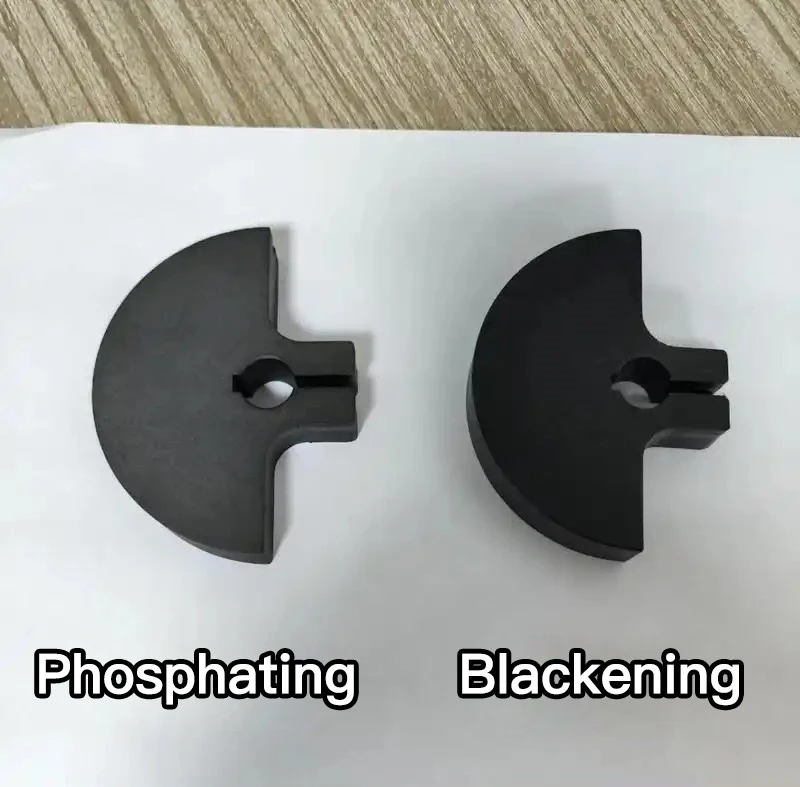
Phosphating is a chemical conversion process that involves the reaction of a metal surface with a phosphating solution to form a thin, adherent, and corrosion-resistant phosphate film. This film is typically composed of various phosphate compounds, such as zinc phosphate, iron phosphate, and manganese phosphate, depending on the type of phosphating solution used and the base metal being treated. The formation of the phosphate film occurs through a series of chemical reactions, including acid dissolution of the metal surface, precipitation of phosphate salts, and crystallization of the film.
Types of Phosphating Processes
There are several types of phosphating processes commonly used in industry, each with its own characteristics and applications.
Zinc phosphating: This type of phosphating is widely used for ferrous metals, such as steel. It produces a dense, uniform, and highly corrosion-resistant phosphate film. The zinc phosphate film has good adhesion to the metal surface and can significantly improve the bonding strength between the metal and the subsequent powder coating. It is suitable for applications where high corrosion resistance is required, such as automotive components, machinery parts, and electrical enclosures.
Iron phosphating: Iron phosphating is mainly used for low-carbon steel and some non-ferrous metals. The phosphate film formed by iron phosphating is relatively thin and has moderate corrosion resistance. It is often used as a pretreatment for powder coating in applications where the corrosion resistance requirements are not extremely high, such as household appliances, furniture, and decorative parts.
Manganese phosphating: Manganese phosphating is primarily used for wear-resistant applications. The phosphate film formed by manganese phosphating is hard and has good lubricating properties. It is commonly used on components such as gears, bearings, and shafts to reduce friction and wear.
Key Components of Phosphating Solutions
Phosphating solutions are complex chemical mixtures that contain several key components, each playing a specific role in the phosphating process.
Phosphoric acid: Phosphoric acid is the main component of the phosphating solution, providing the necessary phosphate ions for the formation of the phosphate film. It also acts as an acid to dissolve the metal surface, creating a suitable environment for the chemical reaction.
Accelerators: Accelerators are added to the phosphating solution to speed up the reaction rate and improve the quality of the phosphate film. Common accelerators include nitrates, nitrites, chromates, and organic compounds. They help to oxidize the metal surface, promote the precipitation of phosphate salts, and reduce the formation of hydrogen gas, which can cause defects in the film.
Metal ions: Metal ions, such as zinc ions, iron ions, and manganese ions, are present in the phosphating solution and participate in the formation of the phosphate film. The type and concentration of metal ions determine the composition and properties of the phosphate film.
Additives: Additives are used to adjust the properties of the phosphating solution and the phosphate film. They can include surfactants to improve the wetting of the metal surface, complexing agents to prevent the precipitation of impurities, and stabilizers to maintain the stability of the phosphating solution.

The Critical Role of Phosphating in Enhancing Powder Coating Performance
Improving Corrosion Resistance
One of the primary reasons for performing phosphating before powder coating is to significantly improve the corrosion resistance of the coated product. The phosphate film acts as a barrier between the metal substrate and the surrounding environment, preventing moisture, oxygen, and other corrosive substances from reaching the metal surface.
Barrier effect: The dense and adherent phosphate film forms a physical barrier that blocks the penetration of corrosive media. It reduces the contact area between the metal and the corrosive environment, thereby slowing down the corrosion process.
Chemical inertness: The phosphate compounds in the film are chemically inert and do not react easily with corrosive substances. This further enhances the resistance of the metal substrate to corrosion.
Synergistic effect with powder coating: When combined with a powder coating, the phosphate film and the coating form a dual barrier system. The powder coating provides an additional layer of protection, while the phosphate film improves the adhesion of the coating to the metal surface. This synergistic effect results in a much higher level of corrosion resistance than either the phosphate film or the powder coating alone. For example, in automotive applications, where vehicles are exposed to harsh environmental conditions such as rain, snow, salt, and humidity, phosphated steel components with powder coating can withstand long-term corrosion, ensuring the structural integrity and appearance of the vehicle.
Enhancing Adhesion Between Metal Substrate and Powder Coating
Good adhesion between the metal substrate and the powder coating is essential for the durability and performance of the coated product. Phosphating plays a vital role in enhancing this adhesion.
Surface roughening: The phosphating process creates a micro-rough surface on the metal substrate. This rough surface increases the contact area between the metal and the powder coating, providing more mechanical interlocking points. The powder coating can penetrate into the micro-pores and irregularities of the phosphate film, forming a strong mechanical bond.
Chemical bonding: The phosphate film contains active functional groups that can react with the components of the powder coating. This chemical bonding further strengthens the adhesion between the two layers. For instance, the hydroxyl groups on the surface of the phosphate film can form hydrogen bonds with the polymer molecules in the powder coating, improving the interfacial adhesion.
Removal of surface contaminants: During the phosphating process, the metal surface is cleaned of oil, grease, rust, and other contaminants. These contaminants can prevent the powder coating from adhering properly to the metal surface, leading to coating defects such as peeling, blistering, and cracking. By removing these contaminants, phosphating ensures a clean and active surface for the powder coating to adhere to.
Promoting Uniformity and Smoothness of Powder Coating
Phosphating also contributes to the uniformity and smoothness of the powder coating, which is crucial for the appearance and performance of the coated product.
Surface leveling: The phosphate film has a relatively uniform and smooth surface, which acts as a foundation for the powder coating. It helps to level out any minor surface irregularities on the metal substrate, ensuring that the powder coating is applied evenly. This reduces the occurrence of coating defects such as orange peel, pinholes, and runs.
Controlled film thickness: The phosphating process can be controlled to produce a phosphate film of a specific thickness. This consistent film thickness provides a uniform base for the powder coating, ensuring that the final coating thickness is also uniform. Uniform coating thickness is important for maintaining the mechanical properties and corrosion resistance of the coating.
Improved flow and leveling of powder coating: The clean and smooth surface provided by phosphating allows the powder coating to flow and level more easily during the curing process. This results in a smooth and glossy finish, enhancing the aesthetic appeal of the coated product.

Application Scenarios Where Phosphating Before Powder Coating is Essential
Automotive Industry
The automotive industry is one of the largest users of powder coating, and phosphating is an essential pretreatment step for automotive components. Automotive components such as body panels, frames, suspension parts, and engine components are exposed to harsh environmental conditions, including moisture, salt, chemicals, and temperature variations.
Corrosion protection for vehicle bodies: The body of a vehicle is constantly exposed to the elements, making corrosion protection a top priority. Phosphating followed by powder coating provides excellent corrosion resistance, ensuring that the vehicle body remains free from rust and corrosion for an extended period. This not only improves the appearance of the vehicle but also extends its service life.
Durability of mechanical components: Automotive mechanical components, such as gears, bearings, and shafts, require high durability and wear resistance. Manganese phosphating, in particular, is often used for these components before powder coating. The hard and wear-resistant phosphate film, combined with the powder coating, provides excellent protection against friction and wear, ensuring the reliable operation of the components.
Aesthetic requirements: In addition to performance, the automotive industry also has high aesthetic requirements for vehicle components. Phosphating ensures a smooth and uniform surface, which allows the powder coating to achieve a high-quality finish with good gloss and color consistency. This enhances the overall appearance of the vehicle, meeting the consumer's expectations.
Electrical and Electronics Industry
The electrical and electronics industry relies heavily on powder coating for the protection of electrical enclosures, components, and equipment. Phosphating is essential in this industry to ensure the safety, reliability, and performance of electrical products.
Insulation properties: Electrical enclosures and components need to have good insulation properties to prevent electrical leakage and short circuits. The phosphate film and powder coating together form a dielectric barrier that provides effective insulation. The phosphate film helps to improve the adhesion of the powder coating, ensuring that the insulation layer is continuous and free from defects.
Corrosion protection in harsh environments: Electrical equipment is often used in harsh environments, such as industrial facilities, outdoor installations, and marine environments. These environments are characterized by high humidity, corrosive gases, and dust. Phosphating before powder coating provides excellent corrosion resistance, protecting the electrical components from damage and ensuring their long-term reliability.
Heat dissipation: Some electrical components generate heat during operation, and effective heat dissipation is essential to prevent overheating and damage. The powder coating used in the electrical industry often has good heat dissipation properties. Phosphating ensures a good bond between the metal substrate and the powder coating, allowing for efficient heat transfer from the component to the coating and then to the surrounding environment.
Construction and Architectural Industry
In the construction and architectural industry, powder coating is widely used for the finishing of aluminum profiles, steel structures, and other building components. Phosphating plays a crucial role in ensuring the durability and aesthetic appeal of these coated products.
Weather resistance: Building components are exposed to the outdoor environment, including sunlight, rain, wind, and temperature changes. Phosphating followed by powder coating provides excellent weather resistance, preventing the coated surfaces from fading, chalking, and deteriorating over time. This maintains the appearance and structural integrity of the building for many years.
Corrosion resistance for structural components: Steel structures, such as beams, columns, and trusses, are prone to corrosion in the outdoor environment. Phosphating provides a strong corrosion-resistant base, and the powder coating adds an additional layer of protection. This ensures the safety and stability of the building structure, reducing the need for frequent maintenance and repair.
Aesthetic variety: The construction and architectural industry requires a wide range of colors and finishes to meet the design requirements of different buildings. Powder coating offers a vast selection of colors and textures, and phosphating ensures that the coating adheres well to the metal surface, resulting in a uniform and high-quality finish. This allows architects and designers to create unique and visually appealing building exteriors and interiors.
Comparison with Other Pretreatment Methods
Phosphating vs. Chromating
Chromating is another common pretreatment method used before coating. While both phosphating and chromating aim to improve the adhesion and corrosion resistance of the coating, there are significant differences between the two methods.
Environmental impact: Chromating uses hexavalent chromium, which is a highly toxic and carcinogenic substance. It poses significant risks to human health and the environment, and its use is strictly regulated in many countries. Phosphating, on the other hand, is relatively environmentally friendly, especially with the development of non-chromium phosphating technologies. The waste generated from phosphating processes is easier to treat and dispose of compared to chromating waste.
Corrosion resistance: In general, phosphating provides better corrosion resistance than chromating, especially for ferrous metals. The phosphate film is thicker and more dense, forming a more effective barrier against corrosion. Chromating films are thinner and less resistant to harsh environmental conditions. However, chromating is more suitable for non-ferrous metals such as aluminum and zinc, where it can form a thin and adherent film with good corrosion resistance.
Adhesion performance: Both phosphating and chromating can improve the adhesion of the coating to the metal surface. However, phosphating creates a more rough surface, which provides better mechanical interlocking with the coating. This results in higher adhesion strength compared to chromating, especially for powder coatings.
Cost and process complexity: The cost of chromating is generally higher than that of phosphating, mainly due to the high cost of chromium compounds and the strict environmental regulations associated with their use. The chromating process is also more complex, requiring precise control of parameters such as temperature, pH, and concentration. Phosphating processes are relatively simple and cost-effective, making them more suitable for large-scale industrial applications.
Phosphating vs. Anodizing
Anodizing is a common pretreatment method for aluminum and its alloys, which forms an oxide film on the metal surface through an electrochemical process. Although anodizing and phosphating are both used to improve the surface properties of metals, they differ in several aspects.
Substrate compatibility: Anodizing is mainly applicable to aluminum and its alloys. It is not suitable for ferrous metals because the oxide film formed on iron is not stable and has poor corrosion resistance. Phosphating, on the other hand, can be used for a wide range of metals, including ferrous metals, aluminum, zinc, and magnesium alloys. This makes phosphating a more versatile pretreatment method.
Film properties: The anodized film is a thick, porous oxide film that has good hardness, wear resistance, and insulation properties. It can also be dyed to achieve a variety of colors. However, the anodized film is relatively brittle and has poor adhesion to organic coatings such as powder coatings. The phosphate film, on the other hand, is thin, flexible, and has excellent adhesion to powder coatings. It provides good corrosion resistance and acts as a strong bond between the metal substrate and the coating.
Process characteristics: Anodizing is an electrochemical process that requires an external power source and specific electrolytes. The process is relatively slow and requires careful control of parameters such as current density, voltage, and temperature. Phosphating is a chemical conversion process that does not require an external power source. It is a faster process and can be easily integrated into continuous production lines.
Cost and application range: The cost of anodizing is generally higher than that of phosphating, especially for large-scale applications. Anodizing is mainly used in applications where high hardness, wear resistance, and aesthetic appearance are required, such as aluminum profiles for windows and doors, automotive trim, and consumer electronics. Phosphating is more widely used in industrial applications where corrosion resistance and adhesion are the primary concerns, such as automotive components, electrical enclosures, and steel structures.
Factors Affecting the Quality of Phosphating and Powder Coating Combination
Surface Preparation Before Phosphating
Proper surface preparation before phosphating is crucial for ensuring the quality of the phosphate film and the subsequent powder coating. The metal surface must be clean and free from oil, grease, rust, scale, and other contaminants.
Degreasing: Degreasing is the first step in surface preparation, which involves removing oil and grease from the metal surface. Common degreasing methods include solvent degreasing, alkaline degreasing, and emulsion degreasing. The choice of degreasing method depends on the type and amount of oil and grease on the surface, as well as the type of metal being treated. Thorough degreasing ensures that the phosphating solution can come into direct contact with the metal surface, promoting the formation of a uniform and adherent phosphate film.
Derusting and descaling: For metal surfaces with rust and scale, derusting and descaling are necessary. Methods such as pickling, sandblasting, and shot blasting can be used to remove rust and scale. Pickling uses acid solutions to dissolve the rust and scale, while sandblasting and shot blasting use mechanical force to remove them. The choice of method depends on the severity of rust and scale, as well as the surface finish requirements. After derusting and descaling, the metal surface must be thoroughly rinsed to remove any residual acid or abrasive particles.
Activation: In some cases, an activation step may be required before phosphating to improve the formation of the phosphate film. Activation solutions typically contain weak acids or other chemicals that etch the metal surface slightly, creating a more reactive surface for the phosphating reaction. Activation is especially useful for metals with a passive oxide film, such as stainless steel or aluminum, to ensure that the phosphate film can form properly.
Parameters of the Phosphating Process
Key phosphating parameters directly impact film quality:
Temperature: Accelerates reaction at higher levels but risks sludge if excessive. Zinc phosphating uses 40°C-70°C; iron phosphating, 20°C-40°C.
Time: Determines film completeness. 3-20 minutes (3 mins for fast iron phosphating, 5-8 mins for automotive zinc phosphating). Too short = thin film; too long = brittle film.
pH value: Zinc phosphating needs 2.5-3.5 (low pH = over-etching; high pH = slow reaction). Iron phosphating uses 3.5-4.5. Regular adjustment is required.
Solution concentration: Zinc phosphating needs 8-12 g/L zinc ions, 25-35 g/L phosphate ions, 0.5-2 g/L accelerators. Insufficient concentration = incomplete film; excess = sludge. Regular analysis maintains levels.
Parameters of the Powder Coating Process
Even good phosphate films fail with poor powder coating parameters:
Application method: Electrostatic spraying (50-100 kV, 15-30 cm distance) is standard. Too high voltage = edge build-up; too low = uneven coating.
Curing: Epoxy powders cure at 160°C-180°C for 15-20 mins; polyester at 180°C-200°C for 10-15 mins. Under-curing = soft film; over-curing = brittleness.
Film thickness: 60-120 μm (general use); 150-200 μm (high-corrosion environments). Account for 5-20 μm phosphate film. Excess = sagging; insufficient = poor corrosion resistance.
Process Integration and Compatibility
Seamless phosphating-powder coating integration is critical:
Post-phosphating steps: Rinse with deionized water to remove residues (prevents blisters), then dry at 80°C-120°C for 10-15 mins (eliminates moisture-related bubbling).
Flash time: Minimize to 2-4 hours (prevents moisture absorption/contamination). For longer storage, use chromate-free sealants.
Common Problems and Solutions
Poor Adhesion
Causes: Residual oil, bad phosphating, surface moisture.
Solutions: Enhance degreasing (two-step for heavy oil); adjust phosphating parameters; ensure thorough drying.
Substrate Corrosion
Causes: Defective phosphate film, thin powder coating.
Solutions: Boost accelerator concentration (reduce pinholes); increase coating thickness; use polyester-epoxy hybrid powders.
Uneven Coating
Causes: Rough phosphate film, bad application, damp powder.
Solutions: Optimize phosphating (reduce time/temp for roughness); adjust spray parameters; use 20-80 μm powder; store powder at <50% humidity.
Future Trends
Eco-Friendly Phosphating
Chromate-free systems: Use citric acid/molybdates instead of toxic hexavalent chromium, matching traditional corrosion resistance.
Low/room-temperature processes: Cut energy use with advanced accelerators, simplifying equipment.
High-Performance Powders
Nanocomposite coatings: Add nano-silica/zinc oxide to fill pores, boosting durability (ideal for offshore/automotive use).
Self-healing coatings: Microcapsules release healing agents to repair cracks, extending service life.
Intelligent Control
Real-time monitoring: Sensors adjust pH/temp automatically, reducing error.
Digital twins: Virtual models simulate processes, predicting issues (e.g., sludge) and cutting waste.

The Indispensable Role of Phosphating in Powder Coating
Phosphating is essential for powder coating, enhancing corrosion resistance, adhesion, and uniformity. Success depends on controlling phosphating/powder coating parameters and integrating processes. Future eco-friendly tech, high-performance powders, and intelligent systems will boost sustainability and performance, keeping phosphating vital for industrial coating.