

The Critical Role of Desiccant: Why Dry Matters
Moisture is an invisible threat that damages products, degrades materials, and leads to costly losses across industries-from electronics and pharmaceuticals to food packaging and shipping. This is where desiccant steps in as a simple yet powerful solution, designed to absorb and retain moisture, keeping enclosed spaces dry and protected. Unlike temporary fixes that only mask moisture issues, desiccant works proactively to remove humidity at the source, preventing mold, corrosion, warping, and bacterial growth. The importance of desiccant lies in its ability to maintain a controlled, low-humidity environment, which is essential for preserving the integrity, performance, and shelf life of countless items. Without effective desiccant use, even the most well-packaged products are vulnerable to moisture-related damage during storage, transportation, or long-term use.
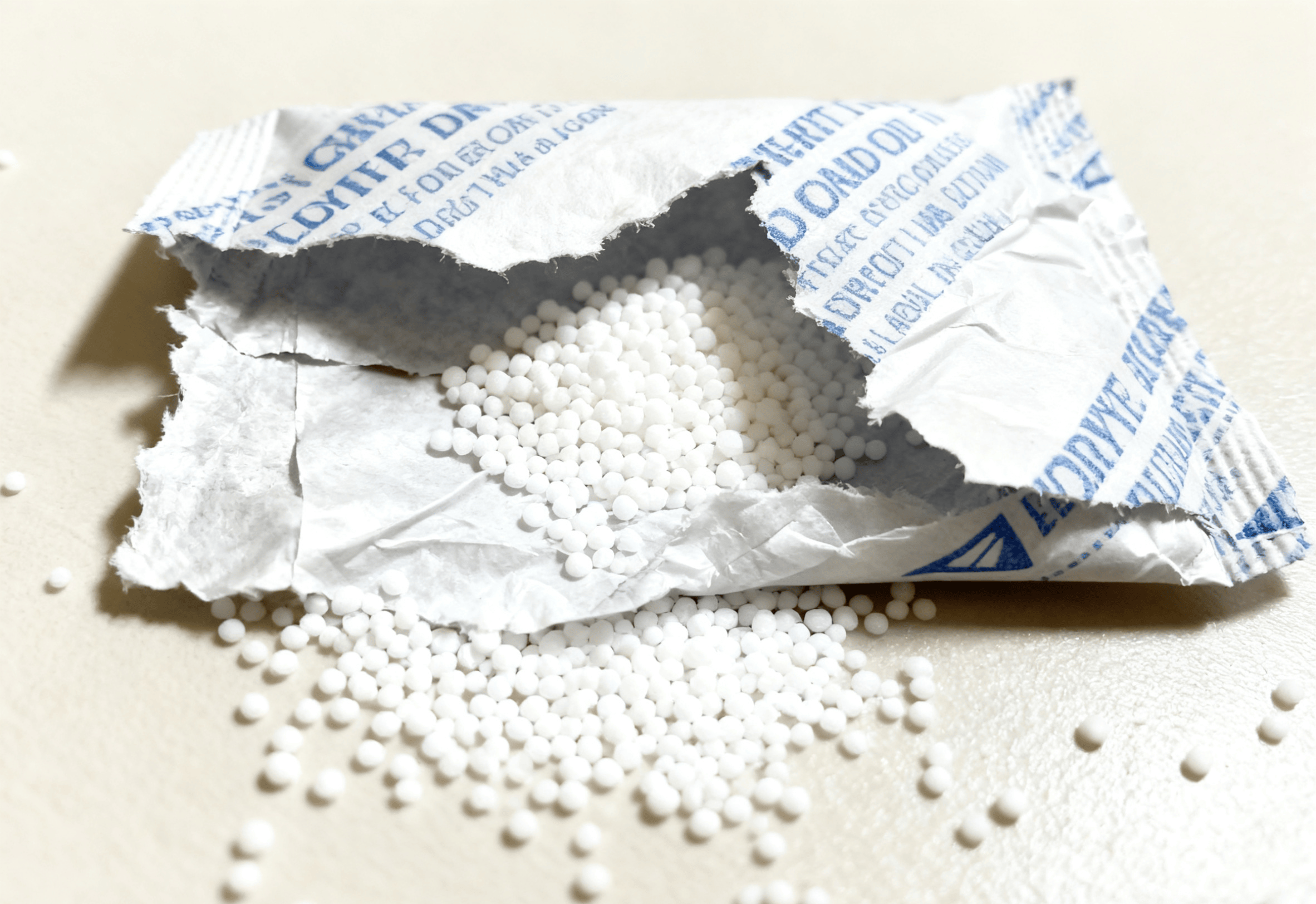
How Desiccant Works: The Science of Moisture Absorption
Desiccant operates on a fundamental principle: attracting and trapping water molecules from the surrounding air through either adsorption or absorption. Adsorption, the most common mechanism, involves water molecules adhering to the surface of the desiccant material, which has a high surface area to maximize contact. Absorption, by contrast, involves water molecules being drawn into the desiccant's structure, where they are retained permanently. Regardless of the method, the goal is to reduce the relative humidity (RH) in an enclosed space to a safe level-typically below 40% RH, where mold and corrosion cannot thrive. Most desiccants are porous, allowing air to flow through while capturing moisture, and they continue working until they reach their saturation point, at which point they can no longer absorb additional water.
Key Mechanisms: Adsorption vs. Absorption
Understanding the difference between adsorption and absorption is key to choosing the right desiccant for a specific application. Adsorptive desiccants, such as silica gel and molecular sieves, have a porous structure with tiny pores that create a large surface area-silica gel, for example, has a surface area of up to 800 square meters per gram. Water molecules in the air are attracted to these pores and stick to the surface, forming a thin film without changing the desiccant's chemical structure. Absorptive desiccants, like calcium chloride and montmorillonite clay, absorb water into their internal structure, often undergoing a chemical or physical change (e.g., calcium chloride dissolves in absorbed water to form a brine). Adsorptive desiccants are reusable (via heating to release moisture), while absorptive desiccants are typically single-use, making each suitable for different use cases.

Common Types of Desiccant: Properties and Applications
Not all desiccants are created equal-each type has unique properties that make it ideal for specific environments, moisture levels, and product requirements. The choice of desiccant depends on factors like the enclosed space size, desired humidity level, temperature, and compatibility with the product being protected. Below are the most common desiccant types, their characteristics, and typical applications, highlighting how each excels in keeping items dry.
Silica Gel: The Versatile Workhorse
Silica gel is the most widely used desiccant, known for its versatility, non-toxicity, and high adsorption capacity. Made from silicon dioxide (a naturally occurring mineral), it is available in beads or crystals, often tinted with color-changing indicators (blue to pink) to signal saturation. Silica gel can absorb up to 40% of its weight in moisture at room temperature and is stable across a wide temperature range (-40°F to 212°F). It is ideal for sensitive applications, including electronics (to prevent short circuits), pharmaceuticals (to preserve potency), and food packaging (to maintain crispness). Its non-toxic nature also makes it safe for use with consumer products, and it can be regenerated by heating to 300°F for several hours, extending its lifespan.
Calcium Chloride: For High-Moisture Environments
Calcium chloride is an absorptive desiccant with exceptional moisture-holding capacity, able to absorb up to 300% of its weight in water. It is derived from natural salt deposits and is available in flakes, pellets, or granular form. Unlike silica gel, calcium chloride works well in high-humidity environments (above 60% RH) and is often used for large enclosed spaces, such as shipping containers, storage warehouses, and industrial equipment. It is particularly effective for preventing condensation during ocean shipping, where temperature fluctuations cause high moisture levels. However, calcium chloride is corrosive to some metals, so it must be used with a barrier in applications involving steel or aluminum.
Molecular Sieves: Precision Moisture Control
Molecular sieves are synthetic zeolites with a uniform, porous structure that allows them to selectively adsorb water molecules while excluding other gases. They are designed for applications requiring ultra-low humidity levels (below 10% RH), such as in the chemical, aerospace, and electronics industries. Molecular sieves have a high adsorption capacity even at low temperatures and can retain moisture more effectively than silica gel in extreme conditions. They are commonly used to protect sensitive electronic components, catalysts, and gases, as well as in refrigerant drying systems. Like silica gel, molecular sieves are reusable, making them a cost-effective option for long-term, high-precision moisture control.
Best Practices for Using Desiccant Effectively
To maximize the effectiveness of desiccant and ensure optimal moisture protection, proper usage and handling are essential. Even the best desiccant will fail if not used correctly-common mistakes include using insufficient quantities, exposing desiccant to air before use, or neglecting to replace saturated desiccant. By following best practices, businesses and consumers can ensure that desiccant performs as intended, protecting products from moisture damage and reducing waste.
Choosing the Right Quantity and Placement
The amount of desiccant needed depends on the size of the enclosed space, the initial moisture level, and the desired humidity target. As a general rule, 1 gram of silica gel can protect approximately 1 cubic inch of enclosed space, but this may vary based on temperature and product sensitivity. Desiccant should be placed evenly throughout the space to ensure uniform moisture absorption-for example, in shipping boxes, place desiccant packets near the top, bottom, and sides to cover all areas. Avoid placing desiccant directly on sensitive products (e.g., electronics) to prevent contact with any condensed moisture that may form on the desiccant surface.
Proper Storage and Handling
Desiccant is only effective if it is dry before use-exposing it to air prior to packaging will cause it to absorb moisture prematurely, reducing its capacity. Desiccant should be stored in airtight containers when not in use, and opened packages should be sealed immediately after removing the required amount. Saturated desiccant should be replaced or regenerated promptly (if reusable) to prevent it from releasing absorbed moisture back into the environment. Additionally, desiccant should be kept away from children and pets, even non-toxic types like silica gel, as ingestion can cause choking.
The Long-Term Value of Desiccant in Moisture Protection
Investing in quality desiccant and following proper usage practices offers long-term value by preventing costly moisture-related damage, extending product shelf life, and maintaining brand reputation. For businesses, this translates to reduced waste, fewer customer returns, and lower replacement costs-critical factors in competitive industries. For consumers, desiccant ensures that products like electronics, jewelry, and food remain in optimal condition, whether stored at home or shipped across the globe. Beyond its practical benefits, desiccant is an environmentally friendly solution: reusable types reduce waste, and even single-use desiccants are often recyclable or biodegradable. In a world where moisture is an ever-present threat, desiccant remains a simple, reliable, and cost-effective way to keep things dry.