

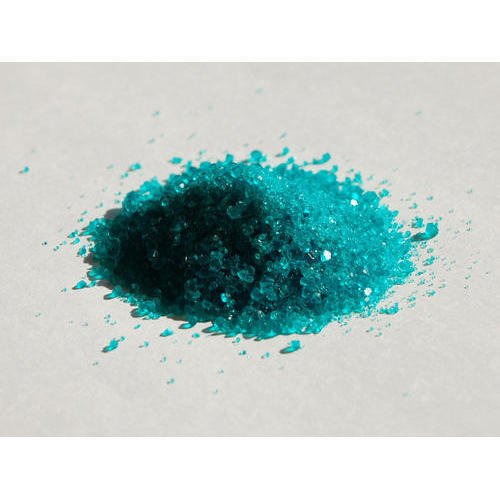
Nickel nitrate, a chemical compound with the formula Ni(NO₃)₂·6H₂O, is a versatile substance that finds extensive applications across various industries and scientific fields. Its unique chemical properties make it a crucial component in numerous processes, ranging from industrial manufacturing to research and development. This article explores the diverse uses of nickel nitrate, shedding light on its significance in modern society.

Industrial Applications
Electroplating Industry
One of the primary uses of nickel nitrate is in the electroplating industry. Electroplating is a process that involves depositing a thin layer of metal onto a substrate to enhance its appearance, durability, and corrosion resistance. Nickel plating is widely used in various sectors, such as automotive, aerospace, and electronics. In electroplating baths, nickel nitrate serves as a source of nickel ions, which are essential for the deposition of nickel onto the workpiece. The nitrate ions in the compound also help to maintain the pH of the plating solution and improve the conductivity, ensuring a smooth and uniform plating process. For example, in the automotive industry, nickel plating is used to coat engine components, such as pistons and valves, to protect them from wear and tear. In the electronics industry, it is used to plate connectors and terminals to improve their electrical conductivity and prevent corrosion.
Catalysis
Nickel nitrate is also widely used in the field of catalysis. Catalysts are substances that accelerate chemical reactions without being consumed in the process. Nickel-based catalysts are commonly used in various industrial processes, such as hydrogenation, dehydrogenation, and isomerization reactions. In these processes, nickel nitrate is often used as a precursor to prepare nickel catalysts. When heated, nickel nitrate decomposes to form nickel oxide, which can be further reduced to metallic nickel. The metallic nickel acts as a catalyst, providing a surface for the chemical reactions to occur. For example, in the production of synthetic fuels, such as methanol and ethanol, nickel catalysts are used to promote the hydrogenation of carbon monoxide and carbon dioxide. In the petrochemical industry, nickel catalysts are used in the reforming of hydrocarbons to produce high-octane gasoline and other valuable products.
Pigment and Ceramic Industry
In the pigment and ceramic industry, nickel nitrate is used to produce various colored pigments and ceramic glazes. Nickel compounds have the ability to impart different colors to materials, depending on their oxidation state and the surrounding environment. For example, nickel oxide can produce green, yellow, and brown colors, while nickel sulfate can produce blue colors. By using nickel nitrate as a raw material, manufacturers can produce a wide range of pigments with different shades and properties. These pigments are used in various applications, such as paints, coatings, plastics, and ceramics. In the ceramic industry, nickel nitrate is used to prepare glazes that can give ceramics a beautiful and durable finish. The glazes can be applied to pottery, tiles, and other ceramic products to enhance their aesthetic appeal and protect them from damage.

Chemical and Pharmaceutical Applications
Laboratory Reagents
In laboratory settings, nickel nitrate is commonly used as a reagent in various chemical reactions. It is used in qualitative and quantitative analysis to detect the presence of certain ions and compounds. For example, nickel nitrate can be used to test for the presence of sulfide ions by forming a black precipitate of nickel sulfide. It is also used in the preparation of other nickel compounds, such as nickel chloride, nickel sulfate, and nickel hydroxide. These compounds are used in various chemical syntheses and research projects. In addition, nickel nitrate is used in electrochemistry experiments to study the properties of electrodes and electrochemical reactions.
Pharmaceutical Industry
Although nickel compounds are generally considered toxic, nickel nitrate has found some applications in the pharmaceutical industry. In small quantities, nickel is an essential trace element for humans and animals, playing a role in various biological processes. However, excessive exposure to nickel can be harmful to health. In the pharmaceutical industry, nickel nitrate is used in the synthesis of certain drugs and as a catalyst in the production of pharmaceutical intermediates. For example, it is used in the production of antibiotics, such as penicillin and cephalosporins, to promote the chemical reactions involved in their synthesis. However, strict safety measures are taken to ensure that the amount of nickel in the final products is within safe limits.
Material Science and Research
Preparation of Nickel-Based Materials
Nickel nitrate is widely used in material science to prepare various nickel-based materials, such as nickel nanoparticles, nickel oxides, and nickel alloys. Nickel nanoparticles have unique physical and chemical properties, making them useful in various applications, such as catalysis, electronics, and energy storage. By using nickel nitrate as a precursor, researchers can synthesize nickel nanoparticles with controlled size, shape, and composition. Nickel oxides, such as NiO and Ni₂O₃, are used in various electronic devices, such as sensors, batteries, and supercapacitors. Nickel alloys, on the other hand, are used in high-temperature applications, such as turbine blades and aerospace components, due to their excellent strength and corrosion resistance.
Research and Development
In research and development, nickel nitrate is used in various fields, such as nanotechnology, electrochemistry, and materials science. Researchers use nickel nitrate to study the properties of nickel and its compounds, as well as to develop new materials and technologies. For example, in nanotechnology, nickel nitrate is used to synthesize nickel-based nanocomposites with enhanced properties for use in drug delivery, environmental remediation, and energy conversion. In electrochemistry, it is used to study the electrochemical behavior of nickel and its applications in batteries and fuel cells. In materials science, it is used to develop new nickel-based alloys and coatings with improved performance for various industrial applications.
Environmental and Safety Considerations
While nickel nitrate offers numerous benefits, it is important to be aware of its environmental and safety hazards. Nickel compounds, including nickel nitrate, can be toxic to humans and the environment if not handled properly. Inhalation or ingestion of nickel nitrate can cause respiratory problems, skin irritation, and other health issues. Therefore, proper safety precautions must be taken when handling and storing nickel nitrate, such as wearing protective clothing, gloves, and masks, and working in a well-ventilated area. In addition, nickel nitrate should be disposed of according to local environmental regulations to prevent contamination of soil and water.
In conclusion, nickel nitrate is a highly versatile chemical compound with a wide range of applications in various industries and scientific fields. From electroplating and catalysis to pigment production and material science, its unique properties make it an essential component in many processes. However, it is crucial to handle and use nickel nitrate with care to ensure safety and minimize environmental impact. As research and technology continue to advance, the uses of nickel nitrate are likely to expand, further highlighting its importance in modern society.