

In the complex landscape of chemical substances, the NTA chelating agent, an abbreviation for Nitrilotriacetic acid, has become a pivotal component with far - reaching applications across numerous industries. Gaining a comprehensive understanding of its properties, functions, and implications is fundamental to recognizing its significance in modern chemistry and related fields.
1. Chemical Structure and Chelation Mechanism
1.1 Molecular Composition
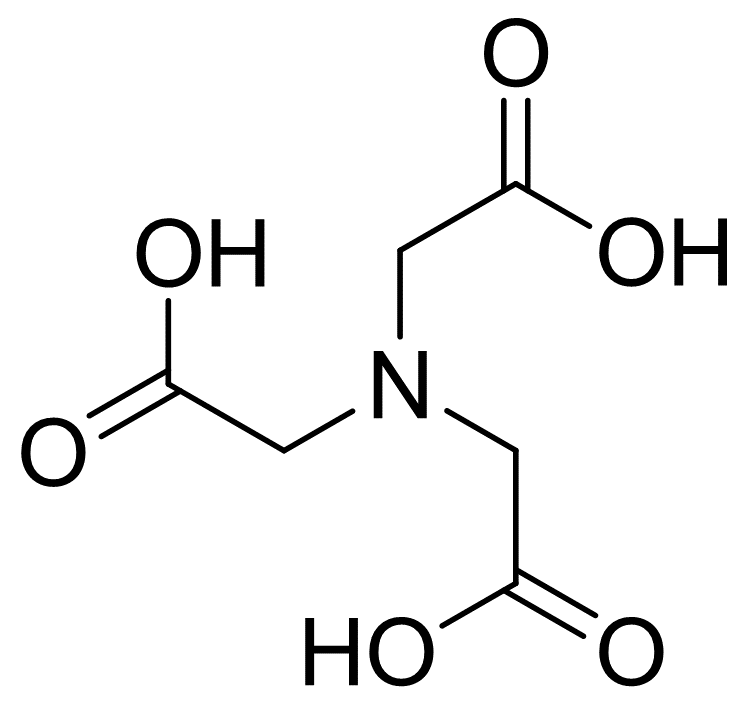
NTA is classified as an aminopolycarboxylic acid. Its structure is characterized by a central nitrogen atom that is bonded to three acetic acid groups. This distnctive molecular architecture is the cornerstone of its functionality as a chelating agent.
1.2 Chelation Process
The chelation mechanism of NTA is what sets it apart. When NTA interacts with metal ions, the nitrogen and oxygen atoms within its molecule donate electron pairs to the metal ion. As a result, a ring - like structure is formed, which firmly encapsulates the metal ion, creating a stable complex. This process is the essence of NTA's role as a chelating agent.
2. Key Characteristics of NTA Chelating Agent
2.1 Broad Metal Ion Affinity
One of the most notable features of NTA is its strong affinity for a wide spectrum of metal ions. It can effectively bind with ions such as calcium, magnesium, iron, copper, and zinc. By chelating these metal ions, NTA significantly reduces their reactivity and solubility in solutions, altering their chemical behavior.
2.2 Impact on Metal Ion Properties
The chelation process by NTA not only changes the chemical reactivity of metal ions but also has practical implications. For instance, in water treatment, it prevents the formation of scale caused by calcium and magnesium ions, maintaining the integrity of water systems. In industrial cleaning products, NTA's ability to chelate metal components in dirt and stains enhances the cleaning efficiency, dissolving stubborn residues effectively.

3. Applications of NTA Chelating Agent
3.1 Water Treatment Industry
In water treatment, NTA plays a crucial role in preventing scale formation. Scale deposits can cause significant damage to pipes, heat exchangers, and other water - handling equipment. By chelating calcium and magnesium ions, NTA ensures the smooth operation of these systems, reducing maintenance costs and improving the lifespan of the equipment.
3.2 Pharmaceutical Industry
The pharmaceutical industry also benefits greatly from NTA. It is used to remove heavy metal contaminants from drugs and raw materials used in drug production. This ensures the safety and purity of pharmaceutical products, safeguarding public health.
3.3 Agricultural Sector
In agriculture, NTA is incorporated into fertilizers. It chelates micronutrient metal ions like iron and zinc, making these essential nutrients more accessible to plants. This enhanced availability improves the plants' absorption and utilization of these nutrients, ultimately leading to increased crop yields and healthier plants.
4. Concerns Regarding NTA Use
4.1 Environmental Impact
Despite its numerous advantages, the use of NTA raises environmental concerns. The chelated metal - NTA complexes may behave differently in the environment compared to free metal ions. Some studies have suggested potential long - term impacts on aquatic ecosystems, such as disrupting the balance of organisms and affecting water quality.
4.2 Human Health Considerations
Regarding human health, although NTA is generally considered to have low toxicity at normal usage levels, there are ongoing debates. Prolonged exposure to higher concentrations of NTA may pose potential risks, and further research is needed to fully understand its effects on human health.

5. Future Research and Development
5.1 Search for Alternatives
In recent years, there has been a significant focus on developing more environmentally friendly and safer alternatives to NTA. Scientists are exploring new compounds that can perform similar chelating functions without the associated environmental and health risks.
5.2 Optimization of NTA Use
Simultaneously, efforts are being made to optimize the use of NTA. This includes improving its biodegradability and gaining a more in - depth understanding of its environmental behavior. By doing so, the potential negative impacts of NTA can be minimized while still leveraging its valuable properties.
In conclusion, the NTA chelating agent is a highly versatile chemical with substantial practical value across various industries. Its unique chelating properties have enabled it to play vital roles in multiple sectors. However, the associated environmental and safety concerns require careful consideration. Through continuous research and innovation, the applications of NTA are likely to expand, and the potential risks will be mitigated, ensuring its continued contribution to the development of modern chemistry and related industries.